Showing posts with label Futurism. Show all posts

Monday, July 25, 2016

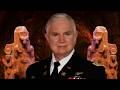
Jesuitical Futurism Promoter Tim LaHaye Dies July 25, 2016

'Evangelical' who identified Roman Catholicism as "a false religion" with ceremonies comparable to pagan rituals, "...more dangerous than no religion because she substitutes religion for truth" and "... pseudo-Christian",  in his 1973 book Revelation Illustrated and Made Plain.

Yet by the 1990s, with his book series Left Behind, promoted Jesuit doctrine of 'futurism' of the 'anti-christ' as some unknown man outside the Roman Catholic Church


https://en.wikipedia.org/wiki/Tim_LaHaye

Timothy F. "Tim" LaHaye (April 27, 1926 – July 25, 2016) was an American evangelical Christian minister, author, and speaker. He is best known for the Left Behind series of apocalyptic fiction, which he co-wrote with Jerry B. Jenkins. He authored more than fifty books, both fiction and non-fiction.

Biography

Early life

Tim LaHaye was born in Detroit, Michigan. His mother was the former Margret Palmer and his father, Frank LaHaye, was a Ford auto worker who died in 1936 of a heart attack. His father's death had a significant influence on LaHaye, who was only nine years old at the time. He had been inconsolable until the minister at the funeral said, "This is not the end of Frank LaHaye; because he accepted Jesus Christ, the day will come when the Lord will shout from heaven and descend, and the dead in Christ will rise first and then we'll be caught up together to meet him in the air." LaHaye later said that, upon hearing those remarks, "all of a sudden, there was hope in my heart I'd see my father again."[1]
LaHaye enlisted in the United States Army Air Forces in 1944 at the age of eighteen, after he finished night school. He served in the European Theater of Operations as a machine gunner aboard a bomber.[2]
In 1950, LaHaye received a Bachelor of Arts from Bob Jones University in Greenville, South Carolina. he held the Doctor of Ministry degree from Western Seminary. In 1958, the LaHaye family moved to San Diego, California, at which he became pastor of the Scott Memorial Baptist Church. he filled the pulpit there for nearly twenty-five years. In 1971, he founded Christian Heritage College, now known as San Diego Christian College.

Political activism

LaHaye has started numerous groups to promote his views, having become involved in politics at the Christian Voice during the late 1970s and early 1980s. In 1972, he helped to establish the Institute for Creation Research at Christian Heritage College in El Cajon, California, doing so along with Henry M. Morris.[3][4] In 1979 he encouraged Jerry Falwell to found the Moral Majority, and sat on its board of directors.[2][5]

Then in 1981 he left the pulpit to concentrate his time on politics and writing.[6] That year, he helped found the Council for National Policy (CNP) a policy making think tank☃☃ in which membership is only available through invitation; it has been reported "the most powerful conservative organization in America you've never heard of and should not be confused with the liberal Center for National Policy.icy.☃☃ In the 1980s, LaHaye founded the American Coalition for Traditional Values and the Coalition for Religious Freedom. He founded the Pre-Tribulation Research Center along with Thomas Ice in 1998. The center is dedicated to producing material that supports a dispensationalist, pre-tribulation interpretation of the Bible. He and his wife had connections to the John Birch Society, a conservative, anti-communist group.[7]
He also took more direct roles in presidential politics. He was a co-chairman of Jack Kemp's 1988 presidential bid; he was kicked off the campaign after four days when his anti-Catholic views (see below) became known.[2][8] LaHaye played a significant role in getting the Religious Right to support George W. Bush for the presidency in 2000.[2][5] In 2007, he endorsed Mike Huckabee during the primaries.[9] Huckabee reportedly found the Left Behind books to be a "compelling story written for nontheologians."[9]

Left Behind

Main article: Left Behind (series)
LaHaye is best known for the Left Behind series of apocalyptic fiction that depict the Earth after the pretribulation rapture which Premillennial Dispensationalists believe the Bible states multiple times will occur. The books were LaHaye's brainchild, though Jerry B. Jenkins, a former sportswriter with numerous other works of fiction to his name, did the actual writing of the books from LaHaye's notes.[10] Jenkins has said, "I write the best I can. I know I'm never going to be revered as some classic writer. I don't claim to be C. S. Lewis. The literary-type writers, I admire them. I wish I was smart enough to write a book that's hard to read, you know?"[11]
The series, which started in 1995 with the first novel, includes 12 titles in the adult series; as well as juvenile novels, audio books, devotionals, and graphic novels. The books have been very popular, with total sales surpassing 65 million copies. Seven titles in the adult series have reached No. 1 on the bestseller lists for The New York Times, USA Today, and Publishers Weekly.[12] Jerry Falwell said about the first book in the series: ""In terms of its impact on Christianity, it's probably greater than that of any other book in modern times, outside the Bible."[13] The best-selling series have been compared to the equally popular works of Tom Clancy and Stephen King: "the plotting is brisk and the characterizations Manichean. People disappear and things blow up."[5]

LaHaye indicates that the idea for the series came to him one day about 1994 while he was sitting on an airplane and observed a married pilot flirting with a flight attendant. He wondered what would befall the pilot if the Rapture happened at that moment.[2] The first book in the series opens with a similar scene.

Recent activities

In 2001, LaHaye co-hosted with Dave Breese in the prophecy television program The King Is Coming. His book The Rapture was released on June 6, 2006, in order to show a 6-6-6 connection.

In 2001, LaHaye gave $4.5 million to Liberty University to build a new student center and School of Prophecy, which opened in January 2002, and was named after LaHaye. He also served as its president. LaHaye also provided the funds for the LaHaye Ice Center on the campus of Liberty University, which opened in January 2006.

Personal life

Tim LaHaye married activist and fellow author Beverly Ratcliffe in 1947.[14][15] They had four children, Linda, Larry, Lee, and Lori, along with nine grandchildren, and lived in the Los Angeles area. His hobbies included skiing, jogging, motorcycling, and golfing.[16] He owned a home in Rancho Mirage, California.[17] He died after a stroke on July 25, 2016.[18]

Other views

Homosexuality

In 1978 LaHaye published The Unhappy Gays, which was later retitled What Everyone Should Know About Homosexuality. The book called homosexuals "militant, organized" and "vile."[19] The Unhappy Gays also argues that gays share 16 pernicious traits, including "incredible promiscuity," "deceit," "selfishness," "vulnerability to sadism-masochism" and "poor health and an early death." He speculates whether those who accept gays even though they are so unhappy or "those who practiced Old Testament capital punishment" on gays are more "cruel and inhuman." He has called the book "a model of compassion."[1] He believes that homosexuality can be cured.[20][21] However, he says that such conversions are rare.[22]

Global conspiracies

LaHaye believed that the Illuminati is secretly engineering world affairs.[8] In Rapture Under Attack he wrote:
I myself have been a forty-five year student of the satanically-inspired, centuries-old conspiracy to use government, education, and media to destroy every vestige of Christianity within our society and establish a new world order. Having read at least fifty books on the Illuminati, I am convinced that it exists and can be blamed for many of man's inhumane actions against his fellow man during the past two hundred years.
The Illuminati is just one of many groups that he believed are working to "turn America into an amoral, humanist country, ripe for merger into a one-world socialist state." Other secret societies and liberal groups working to destroy "every vestige of Christianity", according to LaHaye, include: the Trilateral Commission, the American Civil Liberties Union, the National Association for the Advancement of Colored People, the National Organization for Women, Planned Parenthood, "the major TV networks, high-profile newspapers and newsmagazines," the State Department, major foundations (Rockefeller, Carnegie, Ford), the United Nations, "the left wing of the Democratic Party", Harvard, Yale "and 2,000 other colleges and universities."[2]

Criticism

Eschatology and Left Behind

LaHaye has been criticized for his apocalyptic beliefs, in which he asserts the end of the world is near. Other believers in dispensational premillennialism, who believe that the return of Jesus is imminent, criticize various aspects of his theology, saying he has "some real problems with his prophetical teachings in the Left Behind series." It is noted that "in books 8 & 9, LaHaye and Jenkins teach that [non-willing] recipients of the mark of the beast can still be saved." However, in The Mark, "the Chang scenario" is developed, whereby a character receives both the mark of the beast and the sealing of the Lord. In Desecration, his dual-marking was justified in the storyline." This has led some readers to wonder "how a Christian can have the mark of the beast and still be saved" and has been asked many times by perplexed readers on the Left Behind messageboard. Attempts to address this question have appeared on the FAQ page at LeftBehind.com.[6][23]
With the presumption of eschatological plots, persons and conclusions, and with so many people basing their eschatological understanding on the Left behind series, LaHaye has been accused of violating the warning given in Revelation 22:18–19 not to add to or take away from the words of the Revelation.

Many mainstream Christians and other evangelicals like Tom Sine have broader disagreements with the series as a whole, pointing out that "most biblical scholars largely reject the eschatological assumptions of this kind of pop end-times literature."[24] Others say that LaHaye portrays the Book of Revelation with a selective literalism, choosing to take some things literally (such as the violence) and others as metaphor (the Beast) as it suits his point of view.[25] In The Rapture Exposed by Barbara Rossing, a number of criticisms are raised regarding the series, particularly its focus on violence.[24][26]
Robert M. Price, a professor of biblical criticism for the Council for Secular Humanism's Center for Inquiry Institute and a proponent of the Christ myth theory, wrote a critique of Tim LaHaye and Jerry Jenkins's 'Left Behind' novels called The paperback apocalypse, How the Christian church was left behind, ( Amherst, NY Prometheus Books 2007, ISBN 1-59102-583-4) in which he writes p 11 " The paperback apocalypse examines the theological framework of popular eschatology, comparing it with the texts to which it erroneously appeals. It goes further, demonstrating that the New Testament promise of the Second Coming of Jesus Christ has long since fallen victim to a self-imposed statute of limitations. That is, this pseudo-event was never predicted as happening someday, in the sweet by-and-by; rather, it was always mentioned with the promise of a swift fulfillment in the ancient readers' own day. That promise failed, and there is as much reason to postpone it, still expecting it, as there is to hold onto one's ticket from a defunct airline. It will not be honored, and it is high time to make some alternative plans. I will reinforce this point with a historical survey of disappointed eschatological expectations. "

Anti-Catholic sentiments

LaHaye has been a harsh critic of Roman Catholicism, which he has called "a false religion".[8] In his 1973 book Revelation Illustrated and Made Plain, he stated that the Catholic Church "is more dangerous than no religion because she substitutes religion for truth" and "is also dangerous because some of her doctrines are pseudo-Christian." Elsewhere the same book compared Catholic ceremonies to pagan rituals.[8] It was these statements that were largely responsible for LaHaye's dismissal from Jack Kemp's presidential campaign. It was later revealed that the San Diego church that LaHaye had pastored throughout the 1970s had sponsored an anti-Catholic group called Mission to Catholics; one of their pamphlets asserted that Pope Paul VI was the "archpriest of Satan, a deceiver, and an antichrist, who has, like Judas, gone to his own place."[27] In Book 9 of the series, The Desecration, Carpathia, the villain, specifically refutes all happenings at Jesus' crucifixion that are part of the Catholic stations of the Cross but not in the canonical gospels, further undercutting the Catholic traditions.[28] Other Catholic writers have said that while the books aren't "anti-Catholic per se" they reflect LaHaye's other writings on the subject.[29]

Despite his anti-Catholic views, he praised Roman Catholic director Mel Gibson's 2004 film The Passion of the Christ, saying that "Everyone should see this movie. It could be Hollywood's finest achievement to date."[30] He also endorsed Catholic Newt Gingrich for president in 2012.[31]

Sun Myung Moon

In the 1980s he was criticized by the evangelical community for accepting money from Bo Hi Pak, a longtime Sun Myung Moon operative.[32] He was additionally criticized for joining Moon's Council for Religious Freedom, which was founded to protest Moon's 1984 imprisonment.[32] In 1996 LaHaye's wife spoke at an event sponsored by Moon.[32]

Tributes

Time magazine named LaHaye one of the 25 most influential evangelicals in America and in the summer of 2001 the Evangelical Studies Bulletin named him the most influential Christian leader of the preceding quarter century.[13][24]

http://continuingcounterreformation.blogspot.com/2008/12/jesuitical-futurism-left-behind.html

 http://www.lmn.org/magazine/170/Jesuits.html


Luther’s Discovery

Eventually, Martin Luther turned to the prophecies. By candlelight, he read about the “little horn,” the “man of sin,” and “the beast,” and he was shocked as the Holy Spirit spoke to his heart. Finally, he saw the truth and said to himself, “Why, these prophecies apply to the Roman Catholic Church!” As he wrestled with this new insight, the voice of God echoed loudly in his soul, saying, “Preach the word!” (2 Timothy 4:2). And so, at the risk of losing his life, Martin Luther preached publicly and in print to an astonished people that Papal Rome was indeed the Antichrist of Bible prophecy. Because of this dual message of salvation through faith in Jesus Christ apart from works and of Papal Rome being the Antichrist, the river of history literally changed its course. Hundreds of thousands of people in Europe and in England left the Catholic Church....

A Counter-Reformation

In 1545, the Catholic Church convened one of its most famous councils in history, which took place north of Rome in a city called Trent. The Council of Trent actually continued for three sessions, ending in 1563. One of the main purposes of this Council was for Catholics to plan a counterattack against Martin Luther and the Protestants. Thus the Council of Trent became a center for Rome’s Counter-Reformation. Up to this point, Rome’s main method of attack had been largely frontal—the open burning of Bibles and of heretics. Yet this warfare only confirmed in the minds of Protestants the conviction that Papal Rome was indeed the Beast which would “make war with the saints” (Revelation 13:7). Therefore a new tactic was needed, something less obvious. This is where the Jesuits come in.

On August 15, 1534, Ignatius Loyola (in the title picture) founded a secretive Catholic order called the Society of Jesus, also known as the Jesuithttps://www.blogger.com/blogger.g?blogID=5168353211979506184#editor/target=post;postID=7190526862288718899s. The Jesuits definitely have a dark history of intrigue and sedition, that’s why they were expelled from Portugal (1759), France (1764), Spain (1767), Naples (1767), and Russia (1820). “Jesuit priests have been known throughout history as the most wicked political arm of the Roman Catholic Church. Edmond Paris, in his scholarly work, The Secret History of the Jesuits, reveals and documents much of this information.”4 At the Council of Trent, the Catholic Church gave the Jesuits the specific assignment of destroying Protestantism and bringing people back to the Mother Church. This was to be done not only through the Inquisition and through torture, but also through theology.

 The Jesuit Commission

At the Council of Trent, the Jesuits were commissioned by the Pope to develop a new interpretation of Scripture that would counteract the Protestant application of the Bible’s Antichrist prophecies to the Roman Catholic Church. Francisco Ribera (1537-1591), a brilliant Jesuit priest and doctor of theology from Spain, basically said, “Here am I, send me.” Like Martin Luther, Francisco Ribera also read by candlelight the prophecies about the Antichrist, the little horn, that man of sin, and the Beast. But because of his dedication and allegiance to the Pope, he came to conclusions vastly different from those of the Protestants. “Why, these prophecies don’t apply to the Catholic Church at all!” Ribera said. Then to whom do they apply? Ribera proclaimed, “To only one sinister man who will rise up at the end of time!” “Fantastic!” was the reply from Rome, and this viewpoint was quickly adopted as the official Roman Catholic position on the Antichrist....

 Defining the Issue

Before we go much farther, let’s define some terms. Historicism is the belief that Biblical prophecies about the little horn, the man of sin, the Antichrist, the Beast, and the Babylonian Harlot of Revelation 17, all apply to the developing history of Christianity and to the ongoing struggle between Jesus Christ and Satan within the Christian Church, culminating at the end of time. Historicism sees these prophecies as having a direct application to Papal Rome as a system whose doctrines are actually a denial of the New Testament message of free salvation by grace through simple faith in Jesus Christ, apart from works. Historicism was the primary prophetic viewpoint of the Protestant Reformers. In direct opposition to Historicism, and rising up as a razor-sharp counterattack on Protestantism, was that of the Jesuits with their viewpoint of Futurism, which basically says, “The Antichrist prophecies have nothing to do with the history of Papal Rome, rather, they apply to only one sinister man who comes at the end.”

Thus Jesuit Futurism sweeps 1,500 years of prophetic history under the proverbial rug by inserting its infamous GAP. This theory teaches that when Rome fell, prophecy stopped, only to continue again right around the time of the Rapture, thus the “gap” was created. The ten horns, the little horn, the Beast, and the Antichrist have nothing to do with Christians until this “last-day Antichrist” should appear. According to this viewpoint, there were no prophecies being fulfilled during the Dark Ages!

 Inroads in Protestantism

For almost 300 years after the Council of Trent, Jesuit Futurism remained largely inside the realm of Catholicism, but the plan of the Jesuits was that these theological tenets be adopted by Protestants. This adoption process actually began in the early 1800s in England, and from there it spread to America. The story of how this happened is both fascinating and tragic. As I briefly share some of the highlights, I want to clarify that I am not judging the genuineness of these Christian men. They may have been sincere, yet at the same time deceived in some areas of their theological understanding.

“The Futurism of Ribera never posed a positive threat to the Protestants for three centuries. It was virtually confined to the Roman Church. But early in the nineteenth century it sprang forth with vehemence and latched on to Protestants of the Established Church of England.”9 Dr. Samuel Roffey Maitland (1792-1866), a lawyer and Bible scholar, became a librarian to the Archbishop of Canterbury. It is very likely that one day he discovered Ribera’s commentary in the library. In any event, in 1826 he published a widely-read book attacking the Reformation and supporting Ribera’s idea of a future one-man Antichrist. For the next ten years, in tract after tract, he continued his anti-Reformation rhetoric. As a result of his zeal and strong attacks against the Reformation in England, the Protestantism of that very nation which produced the King James Bible (1611) received a crushing blow.

After Dr. Maitland came James H. Todd, a professor of Hebrew at the University of Dublin. Todd accepted the futuristic ideas of Maitland, publishing his own supportive pamphlets and books. Then came John Henry Newman (1801-1890), a member of the Church of England and a leader of the famous Oxford Movement (1833-1845). In 1850, Newman wrote his “Letter on Anglican Difficulties,” revealing that one of the goals in the Oxford Movement was to finally absorb “the various English denominations and parties” back into the Church of Rome. After publishing a pamphlet endorsing Todd’s futurism ab...out a one-man Antichrist, Newman soon became a full Roman Catholic, and later even a highly honored Cardinal. Through the influence of Maitland, Todd, Newman, and others, a definite “Romeward movement was already arising, destined to sweep away the old Protestant landmarks, as with a flood.”10

Then came the much-respected Scottish Presbyterian minister, Edward Irving (1792-1834), the acknowledged forerunner of both the Pentecostal and Charismatic Movements. Irving pastored the large Chalcedonian Chapel in London with over 1,000 members. When Irving turned to the prophecies, he eventually accepted the one-man Antichrist idea of Todd, Maitland, Bellarmine, and Ribera, yet he went a step further. Somewhere around 1830, Edward Irving began to teach the unique idea of a two-phase return of Christ, the first phase being a secret rapture prior to the rise of the Antichrist. Where he got this idea is a matter of much dispute. Journalist Dave MacPherson believes Irving accepted it is a result of a prophetic revelation given to a young Scottish girl named Margaret McDonald.11 In any case, the fact is, Irving taught it!.....


Left Behind

Now we have Left Behind. In the 1990s, Tim LaHaye and Jerry Jenkins took the future one-man Antichrist idea of Hal Lindsey, Scofield, Darby, Irving, Newman, Todd, Maitland, Bellarmine, and Ribera, and turned it into “The most successful Christian-fiction series ever” (Publishers Weekly). Hal Lindsey’s book, The Late Great Planet Earth, was largely theological, which limited its appeal, while Left Behind is a sequence of highly imaginative novels, “overflowing with suspense, action, and adventure,” a “Christian thriller,” with a “label its creators could never have predicted: blockbuster success” (Entertainment Weekly). The much-respected television ministries of Jack Van Impe, Peter and Paul Lalonde, and Pastor John Hagee, have all worked together to produce LEFT BEHIND: The Movie. The entire project has even caught the attention of the New York Times and the Wall Street Journal, resulting in an interview of LaHaye and Jenkins on Larry King Live. The Left Behind books have been made available on displays at WalMart, Fry’s Electronics, and inside countless other stores.

Again, let me clarify, I am not judging the genuineness of the authors of Left Behind and the leaders of these television ministries. They may be sincere, and have their own walk with God. But they are deceived into wrong ideas concerning Bible prophecy. God may even use Left Behind to influence people for Jesus Christ. But, in the full light of Scripture, prophecy, and the Protestant Reformation, something is terribly wrong. Left Behind is now teaching much of the same Jesuit Futurism as Francisco Ribera, which is hiding the real truth about the Antichrist. Through Left Behind, the floodgates of Futurism have been opened, unleashing a massive tidal wave of false prophecy which is now sweeping over America. Sadly, it is a false “idea whose time has come.”


https://www.timlahaye.com/


Saturday, January 25, 2014

NBC To Produce a 'Rosemary's Baby' Remake as a Mini Series

Rosemary's Baby Poster - H 2013

NBC announces its remake of the movie Rosemary's Baby as a miniseries, to take place not in New York as per the original 1968 movie by Roman Polanski, but rather in Paris, France.
http://www.hollywoodreporter.com/live-feed/nbc-orders-rosemarys-baby-miniseries-664500

The mini hails from Lionsgate TV, with Joshua Maurer, Alix Witlin and David Stern on board to executive produce. Scott Abbott (Introducing Dorothy Dandridge) and James Wong (American Horror Story) will write the screenplay, while Agnieszka Holland, who has been nominated for both an Oscar (Europa, Europa) and an Emmy (Treme), will direct. Casting will begin immediately.

"Ira Levin’s mesmerizing book was a groundbreaking reflection on how effective and influential a psychological thriller could be," said Quinn Taylor, executive vp movies, miniseries and international co-productions at NBC. “We’re looking forward to adapting his incredible work and bringing those indelible characters to a new generation of viewers.”
The project was one of four miniseries NBC put into development in July, along with its recently scrapped Hillary Clinton scripted entry, and arrived after the network hired Taylor to be its new longform point person. The new take on Rosemary's Baby is the network's latest mini and arrives as event series continues to gain popularity as both broadcast and cable networks look to lure both cache and eyeballs in an increasingly competitive DVR era. 

"As we move into the event movie and miniseries space, Rosemary’s Baby represents the kind of attention-getting, surprising project that will make noise for us," said NBC Entertainment president Jennifer Salke. "The story has been updated and moved to Paris, but it’s faithful to the spirit of Ira Levin’s classic novel. This is a compelling tale wonderfully told.”

Rosemary’s Baby is an extraordinary project and we’re excited to be in the longform business with NBC,” said Lionsgate Television Group chairman Kevin Beggs.  

Movies as Rosemary's Baby and the Omen take the Jesuitical "futurist" rather then the "historicist" standpoint; that is, that the anti-Christ being the 'comes out of nowhere' dark haired half Jewish male, rather than the Roman Catholic Church- despite its centuries of the inquisitions/counter reformation.

Thus, one can expect yet another work stressing that false doctrine.


  • Avatar
    IMO not a stellar idea. This is one of those times where if you've read the book or seen the original the suspense is considerably weakened.
  • Here's an idea. If they want to bring the older movie to a new audience, promote it well and air it in NBC.
    One more crappy remake... Why?!!!
    To be fair 20 years ago, I wouldn't have assumed it would be horrible, but today I do, mostly because the executives will wring every once of creativity out of it... :(
    What TV desperately needs today is stuff that's new and fresh (at least a little) done by talented people, not the usual bad producers, writers and directors (and I don't put James Wong in those as he's very talented).
  • Avatar
    FLOP written all over it!
    I suggest to stop paying ridicolous amounts of money to tv executives
    and now I know why I never made it in the tv industry.
      You put your finger on it. The current breed of TV executives is killing good television. The real problem is the higher ups who probably clapped on their backs for that "great idea" and rewarded them with a big Xmas bonus for a "job well done) even as NBC actually managed to lose a time slot to CW recently...


Friday, December 14, 2012

'Baphomet' Revisited - Sort of


Vigilent Citizen is busy during the final countdown to December 21, 2012, with its section "Hidden Knowledge", having just released The Order of the Illuminati: Its Origins, Its Methods and Its Influence on the World Events on December 12, 2012, followed the next day by releasing Who is Baphomet?

Note: it uses the word 'Christianity' where it should say 'Roman Catholicism' - hence inadquately guarding against the not found in the Bible idea of a 'horned devil' created to protect the Papacy, while avoiding any discussion of the clearly relevant concepts of the 'Divine Couple' of the 'Horned God' and 'Earth Mother' figures - which are the Papacy's target, as it chooses to define the "Devil" as that which is is its best threat- smear the male as the 'devil' while avoiding the considerably more difficult task of likewise defaming the "M" Mary Earth Mother Figure.  Let's not forget that the Bible describes the devil as a cherub.

http://vigilantcitizen.com/hidden-knowledge/whoisbaphomet/#comments

Baphomet is an enigmatic, goat-headed figure found in several instance in the history of occultism. From the Knights Templar of the Middle-Ages and the Freemasons of the 19th century to modern currents of occultism, Baphomet never fails to create controversy. But where does Baphomet originate from and, most importantly, what is the true meaning of this symbolic figure? This article looks at the origins of Baphomet, the esoteric meaning of Baphomet and its occurrence in popular culture.

The modern depiction of Baphomet appears to take its roots from several ancient sources, but primarily from pagan gods. Baphomet bears resemblances to gods all over the globe, including Egypt, Northern Europe and India. In fact, the mythologies of a great number of ancient civilizations include some kind of horned deity. In Jungian theory, Baphomet is a continuation of the horned-god archetype, as the concept of a deity bearing horns is universally present in individual psyches. Do Cernunnos, Pan, Hathor, the Devil (as depicted by Christianity[- Correction Roman Catholicism]) and Baphomet have a common origin? Some of their attributes are strikingly similar.


Pope Sylvester II and the Devil (1460). In Christianity [- Correction Roman Catholicism], the devil has similar features to the pagan gods described above as they are the main inspiration for these depictions. The attributes embodied by these gods became the representation of what is considered evil by the Church.
 
[note that it is androgynous- representing both sexes] 
 
Whatever the case may be, the most likely connection between Freemasonry and Baphomet is through symbolism, where the idol becomes an allegory for profound esoteric concepts. The Masonic author Albert Pike argues that, in Freemasonry, Baphomet is not an object of worship, but a symbol, the true meaning of which is only revealed to high-level initiates.
“It is absurd to suppose that men of intellect adored a monstrous idol called Baphomet, or recognized Mahomet as an inspired prophet. Their symbolism, invented ages before, to conceal what it was dangerous to avow, was of course misunderstood by those who were not adepts, and to their enemies seemed to be pantheistic. The calf of gold, made by Aaron for the Israelites, was but one of the oxen under the layer of bronze, and the Karobim on the Propitiatory, misunderstood. The symbols of the wise always become the idols of the ignorant multitude. What the Chiefs of the Order really believed and taught, is indicated to the Adepts by the hints contained in the high Degrees of Free-Masonry, and by the symbols which only the Adepts understand.” 10
Here’s Crowley’s explanation of the etymology of the name Baphomet, taken from his 1929 book The Confessions of Aleister Crowley:
“I had taken the name Baphomet as my motto in the O.T.O. For six years and more I had tried to discover the proper way to spell this name. I knew that it must have eight letters, and also that the numerical and literal correspondences must be such as to express the meaning of the name in such a ways as to confirm what scholarship had found out about it, and also to clear up those problems which archaeologists had so far failed to solve…. One theory of the name is that it represents the words ???? ??????, the baptism of wisdom; another, that it is a corruption of a title meaning “Father Mithras”. Needless to say, the suffix R supported the latter theory. I added up the word as spelt by the Wizard. It totalled 729. This number had never appeared in my Cabbalistic working and therefore meant nothing to me. It however justified itself as being the cube of nine. The word ?????, the mystic title given by Christ to Peter as the cornerstone of the Church, has this same value. So far, the Wizard had shown great qualities! He had cleared up the etymological problem and shown why the Templars should have given the name Baphomet to their so-called idol. Baphomet was Father Mithras, the cubical stone which was the corner of the Temple.” 11
Baphomet is an important figure in the Thelema, the mystical system he established at the beginning of the 20th century. In one of his most important works, Magick, Liber ABA, Book 4, Crowley describes Baphomet as a divine androgyne:
“The Devil does not exist. It is a false name invented by the Black Brothers to imply a Unity in their ignorant muddle of dispersions. A devil who had unity would be a God … ‘The Devil’ is, historically, the God of any people that one personally dislikes … This serpent, SATAN, is not the enemy of Man, but He who made Gods of our race, knowing Good and Evil; He bade ‘Know Thyself!’ and taught Initiation. He is ‘The Devil’ of the Book of Thoth, and His emblem is Baphomet, the Androgyne who is the hieroglyph of arcane perfection … He is therefore Life, and Love. But moreover his letter is ayin, the Eye, so that he is Light; and his Zodiacal image is Capricornus, that leaping goat whose attribute is Liberty.” 12
VC has a follow up article: Aleister Crowley: His Story, His Elite Ties and His Legacy

The Ecclesia Gnostica Catholica, the ecclesiastical arm of Ordo Templi Orientis (O.T.O.), recites during its Gnostic Mass “And I believe in the Serpent and the Lion, Mystery of Mystery, in His name BAPHOMET.” 13 Baphomet is considered to be the union of Chaos and Babalon, masculine and feminine energy, the phallus and the womb.

Baphomet is a composite creation symbolic of alchemical realization through the union of opposite forces. Occultists believe that, through the mastery of life force, one is able to produce magick and spiritual enlightenment. Eliphas Levi’s depiction of Baphomet included several symbols alluding to the raising of the kundalini – serpentine power – which ultimately leads to the activation of the pineal gland, also known as the “third eye”. So, from an esoteric point of view, Baphomet represents this occult process.

However, over time the symbol has come to signify much more than its esoteric meaning. Through controversies, Baphomet became, depending of the point of view, a representation of everything that is good in occultism or everything that is evil in occultism. It is, in fact, the ultimate “scapegoat”, the face of witchcraft, black magick and Satanism. The fact that the symbol is rather monstrous and grotesque has probably helped propel the symbol to its level of infamy as it never fails to shock organized religions while attracting those who rebel against them.

Since gaining widespread recognition in popular culture, the image of Baphomet is now used as a symbol of anything regarding occultism and ritualism. In corporate-owned mass media, which has ties with secret societies, the figure of Baphomet appears in the oddest places, often to audiences too young to understand the occult reference. Is Baphomet used in pop culture as a symbol of the power of the occult elite over the ignorant masses?

After centuries of myths, hoaxes, propaganda and disinformation on both sides of the spectrum, can we truly answer the the original question posed by this article: “Who is Baphomet?”. Is it a symbol of Satan or of spiritual enlightenment? Is it a symbol of good or evil? The answer lies within the symbol itself: It is both. In Egyptian mythology, Toth Hermes was a mediating power between good and evil, making sure neither had a decisive victory over the other. Baphomet represents the accomplishment on this cosmic task on a very small scale, within oneself. Once perfect equilibrium is attained on a personal level, the occult initiate can point one hand towards the heavens and one hand towards the earth and pronounce this hermetic axiom which reverberated through millenniums: “As Above, So Below”.


"... a composite creation symbolic of alchemical realization through the union of opposite forces... "
 
__
Sounds like a description of a couple, starting with the "Horned God".  And accompanied by his wife the Earth Mother Figure, her sister and the gals' Mom.
For most Wiccans, the Lord and Lady are seen as complementary polarities: male and female, force and form, comprehending all in their union; the tension and interplay between them is the basis of all creation, and this balance is seen in much of nature. The God and Goddess are sometimes symbolised as the Sun and Moon, and from her lunar associations the Goddess becomes a Triple Goddess with aspects of "Maiden", "Mother" and "Crone" corresponding to the Moon's waxing, full and waning phases.
http://en.wikipedia.org/wiki/Wiccan_views_of_divinity


The Horned God is one of the two primary deities found in some neopagan religions. He is often given various names and epithets, and represents the male part of the religion's duotheistic theological system, the other part being the female Triple Goddess or other Mother Goddess .[citation needed] In common Wiccan belief, he is associated with nature, wilderness, sexuality, hunting and the life cycle.[1]:32-34 Whilst depictions of the deity vary, he is always shown with either horns or antlers upon his head, often depicted as being theriocephalic, in this way emphasizing "the union of the divine and the animal", the latter of which includes humanity.[2]:11
 
The term Horned God itself predates Wicca, and is an early 20th century syncretic term for a horned or antlered anthropomorphic god with pseudohistorical origins[3] who, according to Margaret Murray's 1921 The Witch-Cult in Western Europe, was the deity worshipped by a pan-European witchcraft-based cult, and was demonized into the form of the Devil by the Medieval Church.
 
 
The Triple Goddess is the subject of much of the writing of Robert Graves, and has been adopted by many neopagans (notably Wiccans) as one of their primary deities . The term triple goddess is infrequently used outside of Neopaganism to instead refer to historical goddess triads and single goddesses of three forms or aspects. In common Neopagan usage the three female figures are frequently described as the Maiden, the Mother, and the Crone, each of which symbolizes both a separate stage in the female life cycle and a phase of the moon, and often rules one of the realms of earth, underworld, and the heavens. These may or may not be perceived as aspects of a greater single divinity. The feminine part of Wicca's duotheistic theological system is sometimes portrayed as a Triple Goddess, her masculine counterpart being the Horned God.
 
Indeed. Such as 'the Two' being represented by the two pillers.


And the pyramid a schematic of human souls, with those within the Capstone being the oldest
 

Thursday, August 30, 2012

Hollywood Futurism - Rosemary's Baby

Anti-Pope = Satanism - according to pro ancient regime jesuitical Hollywood

 
Hellsgate Bridge in background


Rosemary's Baby contains some interesting dialogue:
No pope visits a city where the newspapers are on strike.
I heard he's going to wait till it's over.
That's showbiz.
That's exactly what it is. All the costumes, rituals - all religions.
- We're offending Rosemary. - No, no.
- Are you religious, my dear? - I was brought up a Catholic.
- You looked uncomfortable. - He is the Pope. 
You don't have to respect him because he pretends he's holy.
That's a good point.
What they spend on robes and jewels!

A good picture of the hypocrisy behind organised religion was given in Luther. Did you ever get to play that leading part, Guy?
Okay. Good the protagonist is anti-Pope.  And he is part of a religous group that seeks to bring forth change, via the birth of a principle figure "Adrian"
Satan is his father, not Guy.
He came up from hell and begat a son of mortal woman.

- Hail, Satan. - Hail, Satan.

Satan is his father, and his name is Adrian.

He shall overthrow the mighty and lay waste their temples.

He shall wreak vengeance in the name of the burned and the tortured!

- Hail, Adrian! - Hail, Adrian!

Hail, Satan! Hail, Satan!

Hail, Satan!

He chose you. Out of all the women in the whole world, he chose you.

He wanted you to be the mother of his only son.

His power is stronger than stronger!

His might shall last longer than longer!

- Hail, Satan! - No!

It can't be! No!

- Go look at his hands. - And his feet.

Oh, God!

- God is dead! Satan lives! - Hail, Satan!

- The year is one! - Hail, Satan!

- The year is one and God is done! - Oh, God!

- The year is one! - Hail, Adrian!

Hail, Satan!

Why does "Adrian" have to be the son of satan, if "Adrian" is the challenger to the existing system of the Pope?  

Because the scrip writers have the Pope representative of God, rather then that of Satan. 

In short, the script adopts the pro ancient regime jesuitical FUTURIST definitions, with its inherent assumptions of the status quo being "good", and its challenger as "bad". 

Such is the opposite of the Protestant HISTORICIST definitions of the Pope representing not God but Satan, as it is Satan who has been the master of the World.


CCR- Hidden Illuminati Messages in Movies as Rosemary's Baby
http://continuingcounterreformation.blogspot.com/2012/12/hidden-illuminati-messages-in-movies.html

Thursday, August 9, 2012

Sharon Tate "The Devil is beautiful. Most people think he's ugly but he's not"

A Catholic misconception

http://www.dailymail.co.uk/femail/article-478867/The-final-affair-Roman-Polanskis-murdered-wife-Sharon-Tate.html

Given the evil manner of Tate's death, some of Jones's recollections about his former lover take on an eerie significance.

"One night we went to visit the Trevi Fountain, and I looked at her and had the strongest feeling she was going to die. "Another time I was looking over at her and asking her what she was thinking about, and she suddenly came out with: 'The Devil is beautiful. Most people think he's ugly, but he's not.' "I thought it weird at the time but Roman had just done the movie Rosemary's Baby so I related it to that. "I told her she shouldn't say things like that because it made me nervous. "I knew that she and Roman lived in quite an isolated place in LA, so I told her that for her own protection she should have a gun, but she said that she could never shoot anyone even if she had one."
---

This sounds like the confusion engendered by such movies as 'Rosemary's baby'.

Such is a confusion as the devil is actually a CHERUB.

This mis-conception of that with horns etc is a ancient regime-jesuit concoction designed to engender fear for the "Horned God" husband of the 'Earth Mother Figure' (who, along with her mom and a sister compose the "Triple Headed Goddess" Such is merely Wiccan terminology which is merely a pagan understanding of the spirits of Adam and Eve-Mary.

Saturday, December 27, 2008

Jesuitical Futurism Left Behind

'Futurism' is the idea of a future figure anti-Christ such as a Damien Thorn of the Omen movies' , developed by Jesuits as a distraction from
'Historicism' of the anti-Christ as the historical Roman Catholic Church

From
http://www.lmn.org/magazine/170/Jesuits.html


By Steve Wohlberg


Pastor Wohlberg currently lives in Fort Worth, Texas. This article is adapted from his recent books, Truth Left Behind and The Left Behind Deception.

Modern Christianity has largely forgotten the importance of the Protestant Reformation, which took place during the 1500s. “The sixteenth century presents the spectacle of a stormy sunrise after a dismal night. Europe awoke from long sleep of superstition. The dead arose. The witnesses to truth who had been silenced and slain stood up once more and renewed their testimony. The martyred confessors reappeared in the Reformers. There was a cleansing of the spiritual sanctuary. Civil and religious liberty were inaugurated. The discovery of printing and revival of learning accelerated the movement. There was progress everywhere. Columbus struck across the ocean and opened a new hemisphere to view. Rome was shaken on her seven hills, and lost one-half of her dominions. Protestant nations were created. The modern world was called into existence.”1

For almost a thousand years, Europe had been ruled by the iron hand of Rome. Only a few Bibles existed then, and Christianity was largely permeated with superstition. Faith in Jesus Christ, heartfelt appreciation for His love, and a simple trust in His death on the cross, were almost unknown. The New Testament truth about grace, full forgiveness, and the free gift of eternal life to believers in the Son of God (Romans 6:23), had been buried under a mass of tradition. Then Martin Luther arose like a lion in Germany. After a period of tremendous personal struggle, Martin Luther began teaching justification by faith in Jesus Christ (being declared “just” by God), rather than through reliance on “creature merits,” or any human works (Romans 1:16; 3:26, 28; 5:1).
Martin Luther, as well as all of the other Reformers, were unanimous in their interpretation of the Antichrist as the papacy.
Luther’s Discovery

Eventually, Martin Luther turned to the prophecies. By candlelight, he read about the “little horn,” the “man of sin,” and “the beast,” and he was shocked as the Holy Spirit spoke to his heart. Finally, he saw the truth and said to himself, “Why, these prophecies apply to the Roman Catholic Church!” As he wrestled with this new insight, the voice of God echoed loudly in his soul, saying, “Preach the word!” (2 Timothy 4:2). And so, at the risk of losing his life, Martin Luther preached publicly and in print to an astonished people that Papal Rome was indeed the Antichrist of Bible prophecy. Because of this dual message of salvation through faith in Jesus Christ apart from works and of Papal Rome being the Antichrist, the river of history literally changed its course. Hundreds of thousands of people in Europe and in England left the Catholic Church.

“‘There are two great truths that stand out in the preaching that brought about the Protestant Reformation,’ American Bible Commentator, Ralph Woodrow, reminds us, ‘The just shall live by faith, not by the works of Romanism and the Papacy is the Antichrist of Scripture.’ It was a message for Christ and against Antichrist. The entire Reformation rests upon this twofold testimony.’”2 It has been said that the Reformation first discovered Jesus Christ, and then, in the blazing light of Christ, it discovered the Antichrist. This mighty, Spirit-filled movement, for Christ and against the Antichrist, shook the world.

H. Grattan Guinness wrote these memorable words: “From the first, and throughout, that movement [the Reformation] was energized and guided by the prophetic word. Luther never felt strong and free to war against the Papal apostasy till he recognized the pope as Antichrist. It was then that he burned the Papal bull. Knox’s first sermon, the sermon that launched him on his mission as a reformer, was on the prophecies concerning the Papacy. The reformers embodied their interpretations of prophecy in their confessions of faith, and Calvin in his ‘Institutes.’ All of the reformers were unanimous in the matter, even the mild and cautious Melanchthon was as assured of the antipapal meaning of these prophecies as was Luther himself. And their interpretation of these prophecies determined their reforming action. It led them to protest against Rome with extraordinary strength and undaunted courage. It nerved them to resist the claims of the apostate Church to the utmost. It made them martyrs; it sustained them at the stake. And the views of the Reformers were shared by thousands, by hundreds of thousands. They were adopted by princes and peoples. Under their influence nations abjured their allegiance to the false priest of Rome.

“In the reaction that followed, all the powers of hell seemed to be let loose upon the adherents of the Reformation. War followed war: tortures, burnings, and massacres were multiplied. Yet the Reformation stood undefeated and unconquerable. God’s word upheld it, and the energies of His Almighty Spirit. It was the work of Christ as truly as the founding of the Church eighteen centuries ago; and the revelation of the future which He gave from heaven—that prophetic book with which the Scripture closes—was one of the mightiest instruments employed in its accomplishment.”3

A Counter-Reformation

In 1545, the Catholic Church convened one of its most famous councils in history, which took place north of Rome in a city called Trent. The Council of Trent actually continued for three sessions, ending in 1563. One of the main purposes of this Council was for Catholics to plan a counterattack against Martin Luther and the Protestants. Thus the Council of Trent became a center for Rome’s Counter-Reformation. Up to this point, Rome’s main method of attack had been largely frontal—the open burning of Bibles and of heretics. Yet this warfare only confirmed in the minds of Protestants the conviction that Papal Rome was indeed the Beast which would “make war with the saints” (Revelation 13:7). Therefore a new tactic was needed, something less obvious. This is where the Jesuits come in.

On August 15, 1534, Ignatius Loyola (in the title picture) founded a secretive Catholic order called the Society of Jesus, also known as the Jesuits. The Jesuits definitely have a dark history of intrigue and sedition, that’s why they were expelled from Portugal (1759), France (1764), Spain (1767), Naples (1767), and Russia (1820). “Jesuit priests have been known throughout history as the most wicked political arm of the Roman Catholic Church. Edmond Paris, in his scholarly work, The Secret History of the Jesuits, reveals and documents much of this information.”4 At the Council of Trent, the Catholic Church gave the Jesuits the specific assignment of destroying Protestantism and bringing people back to the Mother Church. This was to be done not only through the Inquisition and through torture, but also through theology.
At the Council of Trent, the Jesuits were commissioned to develop a new interpretation of Scripture that would counteract the Protestant Reformation, specifically, the application of the biblical Antichrist to the Roman Catholic Church.
The Jesuit Commission

At the Council of Trent, the Jesuits were commissioned by the Pope to develop a new interpretation of Scripture that would counteract the Protestant application of the Bible’s Antichrist prophecies to the Roman Catholic Church. Francisco Ribera (1537-1591), a brilliant Jesuit priest and doctor of theology from Spain, basically said, “Here am I, send me.” Like Martin Luther, Francisco Ribera also read by candlelight the prophecies about the Antichrist, the little horn, that man of sin, and the Beast. But because of his dedication and allegiance to the Pope, he came to conclusions vastly different from those of the Protestants. “Why, these prophecies don’t apply to the Catholic Church at all!” Ribera said. Then to whom do they apply? Ribera proclaimed, “To only one sinister man who will rise up at the end of time!” “Fantastic!” was the reply from Rome, and this viewpoint was quickly adopted as the official Roman Catholic position on the Antichrist.
Francisco Ribera and Cardinal Robert Bellarmine, two Jesuit scholars, published works that taught that the Scriptures written by Paul, Daniel, and John had nothing whatsoever to say about the Papal power.
-------
-------
“In 1590, Ribera published a commentary on the Revelation as a counter-interpretation to the prevailing view among Protestants which identified the Papacy with the Antichrist. Ribera applied all of Revelation but the earliest chapters to the end time rather than to the history of the Church. Antichrist would be a single evil person who would be received by the Jews and would rebuild Jerusalem.”5 “Ribera denied the Protestant Scriptural Antichrist (2 Thessalonians 2) as seated in the church of God—asserted by Augustine, Jerome, Luther and many reformers. He set on an infidel Antichrist, outside the church of God.”6 “The result of his work [Ribera’s] was a twisting and maligning of prophetic truth.”7

Cardinal Robert Bellarmine, who helped popularize and propagate the futuristic interpretation of biblical prophecy.
Following close behind Francisco Ribera was another brilliant Jesuit scholar, Cardinal Robert Bellarmine (1542-1621) of Rome. Between 1581 and 1593, Cardinal Bellarmine published his “Polemic Lectures Concerning the Disputed Points of the Christian Belief Against the Heretics of This Time.” In these lectures, he agreed with Ribera. “The futurist teachings of Ribera were further popularized by an Italian cardinal and the most renowned of all Jesuit controversialists. His writings claimed that Paul, Daniel, and John had nothing whatsoever to say about the Papal power. The futurists’ school won general acceptance among Catholics. They were taught that Antichrist was a single individual who would not rule until the very end of time.”8 Through the work of these two tricky Jesuit scholars, we might say that a brand new baby was born into the world. Protestant historians have given this baby a name—Jesuit Futurism. In fact, Francisco Ribera has been called the Father of Futurism.

Defining the Issue

Before we go much farther, let’s define some terms. Historicism is the belief that Biblical prophecies about the little horn, the man of sin, the Antichrist, the Beast, and the Babylonian Harlot of Revelation 17, all apply to the developing history of Christianity and to the ongoing struggle between Jesus Christ and Satan within the Christian Church, culminating at the end of time. Historicism sees these prophecies as having a direct application to Papal Rome as a system whose doctrines are actually a denial of the New Testament message of free salvation by grace through simple faith in Jesus Christ, apart from works. Historicism was the primary prophetic viewpoint of the Protestant Reformers. In direct opposition to Historicism, and rising up as a razor-sharp counterattack on Protestantism, was that of the Jesuits with their viewpoint of Futurism, which basically says, “The Antichrist prophecies have nothing to do with the history of Papal Rome, rather, they apply to only one sinister man who comes at the end.”

Thus Jesuit Futurism sweeps 1,500 years of prophetic history under the proverbial rug by inserting its infamous GAP. This theory teaches that when Rome fell, prophecy stopped, only to continue again right around the time of the Rapture, thus the “gap” was created. The ten horns, the little horn, the Beast, and the Antichrist have nothing to do with Christians until this “last-day Antichrist” should appear. According to this viewpoint, there were no prophecies being fulfilled during the Dark Ages!

Inroads in Protestantism

For almost 300 years after the Council of Trent, Jesuit Futurism remained largely inside the realm of Catholicism, but the plan of the Jesuits was that these theological tenets be adopted by Protestants. This adoption process actually began in the early 1800s in England, and from there it spread to America. The story of how this happened is both fascinating and tragic. As I briefly share some of the highlights, I want to clarify that I am not judging the genuineness of these Christian men. They may have been sincere, yet at the same time deceived in some areas of their theological understanding.

“The Futurism of Ribera never posed a positive threat to the Protestants for three centuries. It was virtually confined to the Roman Church. But early in the nineteenth century it sprang forth with vehemence and latched on to Protestants of the Established Church of England.”9 Dr. Samuel Roffey Maitland (1792-1866), a lawyer and Bible scholar, became a librarian to the Archbishop of Canterbury. It is very likely that one day he discovered Ribera’s commentary in the library. In any event, in 1826 he published a widely-read book attacking the Reformation and supporting Ribera’s idea of a future one-man Antichrist. For the next ten years, in tract after tract, he continued his anti-Reformation rhetoric. As a result of his zeal and strong attacks against the Reformation in England, the Protestantism of that very nation which produced the King James Bible (1611) received a crushing blow.

After Dr. Maitland came James H. Todd, a professor of Hebrew at the University of Dublin. Todd accepted the futuristic ideas of Maitland, publishing his own supportive pamphlets and books. Then came John Henry Newman (1801-1890), a member of the Church of England and a leader of the famous Oxford Movement (1833-1845). In 1850, Newman wrote his “Letter on Anglican Difficulties,” revealing that one of the goals in the Oxford Movement was to finally absorb “the various English denominations and parties” back into the Church of Rome. After publishing a pamphlet endorsing Todd’s futurism about a one-man Antichrist, Newman soon became a full Roman Catholic, and later even a highly honored Cardinal. Through the influence of Maitland, Todd, Newman, and others, a definite “Romeward movement was already arising, destined to sweep away the old Protestant landmarks, as with a flood.”10

Then came the much-respected Scottish Presbyterian minister, Edward Irving (1792-1834), the acknowledged forerunner of both the Pentecostal and Charismatic Movements. Irving pastored the large Chalcedonian Chapel in London with over 1,000 members. When Irving turned to the prophecies, he eventually accepted the one-man Antichrist idea of Todd, Maitland, Bellarmine, and Ribera, yet he went a step further. Somewhere around 1830, Edward Irving began to teach the unique idea of a two-phase return of Christ, the first phase being a secret rapture prior to the rise of the Antichrist. Where he got this idea is a matter of much dispute. Journalist Dave MacPherson believes Irving accepted it is a result of a prophetic revelation given to a young Scottish girl named Margaret McDonald.11 In any case, the fact is, Irving taught it!
Adding to the Futuristic interpretation of prophecy, John Nelson Darby added the theory of dispensationalism, or the idea tht God deals with mankind in major dispensations or periods of time.
In the midst of this growing anti-Protestant climate in England, there arose a man by the name of John Nelson Darby (1800-1882). A brilliant lawyer, pastor, and theologian, he wrote more than 53 books on Bible subjects. A much-respected Christian and a man of deep piety, Darby took a strong stand in favor of the infallibility of the Bible in contrast with the liberalism of his day. He became one of the leaders of a group in Plymouth, England, which became known as the Plymouth Brethren. Darby’s contribution to the development of evangelical theology has been so great that he has been called The Father of Modern Dispensationalism. Yet John Nelson Darby, like Edward Irving, also became a strong promoter of a Pre-Tribulation Rapture followed by a one-man Antichrist. In fact, this teaching has become a hallmark of Dispensationalism.
Dispensationalism is the theory that God deals with mankind in major dispensations or periods. According to Darby, we are now in the “Church Age,” that is, until the Rapture. After the Rapture, then the seven-year period of Daniel 9:27 will supposedly kick in, and this is when the Antichrist will rise up against the Jews. In fact, John Nelson Darby laid much of the foundation for the present popular removal of Daniel’s 70th week away from history and from Jesus Christ in favor of applying it to a future Tribulation after the Rapture. Thus, in spite of all the positives of his ministry, Darby followed Maitland, Todd, Bellarmine, and Ribera by incorporating the teachings of Futurism into his theology. This created a link between John Nelson Darby, the Father of Dispen-sationalism, and the Jesuit Francisco Ribera, the Father of Futurism. Darby visited America six times between 1859-1874, preaching in all of its major cities, during which time he definitely planted the seeds of Futurism in American soil. The child of the Jesuits was growing up.

Futurism in America

One of the most important figures in this whole drama is Cyrus Ingerson Scofield (1843-1921), a Kansas lawyer who was greatly influenced by the writings of Darby. In 1909, Scofield published the first edition of his famous Scofield Reference Bible. In the early 1900s, this Bible became so popular in American Protestant Bible schools that it was necessary to print literally millions of copies. Yet, in the much-respected footnotes of this very Bible, Scofield injected large doses of the fluid of Futurism also found in the writings of Darby, Todd, Maitland, Bellarmine, and Ribera. Through the Scofield Bible, the Jesuit child reached young adulthood. The doctrine of an Antichrist still to come was becoming firmly established inside 20th-century American Protestantism.
Cyrus Scofield, the famed publisher of the Scofield Reference Bible, liberally interspersed the footnotes of his Bible with large doses of Futurism. These footnotes are still widely accepted by many theologians today.
The Moody Bible Institute and the Dallas Theological Seminary have strongly supported the teachings of John Nelson Darby, and this has continued to fuel Futurism’s growth. Then in the 1970s, Pastor Hal Lindsey, a graduate of Dallas Theological Seminary, released his blockbuster book The Late Great Planet Earth. This 177-page, easy-to-read volume brought Futurism to the masses of American Christianity, and beyond. The New York Times labeled it “The number one best-seller of the decade.” Over 30 million copies have been sold, and it has been translated into over 30 languages. Through The Late Great Planet Earth, Jesuit Futurism took a strong hold over the Protestant Christian world.
--------
--------
Left Behind

Now we have Left Behind. In the 1990s, Tim LaHaye and Jerry Jenkins took the future one-man Antichrist idea of Hal Lindsey, Scofield, Darby, Irving, Newman, Todd, Maitland, Bellarmine, and Ribera, and turned it into “The most successful Christian-fiction series ever” (Publishers Weekly). Hal Lindsey’s book, The Late Great Planet Earth, was largely theological, which limited its appeal, while Left Behind is a sequence of highly imaginative novels, “overflowing with suspense, action, and adventure,” a “Christian thriller,” with a “label its creators could never have predicted: blockbuster success” (Entertainment Weekly). The much-respected television ministries of Jack Van Impe, Peter and Paul Lalonde, and Pastor John Hagee, have all worked together to produce LEFT BEHIND: The Movie. The entire project has even caught the attention of the New York Times and the Wall Street Journal, resulting in an interview of LaHaye and Jenkins on Larry King Live. The Left Behind books have been made available on displays at WalMart, Fry’s Electronics, and inside countless other stores.
--------
--------
Again, let me clarify, I am not judging the genuineness of the authors of Left Behind and the leaders of these television ministries. They may be sincere, and have their own walk with God. But they are deceived into wrong ideas concerning Bible prophecy. God may even use Left Behind to influence people for Jesus Christ. But, in the full light of Scripture, prophecy, and the Protestant Reformation, something is terribly wrong. Left Behind is now teaching much of the same Jesuit Futurism as Francisco Ribera, which is hiding the real truth about the Antichrist. Through Left Behind, the floodgates of Futurism have been opened, unleashing a massive tidal wave of false prophecy which is now sweeping over America. Sadly, it is a false “idea whose time has come.”

The Prophetic Foundation

As we have already seen, the theological foundation for the entire Left Behind series is the application of the “seven years” of Daniel 9:27 to a future period of Tribulation. Are you ready for this? Guess who was one of the very first scholars to slice Daniel’s 70th week away from the first 69 weeks, sliding it down to the end of time? It was Francisco Ribera! “Ribera’s primary apparatus was the seventy weeks. He taught that Daniel’s 70th week was still in the future. . . It was as though God put a giant rubber band on this Messianic time measure. Does this supposition sound familiar? This is exactly the scenario used by Hal Lindsey and a multitude of other current prophecy teachers.”12

When most Christians look at the last 1,500 years, how much fulfilled prophecy do they see? None, zero, because almost everything is now being applied to a future time period after the Rapture. As we have seen, this GAP idea originated with the Jesuits, and its insertion into the majority of 21st century prophetic teaching is now blinding millions of hearts and eyes to what has gone before, and to what is happening right now inside the Church. “It is this GAP theory that permeates Futurism’s interpretation of all apocalyptic prophecy.”13 In love and in the Spirit of Jesus Christ, someone should publicly appeal to the major prophetic television ministries of today to re-evaluate their positions. Hopefully, like noble ships with a new command from their captain, they will yet change their course.

Jesuit Futurism has almost completely changed the beliefs of Protestant Historicism. “The proper eschatological term for the view most taught today is Futurism, which fuels the confusion of Dispensationalism. The futuristic school of Bible prophecy came from the Roman Catholic Church, specifically her Jesuit theologians. . . However the alternative has been believed for centuries. It is known as Historicism.”14 “It is a matter for deep regret that those who hold and advocate the Futurist system at the present day, Protestants as they are for the most part, are thus really playing into the hands of Rome, and helping to screen the Papacy from detection as the Antichrist.”15

Who Had It Right?

Who had the right theology—those who were burned at the stake for Jesus Christ, or those who lit the fires? Who had the true Bible doctrine—the martyrs or their persecutors? Who had the correct interpretation of the Antichrist—those who died trusting in the blood of Christ, or those who shed the blood of God’s dear saints? Dear friend, Jesuit Futurism is now at war with the Protestant Reformation by denying its power-packed application of prophecy to the Vatican. “The futurist school of Bible prophecy was created for one reason, and one reason only: to counter the Protestant Reformation!”16 In fact, Jesuit Futurism is at war with the prophecies of the Word of God itself! And if that’s not enough, consider this. Jesuit Futurism originated with the Roman Catholic Church, which makes it the very doctrine of the Antichrist! And when Christian ministries and movies like A Thief in the Night, Apocalypse, Revelation, Tribulation, and Left Behind, proclaim an Antichrist who comes only after the Rapture, what are they really doing? I shudder to even say it. Are you ready for this? They are sincerely and yet unknowingly teaching the doctrine of the Antichrist!

Now you know why truth has been left behind. You are now able to see The Left Behind deception. I appeal to you in the loving name of Jesus Christ, the Crucified One—Don’t fall for it.

Notes1 H. Grattan Guinness, Romanism and the Reformation, p. 1222 Michael de Semlyen, All Roads Lead to Rome, Dorchester House Publications, Dorchester House, England, 1991, pp. 202, 2033 H. Grattan Guinness, Romanism and the Reformation, pp. 136, 1374 Robert Caringola, Seventy Weeks: The Historical Alternative. Abundant Life Ministries Reformed Press, 1991, p. 315 George Eldon Ladd, The Blessed Hope: A Biblical Study of the Second Advent and the Rapture. Grand Rapids, MI: Eerdmans, 1956, pp. 37-386 Ralph Thompson, Champions of Christianity in Search of Truth, p. 897 Robert Caringola, Seventy Weeks: The Historical Alternative, p. 328 Ralph Woodrow, Great Prophecies of the Bible, p. 1989 Ralph Thompson, Champions of Christianity in Search of Truth, p. 9110 H. Grattan Guinness, History Unveiling Prophecy or Time As an Interpreter, New York: Fleming H. Revell Co., 1905, p. 28911 Dave MacPherson, The Incredible Cover-Up: Exposing the Origins of Rapture Theories. Omega Publications, Medford Oregon, 198012 Robert Caringola, Seventy Weeks: The Historical Alternative, p. 3513 Ralph Thompson, Champions of Christianity in Search of Truth, p. 9014 Robert Caringola, Seventy Weeks: The Historical Alternative, p. 615 Joseph Tanner, Daniel and the Revelation: The Chart of Prophecy and Our Place in It, A Study of the Historical and Futurist Interpretation. London: Hodder and Stoughton, 1898, p. 1616 Robert Caringola, Seventy Weeks: The Historical Alternative, p. 34
..

Steve Wohlberg's books are available from the Laymen Ministries bookstore. Exploding the Israel Deception takes a look at the current popularity of seeking fulfillment of prophecy in the Middle East, and shows what the Bible indicates about these prophecies.

The Left Behind Deception is select chapters from Truth Left Behind. These books will give you the history of the teachings of the Rapture, and show you the truth of what the Scriptures say about it. The Left Behind Deception is a great gift for one who has questions on the Rapture, but isn't so in depth as to be overwhelming.

Source: http://www.lmn.org/magazine/170/Jesuits.html

Found at Endr Times
http://endrtimes.blogspot.com/2008/12/left-behind-by-jesuits.html