Showing posts with label Covington and Burling. Show all posts

Wednesday, December 30, 2015

Rome's Pharmacratic Inquisition - Series

Various Continuing Counter Reformation posts about Rome's Pharmacratic Inquisition

Pro-Papist Drug War Pusher William Randolf Hearst

A General Overview:
http://continuingcounterreformation.blogspot.com/2015/06/20th-century-pharmacratic-inquisition.html

Vatican Initiates 20th Century Drug War
http://continuingcounterreformation.blogspot.com/2015/12/1897-church-of-england-lies-about-coca.html
http://continuingcounterreformation.blogspot.com/2008/07/roman-catholic-church-cocaine.html
http://continuingcounterreformation.blogspot.com/2014/10/the-plausible-falling-out-between.html
http://continuingcounterreformation.blogspot.com/2011/09/luis-martins-curse.html
http://continuingcounterreformation.blogspot.com/2015/12/episcopalian-who-became-law-professor.html


Vatican Spurs U.S. President Ronald Wilson Reagan's escalation of drug war:
http://continuingcounterreformation.blogspot.com/2010/05/wlodimir-ledochowskis-afterglow-5.html
 Vatican Promotes Continuation of Drug War:
http://continuingcounterreformation.blogspot.com/2009/02/there-is-special-place-in-hell-reserved.html
So called 'reformist' Pope Francis S.J. Supports drug war:
http://continuingcounterreformation.blogspot.com/2015/01/mafia-pope-francis-sj-supports-crime.html
So called 'Protestants' Support drug war:

http://continuingcounterreformation.blogspot.com/2015/03/1911-protestants-fell-in-line-with-rome.html
http://continuingcounterreformation.blogspot.com/2015/01/crypto-roman-catholic-baptist-support.html
 http://continuingcounterreformation.blogspot.com/2014/12/the-unchristian-westboro-baptist-church.html

 Also- research Vatican Media Tool William Randolph Hearst.


Monday, December 28, 2015

Episcopalian Who Became A Law Professor At Jesuit Georgetown Sold Out Freedom of Medicine and Diet As A Judge

Episcopalian U.S. Congressman (1909-1914) who resigned to simultaneously become a Judge and a law professor at Jesuit Georgetown University Law School


James Harry Covington (1870-1942) — also known as J. Harry Covington — of Easton, Talbot County, Md.; Washington, D.C. Born in Easton, Talbot County, Md., May 3, 1870. Democrat. Lawyer; Talbot County State's Attorney, 1903-09; U.S. Representative from Maryland 1st District, 1909-14; resigned 1914; delegate to Democratic National Convention from Maryland, 1912 (chair, Committee on Rules and Order of Business; speaker); justice of District of Columbia supreme court, 1914-18. Episcopalian. Member, Kappa Sigma. Died in Washington, D.C., February 4, 1942 (age 71 years, 277 days). Interment at Spring Hill Cemetery. 

Relatives: Son of James Harry Covington (1836-1915) and Emma Virginia (Robinson) Covington (1839-1870); married, April 4, 1899, to Ethel Kate Rose (1879-1976).
See also congressional biography — Govtrack.us page — Find-A-Grave memorial


http://bioguide.congress.gov/scripts/biodisplay.pl?index=C000816 COVINGTON, James Harry, (1870 - 1942)


COVINGTON, James Harry, a Representative from Maryland; born in Easton, Talbot County, Md., May 3, 1870; received an academic training in the public schools of Talbot County and the Maryland Military Academy at Oxford; entered the law department of the University of Pennsylvania at Philadelphia in 1891, attending at the same time special lectures in history, literature, and economics, and was graduated from that institution in 1894; commenced the practice of law in Easton, Md.; unsuccessful Democratic nominee for the State senate in 1901; State’s attorney for Talbot County 1903-1908; elected as a Democrat to the Sixty-first, Sixty-second, and Sixty-third Congresses and served from March 4, 1909, until his resignation on September 30, 1914, to accept a judicial position; chief justice of the Supreme Court of the District of Columbia from October 1, 1914, to June 1, 1918, when he resigned to practice law in Washington, D.C.; professor of law in Georgetown University, Washington, D.C., 1914-1919; appointed by President Wilson as a member of the United States Railroad Commission in January 1918; practiced law in Washington, D.C., where he died on February 4, 1942; interment in Spring Hill Cemetery, Easton, Md.

http://talbotspy.org/eastern-shore-footnote-the-seeds-of-covington-burling-law-firm-giants/

In 1908, Covington won a Congressional seat as a Democrat, serving in the United States House of Representatives for Maryland’s First Congressional District, which was then composed of nine Eastern Shore counties.

He served in Congress until September, 1914, resigning to accept the position as the Chief Justice of the Supreme Court of the District of Columbia. Covington continued to serve as the District’s Supreme Court Chief Justice until 1918, when he resigned and returned to practicing  law, this time  in Washington, D.C. During those years, (1914-1919), he was also a professor of law at Georgetown University. In 1918, President Woodrow Wilson appointed Covington to the United States Railroad Commission.

In January 1, 1919,  J. Harry Covington and Edward B. Burling established the law firm of Covington and Burling in Washington, D.C., and were joined in the new firm by George Rublee, who had been a member of the Federal Trade Commission – also appointed by President Woodrow Wilson.

Appears in 1916-1917 Georgetown director
 https://books.google.com/books?id=MqRGAQAAMAAJ&pg=PA208&dq=james+harry+covington+law+professor+georgetown&hl=en&sa=X&ved=0ahUKEwj3uOLWsNXJAhWL1h4KHRPjBbcQ6AEIJTAA#v=onepage&q=james%20harry%20covington%20law%20professor%20georgetown&f=false


Chief Justice Supreme Court of the District of Columbia
Lecturer on Common Law Pleadings and Corporations/Associations

Ex Congressman James Harry Covington Upheld Harrison Narcotics Act delegation of regulatory authority to the U.S. Department of Treasury to define what constituted legitimate professional medicine.

See:
http://freedomofmedicineanddiet.blogspot.com/2011/10/jh-covington-upheld-harrison-narcotic.html

This was consistent with the general subversion of freedom of medicine and diet as being promulgated via the American Medical Association.

Covington would resign his positions as judges and law professor to start the law firm Covington & Burling, which is perhaps the largest legal representative of the mass produced food, drugs (pharmaceutical) and Tobacco industries.

Also see:
http://continuingcounterreformation.blogspot.com/2010/06/jesuitical-drug-war.html


Tuesday, January 3, 2012

One of the Reasons?

to push the freeways away from Catholic University of America and Georgetown University

http://wwwtripwithinthebeltway.blogspot.com/2011/12/within-beltway.html


See the botching of the planning of I-95 through Washington, D.C. starting in 1963 months after the U.S. President issued a report for I-95 to run near Catholic University of America:
http://wwwtripwithinthebeltway.blogspot.com/2010/05/1960s-washington-dc-freeway-planning.html

Late 1963-1964 study DISREGARDS JFK's prescription for freeway to hug RR
http://wwwtripwithinthebeltway.blogspot.com/2007/05/1964-north-central-freeway-routing_08.html

Federal City Council subverts support for DC I-95 (mere weeks before 'supplementary' report faithful to JFK 1962 B&O Route) by calling for the disastrous 1964 route as "cheaper" (though a longer route taking 471 houses rather then some 30)
http://wwwtripwithinthebeltway.blogspot.com/2010/05/fallacy-of-federal-city-councils.html

Officials fail to commit to JFK B&O railroad route, waffling towards disastrous 1964 plan, as late as 1968 (the year that USNCPC reversed itself and went against freeway)
http://wwwtripwithinthebeltway.blogspot.com/2010/05/significence-of-waffling-on-b-north.html

Letter to Maryland Governor Agnew, 1967 on how waffling on North Central Freeway planning was inciting opposition.
Citizens of Takoma Park and Silver Spring had reason for their demonstrations of bitter dissatisfaction with the highway authorities of your predecessor's administration. After we had been given reason to believe that the causes of our protests had been in at least some part overcome, the matter now threatens to break into renewed bitterness. I am sure you will wish to avoid this as much as many of us.

We showed that the methods of traffic projections which were claimed to justify the North Central were fallacious, the results in error by as much as 400 percent. Our contention was tacitly admitted in "re-studied" versions of the proposal made public last year, sharply reducing the original plan of 5 lanes each way.

The re-studied proposal also tacitly admitted that the route first proposed was needlessly, even carelessly if not ruthlessly, destructive of our communities. The new version hugged both sides of the existing Baltimore and Ohio railway, thus avoiding a new swath of destruction to divide our communities and sharply reducing the number of homes to be taken.

The reduced, re-routed proposal was made public last year with endorsement of D.C. And Maryland highway authorities. The D.C. Portion was forced through the National Capital Planning Commission by votes of representatives of the D.C. Highway Department and of the U.S. Bureau of Public Roads. From this we concluded, reasonably enough, that the highway authorities of the two jurisdictions (Maryland and D.C.) had reached a firm understanding with the Bureau of Public Roads.

Many of us were therefore astonished and aroused to preparations for renewed protests when Washington newspapers recently reported that the Bureau has acted to open it all up again. We have not found the Bureau forthcoming with candid information, but the press articles intimate an intention to force Maryland to accept modifications of route or design ostensibly "cheaper."

The result is that the whole controversy, which had been somewhat quiescent, is beginning to agitate the communities again. I can assure you this is so, for although I recently resigned chairmanship of the Metropolitan Citizens Council for Rapid Transit and write this simply as an individual citizen who wishes your administration well, I do remain in close touch with neighborhood sentiment on transportation-related issues.
And afterwards that Washington, D.C. powerhouse law firm Covington & Burling PAYS for anti-freeway riots in the DC City Council
http://wwwtripwithinthebeltway.blogspot.com/2009/10/ectc-paid-to-riot-via-covington-burling.html

Who Really Stopped Washington, D.C.'s Freeways
http://wwwtripwithinthebeltway.blogspot.com/2008/12/who-really-stopped-washington-dcs.html

Political Mass Within The Beltway
http://wwwtripwithinthebeltway.blogspot.com/2010/09/washington-dcs-supreme-bridge-builder.html

A Sampling of Attitudes Towards D.C. I-95
http://wwwtripwithinthebeltway.blogspot.com/2007/02/sampling-of-attitudes-towards-dc-i-95.html
These were a group of black-clothed priests that attended my June 5, 2005 presentation near Catholic University of America, at the Archbishop Carroll High School through the D.C. NE Historical Society. My presentation was "The Never-Built Freeways of Northeast D.C.: The Plans and the Controversy, Part I" by Douglas A. Willinger of the Takoma Park Highway Design Studio. IIRC, these men were identified to me as Jesuits: members of the Jesuit Order, established by Ignatius Loyola in 1543 to counter the Protestant Reformation, via strategizing to further and expand the power of the Vatican/Roman Catholic Church....

I remember two of these men in particular, one white haired elderly, described to me as liking to jump on the bandwagon rather then think for himself, and a young, dark haired, reddish complexion one – too young to have been more then a child when D.C. I-95 was canceled in 1968-1973 – who appeared to me to be of mixed Irish and German ancestry. It was he who expressed the astonishment that they were actually going to run I-95 through Washington, D.C., as if that was somehow unfathomable. He did not appear too pleased to hear me discuss its feasibility, even as I acknowledged the shortcomings of the earlier designs (and that I felt it was right to stop those earlier specific plans, such as the 1964 plan’s demolition of Brooks Mansion).

Figuring that these men had an interest in what they would likely call “social justice” matters, I ended my laptop projection presentation with my own example of activism: the South Capitol Street/ Frederick Douglass Mall, and its desecration by the atrociously placed Nationals Ball Park Stadium, with the visual image of the stamp-pair that I had created with Ian Goddard in early 2005. I looked forward to an interesting discussion.


http://wwwsouthcapitolstreet.blogspot.com/2007/12/south-capitol-street-frederick-douglass.html

http://wwwsouthcapitolstreet.blogspot.com/2006/07/physical-reality-only-structure-along_22.html

Instead there was only a cold silence.

Such so far reflects the general attitude of the authorities towards any urban freeways.
JFK Gave Us the "Y" Route I-70S-I-95 B&O RR Route D.C. North Central Freeway
http://wwwtripwithinthebeltway.blogspot.com/2010/05/jfk-administration-gave-us-b-north.html

Recommendations for Transportation in the National Capital Region: A Report to the President for transmittal to Congress by the National Capital Transportation Agency November 1, 1962

At page 44:
Significance of Using B&O Route. Use of the Baltimore & Ohio Railroad corridor to bring Routes 70-S and 95 into the city is the key to meeting the need for additional highway capacity in northern Washington, Montgomery County and northwestern Prince Georges Counties and at the same time avoiding the substantial relocation of persons, loss of taxable property and disruption of neighborhoods that would result from construction of the Northeast, North Central and Northwest Freeway proposed in the 1959 plan. Further savings are realized by placing the rapid transit line to Silver Spring and Queen’s Chapel in the same railroad corridor.
And, at pages 25-26:
Three Sisters Bridge In the 1959 plan, Three Sisters Island Bridge was part of an intermediate loop (located between the Capital Beltway and the proposed inner loop) that virtually circled the city. The Agency's studies show no need for the portion of the intermediate loop between the Potomac River and the Soldiers Home area. Standing alone, the only purpose of Three Sisters would to bring trucks and additional auto traffic from Fairfax and Arlington Counties into downtown. For that purpose the bridge is not required.

As of 1957, there were a total of 22 bridge lanes across the Potomac River. Projects now under construction, or recently completed, will nearly double the number of such lanes ... [while] The Agency proposes two rail rapid transit lines to Virginia, one of which would serve the Three Sisters Bridge corridor. Rapid transit service would not have been provided in this corridor under the 1959 plan. With such service available, in 1980 a total of over 30,000 people - many of whom would otherwise be using their autos - would use public transportation from Virginia into the District in the morning peak hour, enough to fill 12 bridge lanes ... The result, as the following table shows, is that under the plan recommended by the Agency, central area bridge capacity will be adequate for the needs of motorists in 1980 without Three Sisters Bridge.
Yet a June 1, 1963 letter enumerates the cross town I-66 North Leg and Three Sisters Bridge as the most controversial segments require further study
“…I noted that certain portions of the highway network within the District of Columbia required further study. The guidelines which I believe should be followed in this re-examination are as follows:

The re-examination should focus upon the sections of the highway plans which have from the beginning been the most uncertain and the most controversial- the North Leg of the Inner Loop and the Three Sisters Bridge, both of which involve the manner in which necessarily involve a re-study of those additional portions of the plan which are directly affected by the conclusions reached in the re-examination…”
Since his November 1962 report had rejected the Three Sisters Bridge, his June 1963 letter calling for that bridge's 're-examination' meant that it might be needed, hence having JFK place freeways alongside Catholic University of America and Georgetown University.

Cancelled D.C. I-95 next to Catholic University of America

The canceled I-266 Three Sisters Bridge- pointing at Georgetown University

If only JFK had not been assassinated, he would have asked why J.E. Greiner dissed his prescription for the freeway to hug the railroad centrally located between the Potomac River and the eastern portion of the I-495 Capital Beltway, hence resulting in the freeways' political demonification. JFK specified the B&O Route, as "the key", to bringing I-70S and I-95 into Washington, D.C. "avoiding the substantial relocation of persons, loss of taxable property and disruption of neighborhoods that would result from construction of the Northeast, North Central and Northwest Freeway proposed in the 1959 plan"; yet the 1964 Greiner 'North Central Freeway' report excluded it, instead offering an upwards of 37 routes each with a far far higher amount of local impacts, akin to that in the 1959 planning. And it offers up a recommended route partially along the railroad but with serious deviations upon longer routes in Takoma Park Maryland and to a lesser degree in Brookland, D.C., creating mass opposition.

Apparently, none of the media outlets asked why the 1963-64 North Central Freeway engineering study report, released in October 1964, so deviated from JFK's proposal. In researching the history of Washington, D.C.'s un-built freeways I have yet to see this question about the Greiner report's betrayal of the JFK freeway plan addressed.

Thursday, July 14, 2011

Up Front & Hidden In Plain Sight

About the Absolute Monarchy of the Continuing Roman Empire


http://www.nytimes.com/2011/07/10/books/review/up-front-bill-keller.html

Up Front: Bill Keller
By THE EDITORS
Published: July 7, 2011

Through the years, The New York Times’s coverage of the Roman Catholic Church and the Vatican has received sharp criticism from practicing Catholics — including the past eight years that Bill Keller has been the paper’s executive editor. Yet Keller, who wrote this week’s cover review of “Absolute Monarchs: A History of the Papacy,” by John Julius Norwich, was raised within the fold.

“My parents took their faith very seriously — especially my mother, who had the fervor of a convert (from Episcopalian),” Keller recalled in an e-mail. “My brothers and I had nuns and priests as our teachers through high school, and I look back on that education with real gratitude. I’m now what my friend Dan Barry calls a ‘collapsed Catholic’ — beyond lapsed — but you never really extricate yourself from your upbringing.”

Keller, as most readers probably know, recently announced he would step down from his current position in September, though he will continue to write a regular column (it now appears in The Times Magazine). Has he observed any parallels between the institution he has led since 2003 and the one he writes about in his review?

“I run into readers who believe The Times is a place directed from on high,” Keller replied. “The truth is that our priesthood of journalists operates with great autonomy, and our congregation of readers makes up its own mind — all as it should be. In the unlikely event that the pope ever invited me for tea, we’d probably have stories to swap about the practical limits of authority. ‘Absolute monarchs’ indeed!”

Indeed! What about the political dynamics of this following story?!

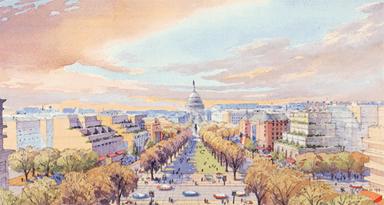
The Washington, D.C. “South Capitol Mall”. Though never formally named, it appeared front and center within and throughout U.S. National Capital Planning Commission (NCPC's) 1997 publication “Extending the Legacy: Planning America’s Capital for the 21st Century".


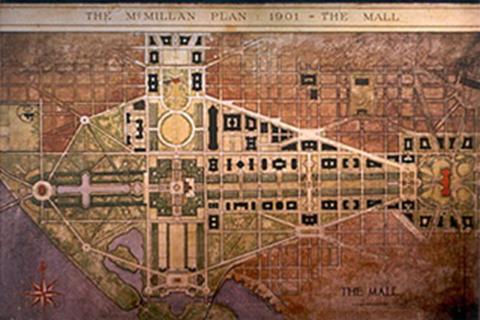
“Extending the Legacy” refers to extending that of Washington, D.C.'s Pierre L’Enfant and McMillan Commission Washington, D.C. planning, with the latter adopting a beaux arts 'city beautiful' mode incoroporating and extending the linear green-way of the National Mall westward with a Reflecting Pool culminating in a Lincoln Memorial with traffic circle.

The 1990s USNCPC 'South Capitol Mall' concept of a new promenade extending due south from the U.S. Capitol building, via a widened South Capitol Street corridor, was the largest addition to the monumental core of Washington D.C. since the West Mall with the Lincoln and Jefferson Memorials, completed respectively by the early 1920s and early 1940s, and a subsequent NCPC "East Capitol Mall" proposal from the 1920s into about the early 1960s.


Both the McMillan plan and the subsequent East Capitol Mall proposal were contemporaneously reported about by newspapers, particularly the former’s West Mall-Lincoln Memorial.

LINK- East Capitol Mall
LINK- East Capitol Mall controversy

In sharp contrast, the 1990s “Extending the Legacy” South Capitol Mall went strangely un-dereported, only starting with being seemingly un-named (the term “South Capitol Mall” and any variant with the word “Mall”, “Promenade” nor “Greenway” appears nowhere within USNCPC's ‘Extending the Legacy’ publications), and is effectively masked by being mis-described via the notably vague yet consistent terminology rather as a "gateway" and "boulevard".

This would be universal throughout the MSM ‘reporting’, but also with the various ‘environmentalist’ organizations, all following such a consistently selective use of terminology to NOT inform about the proposal for the new linear park along the South Capitol axis.

Such a uniformity of focus and lexicon -- for such a signature proposal -- defied any reasonable expectation of the odds, of say any of the past such proposals being so un-der-reported.

It was like there was a giant ‘magnet’ controlling all of these entities in their selections of words and actions, all working together to obscure the issue for a larger agenda, via entities sold to the public for defending the very ideals they must actually betray for the sake of their hidden master[s]. Something with its tentacles throughout the U.S. and other governments, the media, and the various private organizations.

LINK- 1996 MSM non-reporting on proposed South Capitol Mall

LINK- 2003 MSM non-reporting on proposed South Capitol Mall

LINK- 'E' Groups Indifference

The single most significent building saved by the un-der-reported cancellation of the South Capitol Mall is the St Vincent DePaul Church at the northeast quadrant of the South Capitol Street intersection with M Street.


Located at the northeast quadrant of the intersection of South Capitol and M Streets.

Completed and opened in April 1904.

Originally had more green space, now paved over for automobile parking, plus the addition to the rear of a rectory.


While any reporting about "Extending the Legacy" carefully avoided -- via the selective lexicon and omissions -- reporting on the South Capitol Mall, the conflict between "Extending the Legacy" and the Vatican went entirely unreported by the mainstream media.

LINK- Why Was Not The Public Informed?

Addition- Completed 9:14 PM


This is likewise true with the story of the single most significant building to be erected within the South Capitol Mall’s space – Nationals Ballpark Stadium – even as its planning predated the official abandonment of the South Capitol Mall concept in 2003; yet the planning for this stadium was publicized in 2002, and was notably again un-der-reported:

Advocates of major league baseball in the District this week made perhaps their boldest step yet in that city’s long quest for a team, sending the sport’s top executives a 70 page report documenting potential site plans for a stadium, as well as financing options for a project that could cost as much as $522 million.

The report – the result of a six-month, $300,000 site selection study by the D.C. Sports & Entertainment Commission, D.C. Office of Planning and a bid group led by financier Fred Malek – details the potential land use and financial plans for five potential stadium sites. The sites are scattered about the city: two along Massachusetts Avenue NW between Mount Vernon Square and Union Station, a location near the Southeast Federal Center and District waterfront, the RFK Stadium property, and located north of Union Station near New York Avenue NE.

Eric Fisher, The Washington Times November 15, 2002 District Outlines

Interesting how the South Capitol site is described with the most vague terms “a location near the Southeast Federal Center and District waterfront”.


Such un-reporting, like that for the Extending the Legacy South Capitol Mall and its defying the odds of mislabeling things consistently, suggests this was all the baby from rather high up the political pyramid, connected to the entities being employed for its facilitation: the D.C. Sports and Entertainment Commission; Major League Baseball, and the powerful Washington, D.C. law firm of Covington & Burling.

Who Got Involved

http://wwwsouthcapitolstreet.blogspot.com/2006/04/who-got-involved-2002-efforts-to-bring.html

http://wwwsouthcapitolstreet.blogspot.com/2006/04/national-capital-planning.html


Michael Tuohey, then head of the D.C. Sports and Entertainment Commission, is well connected to this pinnacle of political power, known as the Roman Catholic Church.

He has been a member of the board of trustees of three Roman Catholic Schools: Jesuit Academy, Gonzaga High School, and Catholic University of America (CUA)- the latter with others including Washington Archbishop Theodore McCarrick (retired May 2006), New York Cardinal Edward Egan (retired 2009), and Egan’s replacement Timothy Dolan:

http://publicaffairs.cua.edu/factbook/trustees.htm
Board of Trustees*
Carl A. Anderson, New Haven, Conn.
Richard D. Banziger, New York, N.Y.
Nancy J. Bidwill, Phoenix, Ariz.
Bertha S.Braddock, Alexandria, Va.
Bishop Michael J. Bransfield, Wheeling, W.Va.
Archbishop Raymond L. Burke , St. Louis, Mo.
Timothy R. Busch, Esq., Irvine, Calif.
Archbishop Charles J. Chaput, O.F.M. Cap., Denver, Colo.
Paul J. Chiapparone, Frisco, Texas
Robert F. Comstock, Esq., Washington, D.C.
Robert E. Craves, Issaquah, Wash.
Robert J. Crimmins, Huntington, N.Y.
Bishop Edward P. Cullen, Allentown, Pa.
Leo A. Daly III, Washington, D.C.
Bishop Daniel N. DiNardo, Houston, Texas
Archbishop Timothy M. Dolan, Milwaukee, Wis. [succeeded Egan]
David A. Donohoe, Esq., Vice Chairman, Washington, D.C.
Bishop Thomas G. Doran, Rockford, Ill.
Cardinal Edward M. Egan, New York, N.Y.
Archbishop John C. Favalora, Miami Shores, Fla.
Frederick R. Favo, Oakmont, Pa.
Sister Margaret Mary Fitzpatrick, S.C., Sparkill, N.Y.
Archbishop Harry J. Flynn, St. Paul, Minn.
Cardinal Francis E. George, O.M.I., Chicago, Ill.
Stephanie Germack-Kerzic, Grosse Pointe Farms, Mich.
Archbishop José H. Gomez, San Antonio, Texas
Archbishop Wilton D. Gregory, Atlanta, Ga.
Ray J. Hillenbrand, Rapid City, S.D.
Michael P. Hoffman, New York, N.Y.
Cardinal William H. Keeler, Baltimore, Md.
Bishop William E. Lori, Chairman, Bridgeport, Conn.
Cardinal Roger Mahony, Los Angeles, Calif.
Cardinal Adam J. Maida, Detroit, Mich.
Cardinal Theodore E. McCarrick, Chancellor, Washington, D.C.
William A. McKenna Jr., Saugerties, N.Y.
Sandra A. McMurtrie, Bethesda, Md.
Bishop William F. Murphy, Rockville Centre, N.Y.
Archbishop John J. Myers, Newark, N.J.
Very Rev. David M. O’Connell, C.M., President, Washington, D.C.
Archbishop Sean P. O’Malley, O.F.M. Cap., Boston, Mass.
William G. Parrett, New York, N.Y.
Bishop Joseph A. Pepe, Las Vegas, Nev.
Neil J. Rauenhorst, Tampa, Fla.
Cardinal Justin F. Rigali, Philadelphia, Pa.
Andrea Roane, Washington, D.C.
Monsignor Walter R. Rossi, Washington, D.C.
Timothy C. Scheve, Towson, Md.Rodger D. Shay, Miami, Fla.
Mark H. Tuohey III, Esq., Washington, D.C.
Bishop Allen H. Vigneron, Oakland, Calif.
Frank G. Persico, Secretary of the Board, Fulton, Md.


Archbishop Theodore McCarrick’s name appears as follows in an article in The Washington Times, September 18, 2005:

OK, we know you have connections. An office overlooking the inaugural parade. Access to a private jet. A drink named after you at Zola. A booth at the Palm restaurant. Your face on the wall at the Palm.

But have you yelled "Beer man" next to Secretary of State Condoleezza Rice? Have you spilled popcorn on James Carville? Have you elbowed Tim Russert during the T-shirt toss or tripped over Al Hunt's loafers on the way to the men's room or cut in the hot-dog line in front of Judy Woodruff?

If so, you belong to an exclusive club of baseball fans -- high-priced lawyers, lobbyists, politicos and media types -- who have made RFK Stadium power
central during the balmy nights of late summer. The Nationals may win or lose,
but it's never a bad night behind the dugouts.

Mayor Anthony A. Williams, pundit Mark Shields and AOL emeritus Jim Kimsey all have season tickets. Guests spotted over the summer have been rocker Dave Matthews; rapper Ludacris; Supreme Court Justice Antonin Scalia; actor Kevin Sorbo; White House spokesman Scott McClellan; and athletes Art Monk, Carlton Fisk, Sonny Jurgensen, Joe Theismann and Daryl Green. Fred Malek, who is head of the Washington Baseball Club, a consortium hoping to buy the team when Major League Baseball holds an upcoming auction, has tickets two rows up behind first base.
“It gives you 81 opportunities to do this -- and the seats aren't so darn expensive that people can't accept them as a gift. It falls within the limits," he says. (He is referring to the $50 limit on gifts people in government can accept.)

"People do go to be seen," says a K Street lobbyist who often entertains out-of-town guests with seats at RFK. "Let's face it, there are very few things like this for middle-aged guys like me to do. Washington is venue-starved."

And if you've nibbled on lamb chops in D.C. Sports & Entertainment Commission Chairman Mark Tuohey's private suite, you know you're not in Baltimore anymore, eating soggy crab cakes and dreading that hour long ride home. (Mr. Tuohey also bought up a truckload of hot dogs and serves them to his guests. He also gives them to the team after each game.)

Washington finally has a new venue for schmoozing and deal-making, and by all accounts, the results have been formidable.

"It's all about building relationships," Mr. Tuohey said one humid night in his large suite, where he has entertained guests from Capitol Hill as well as Cardinal Theodore McCarrick and Eddie Jordan, coach of the Wizards. "Is this a good place to do that? The answer is yes."

Federal Reserve Board Chairman Alan Greenspan and his wife, TV journalist Andrea Mitchell, recently sat behind home plate as guests of journalists Al Hunt and Judy Woodruff. Colin Powell, the former secretary of state, has sat on the hard orange seats. So have White House Chief of Staff Andrew Card, Mary Matalin and President Bush's political architect, Karl Rove. (Mr. Bush himself has attended two games, sitting in the President's Box.)


The corporate entity of Major League Baseball was the tool to enforce the twin dictates of locating the stadium right next to South Capitol Street – essentially extending the St Vincent DePaul Church building line southward -- and its completion by March 2008, as conditions of the agreement crafted through Covington & Burling for the Washington Nationals franchise, reportedly via a vote of the MLB team franchise owners.


It gets to be called W stadium- double meaning referring to both the Washington Nationals and to a ‘kick-name’ of then U.S. President Bush, a former part owner of the Texas Rangers MLB team franchise, and whose last chance to throw the opening ball as U.S. President, a custom since the early 1900s, was March 2008.


"W"s Nationals Ballpark Stadium's 1st biggest VIP was Pope Benedict XVI, who held a huge outdoor mass on April 17, 2008.


Writing publicly on this then upcoming event, Washington Post real estate reporter Jacqueline Dupree (JD) said it best:


With the Douglass Bridge viaduct now demolished, the views looking north on South Capitol Street easily encompass both the ballpark and the Capitol dome. The Administration building at right is now topped out. Note the knife-edged clubhouse to the right. (10/21/07)

Above photo and caption by Washington Post real estate reporter Jacqueline Dupree http://www.jdland.com/dc/stadium.cfm?tab=no2


Looking across the roof of the under-construction admin building (or, as I call it, the bow of the S.S. Nationals), toward South Capitol Street and points south, including the new intersection at South Capitol and Potomac. I'm King of the World!!!

(9/1/07)
Above photo and caption Washington Post real estate reporter Jacqueline Dupree http://www.jdland.com/dc/stadium.cfm?tab=no3

Dupree hit the nail on the head with that caption of the view from that triangular shaped clubhouse, with the phrase she selected “King of the World”

She furthermore made a great analogy of it as the ‘bow of the S.S. Nationals’ and in the context of an event filled with VIPs in April 2008. Its a quite clear allusion of the political arrogance this structure reflects, as roughly analogous to the part of the Titanic that hit the iceberg.

It's an arrogance that can be quite apparant to anyone seeing and comprehending that 1990s Extending the Legacy South Capitol Mall proposal, the utter lack of reporting, discussion, debate, and that St. Vincent DePaul Church at South Capitol and M Street, as the only building fronting South Capitol Street saved by the mall’s cancellation as a monumental indicator of the continuing cloaked rule.

A White House Sell Out
http://wwwfreespeechbeneathushs.blogspot.com/2006_10_01_archive.html