Showing posts with label Farnese Family. Show all posts

Saturday, January 7, 2017

The Unlucky Number of Families That Rule Via the Vatican etc.

Usually notoriously overlooked by those who focus upon the Rothschilds

Ceasare Borgia
A representation of the Pretense of Christianity
of the continuing mystery Babylon


Both this Black Pope and the white Pope aren’t of Papal Bloodline, they are both commoners.

I’ve named the most powerful families on the planet. I’ve named the Grey Pope the one inbetween the white and black but unseen Saturnalian Brotherhood – The Real 13 Zoroastrian Bloodlines of the Illuminati
---

The Farneses helped found the Jesuit Order.

The recent King of Spain is a member of the Farnese family.


http://continuingcounterreformation.blogspot.com/2009/08/papist-farnese-family.html

Friday, January 24, 2014

The New York Times On Spain's King Juan Carlos

a descendant of the infamous Farnes family
which started the Satanic Jesuit Order
and was the likely culprit behind apostate Nationals Stadium in Washington D.C.


MADRID — You know a monarchy is in trouble when the queen is jeered at the Royal Theater, of all places, and by a classical music audience. This happened to Queen Sofía of Spain last year in Madrid — a scene then repeated elsewhere with other members of the royal family.

A recent poll put support for the Spanish monarchy at a historic low: More than 60 percent of Spaniards want King Juan Carlos to step down. And all this is happening amid a series of scandals involving the royal household, the most serious of which are corruption charges against the king’s son-in-law, also involving the king’s daughter, Princess Cristina.

What is astonishing about this turn of events is that the Spanish monarchy was once deemed rock-solid. King Juan Carlos was praised both inside and outside Spain as a model monarch; the man who in the 1970s steered the country’s complicated transition from the military rule of Gen. Francisco Franco to parliamentary democracy; the king who stood up to an attempted military coup in 1981. He was said to be loved by his people, who were grateful for what he had done — and it was true.

What has changed? Not the king, but the country. Popular opinion has changed so fast and so dramatically that it is perhaps not surprising the monarchy has failed to keep pace.

Two things transform a people more than any other: war and economic hardship. War was what shaped the Spain that loved King Juan Carlos. It was the haunting memories of the 1936-39 civil war that won people over to the monarchy after Franco’s death in 1975: Few were monarchists at heart, but the institution seemed to offer a safe path to stability.

Nearly four decades later, economic privation is creating a new Spain. The financial crisis hit the country hard, leaving a trail of home repossessions, draconian cutbacks to public services and low wages. Last year, there were fears of a complete meltdown of Spain’s banking system, avoided only at the taxpayers’ expense. The unemployment rate stands at a staggering 27 percent.

All this has made Spaniards angry at the establishment and hypersensitive to the misuse of public money. That’s why, after they heard that the king’s son-in-law was being investigated for fraud on a grand scale, their blood boiled. Public esteem for the monarchy started to decline. 

The real disaster came in April 2012. The country learned that the king had broken his hip while hunting elephants in Botswana, reportedly as the guest of a Syrian-born Saudi magnate. He was also — unusually, for a private trip — unaccompanied by the queen. The affair opened a Pandora’s box of awkward questions — from the state of the royal marriage to the nature of the king’s business dealings.

Above all, people were livid at the insensitivity of his shooting of pachyderms while the country was reeling under harsh austerity. The fact that the king was also a patron of the World Wildlife Fund did not help. (Soon after, the conservation group unceremoniously sacked the monarch.) To this day, the mere mention of an elephant in Spain sends people into an uproar over the king.

The irony is that Juan Carlos had been hunting and doing business around the world all his life. Most people simply didn’t know. The king and his family were shielded from criticism by an informal media covenant, their sources of income kept secret in part.

With hindsight, this proved to have been a mistake. The sudden contrast between image and reality only made disclosure all the more embarrassing. Now, thanks to the scandal, there is more transparency in the royal household, but probably not enough. Its official budget approved by Parliament is known to be around 8 million euros, but this is widely believed to represent a small part of the family’s total worth.

To his credit, the king apologized for his ill-fated safari. Yet he lacked experience in apologizing — and his people, in forgiving. It was simply awkward, and it’s become increasingly awkward as the king seeks to regain the favor of his subjects by multiplying his public appearances in spite of a series of surgeries from which he has not fully recovered.


As to the future, many believe that the appearance in court of Princess Cristina, regardless of the outcome, could be a cathartic moment that would allow a reset. That seems naïve. The king’s men pin their hopes on an early end to the economic hardship and a shift in the general mood that would bring back the Spain of yore, more tolerant of housing bubbles and royal blunders.

That could well occur: Spaniards who change their minds are not unheard of. But others speak openly of Juan Carlos’s abdication. They note that polls also show there is a chance that Crown Prince Felipe, young and untainted, could restore the monarchy’s lost prestige.

Juan Carlos has made it clear he will not even consider stepping aside, but even on this, ill luck dogs him: The abdication last year of Queen Beatrix of the Netherlands, soon followed by King Albert II of Belgium renouncing the crown, renewed the pressure. Rather cruelly, even the pope stepped down. And yet, Juan Carlos remains adamant: He wants to be the king he was.

That’s not the problem: He is the king he was. It’s his kingdom that is no longer the same.
Miguel-Anxo Murado is a Spanish author and journalist

Tuesday, September 3, 2013

SAUDI - FARNESE Puppet Barack Obama


SAUDI Romish Yoked Governments to lead us to war
http://continuingcounterreformation.blogspot.com/2009/06/romish-masonic-clerical-fascist.html

PRESIDENT OBAMA: This is my first visit to Saudi Arabia, but I've had several conversations with His Majesty. And I've been struck by his wisdom and his graciousness. Obviously the United States and Saudi Arabia have a long history of friendship, we have a strategic relationship. And as I take this trip and we'll be visiting Cairo tomorrow, I thought it was very important to come to the place where Islam began and to seek His Majesty's counsel and to discuss with him many of the issues that we confront here in the Middle East.

The day King Abdullah meets Obama……….KJC sends 2 messages to King Abdullah. http://www.isria.com/pages/3_June_2009_93.htm

Saudi Arabia: Custodian of the Two Holy Mosques Receives Two Messages From Spanish King, President of the Spanish Government

The Custodian of the Two Holy Mosques, King Abdullah bin Abdulaziz Al Saud received today two messages from Spanish King Juan Carlos and President of the Spanish Government Jose Luis Zapatero.
http://www.barcelonareporter.com/ind...peace_process/

The government of Rodriguez Zapatero wants to leave as a legacy of his presidency of the EU a strong foundation on which to lay the foundations of a lasting peace between Israel and the Palestinian National Authority and, ultimately, the creation of a new state and the first step towards achieving that end will be a summit that the President will have with leaders of Arab countries involved in the peace process to be held next autumn In Cairo.

Sunday, August 9, 2009

Papist Farnese Family

user posted image

From the UnHived Mind:
http://z10.invisionfree.com/The_Unhived_Mind_II/index.php?showtopic=6929
QUOTE House of Farnese

The Farnese family was an influential family in Renaissance Italy.

Its most important members include Pope Paul III and the Dukes of Parma.

Several important architectural works and antiquities are associated with the Farnese family, either through construction or acquisition, including the Farnese Marbles. These include the Palazzo Farnese in Rome and the Villa Farnese in Caprarola.

Origins


The family could trace its origins back to around AD 984 and took their name from one of their oldest feudal possessions - Castrum Farneti. There has been some debate as to the origins of the name Farnesti/Farnese. Some suggest that it derives from the vernacular name for an oak found in the region, the Farnia (Quercus robur), but others have held that the name owes its origins to the Fara, a term of Lombard origin used to denote a particular social group. In the 12th century they are recorded as minor feudataries in the area of Tuscania and Orvieto, several members holding political positions in the latter commune. One Pietro defeated the Tuscan Ghibellines in 1110 and, most likely, fought against the Italo-Normans in 1134. His son Prudenzio was consul in Orvieto and defeated the Orvieto Ghibellines backed by Siena; another Pietro defended the town against Emperor Henry VI.

In 1254 one Ranuccio defeated Todi's troops and fought for Pope Urban IV against Manfred of Sicily. His son Niccolò was in the Guelph army in the Battle of Benevento (1266).

The Farnese returned in Tuscia (southern Tuscany-northern Lazio) in 1319, when they acquired Farnese, Ischia di Castro, and the Castles of Sala and San Savino. In 1354 Cardinal Albornoz, in return for the family's help in the war against the Papal riotous barons, gave them the territory of Valentano. In this period they fought against the fierce Papal rivals, the Prefetti di Vico. In 1362 Pietro Farnese was commander-in-chief of the Florentine army against Pisa in the war for Volterra. Six years later Niccolò Farnese saved Pope Urban V from the attack of Giovanni di Vico, first in the castle of Viterbo and then in that of Montefiascone. The loyalty to the Papal cause granted to the Farnese the confirmations of their possessions in the northern Lazio and a series of privileges which raised them as the same level of the more ancient and powerful Roman barons of the time (Savelli, Orsini, Monaldeschi, Sforza of Santa Fiora).

Rise of the family

The family substantially increased its power in the course of the 15th century, as their territories reached the southern shore of the Lake Bolsena and Montalto, especially thanks to Ranuccio the Elder. He was commander-in-chief for the neighbouring Siena against the Orsini of Pitigliano and, after his victory, received the title of Senator of Rome. His son Gabriele Francesco originated the "military" line of the family, which however disappeared after three generations.

Pope Paul III with his cardinal-nephew Alessandro Cardinal Farnese (left) and his other grandson, Ottavio Farnese, Duke of Parma.

The Farnese's Palazzo della Pilotta in Parma.Ranuccio's son Pier Luigi married a member of the ancient baronial family of the Caetani (that of Pope Boniface VIII), thus giving the Farnese further importance in Rome. His daughter Giulia, who was a mistress of Pope Alexander VI, further expanded the Roman fortunes of her family. She granted her brother Alessandro the title of cardinal; under Alexander's successor Julius II he became governor of the Marca Anconetana and, in 1534, he managed to become pope as Paul III. Among his most notable feats, there were an unprecedented nepotism and the establishment of the Council of Trent.

Dukes of Castro and Parma

Paul III named his son Pier Luigi gonfaloniere of the Roman Church and Duke of Castro, granting him the possession of a state encompassing the Farnese lands from the Thyrrenian Sea to the Lake of Bolsena, as well as the county of Ronciglione and many other smaller fiefs.

In 1545 Paul was also able to carve out, from territories once belonging to the Papal States, another state in northern Italy for his son, the Duke of Parma and Piacenza. Two years later Pier Luigi was assassinated by his new subjects under Spanish mandate. Despite Charles V moves, the pope reacted and soon established Ottavio, Pier Luigi's son, on the ducal throne. Paul III died in 1549, his political role in the curia handed over to his grandson Alessandro, who was an influential cardinal until his death in 1589.

The Duchy of Parma continued to be ruled by the Farnese until the 17th century, but that of Castro went lost in 1649 under the military assault launched by Pope Innocent X. Despite the lack of the territories in central Italy, the Farnese court in Parma under duke Ranuccio II was one of the most splendid in Italy.

As the small state fell under the Spanish control and influence, the family lost Parma and Piacenza in 1731 as the last duke Antonio Farnese died heirless.

Most notable members

Pietro Farnese (dates unknown)
Ranuccio Farnese (1390—1450)
Pier Luigi Farnese (1435—1487)
Pope Paul III, born Alessandro Farnese (1468—1549)
Giulia Farnese, mistress of Pope Alexander VI and sister of the above Alessandro Farnese
Pier Luigi Farnese, first Duke of Parma (1503—1547)
Alessandro Farnese, Cardinal (1520—1589)
Ottavio Farnese, second Duke of Parma (1524—1586)
Ranuccio Farnese, Cardinal (1530—1565)
Alessandro Farnese, third Duke of Parma (1545—1592)
Ranuccio I Farnese, fourth Duke of Parma (1569—1622)
Odoardo Farnese, fifth Duke of Parma (1612—1646)
Ranuccio II Farnese, sixth Duke of Parma (1630—1694)
Francesco Farnese, seventh Duke of Parma (1678—1727)
Antonio Farnese, eighth Duke of Parma (1679—1731)
Elizabeth Farnese, Queen of Spain, wife of King Philip V, mother of Charles III (1692—1766)

Sources

Annibali, Flaminio Maria (1817-1818). Notizie Storiche della Casa Farnese. Montefiascone.
del Vecchio, Edoardo (1972). I Farnese. Rome: Istituto di studi romani editore.
Drei, Giovanni (1954). I Farnese grandezza e decadenza di una dinastia italiana. Rome: La Libreria dello Stato.
Nasalli Rocca, Emilio (1969). I Farnese.

user posted image

user posted image
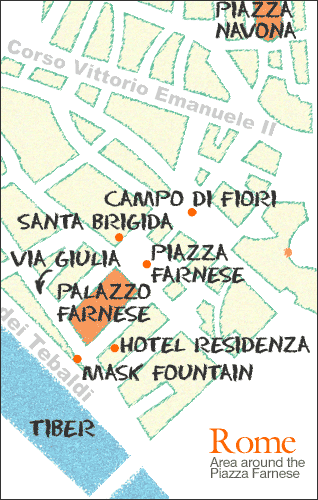
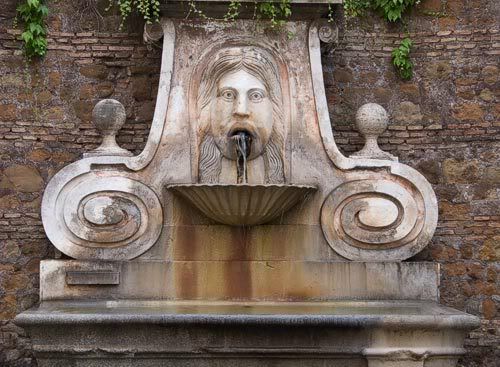
Farnese Fountain

user posted image
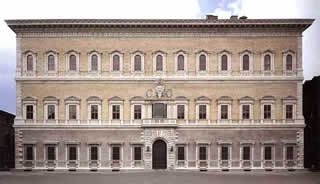
Palazzo Farnese

user posted image
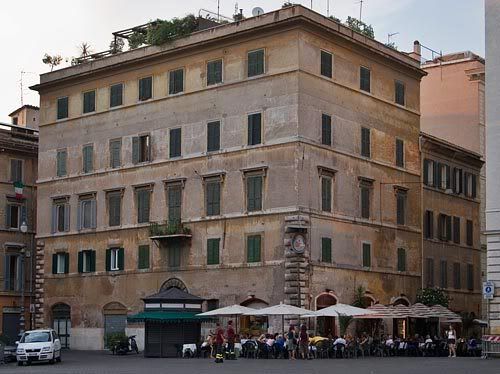
Farnese Cafe

user posted image
Farnese Hotel

user posted image
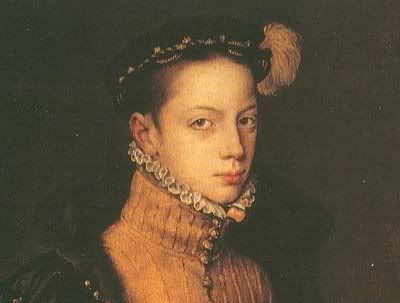
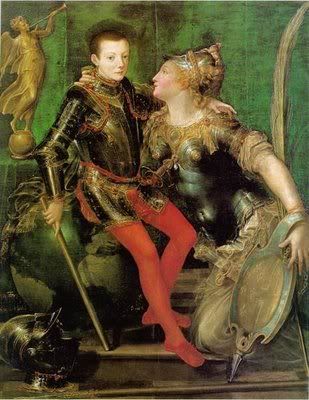
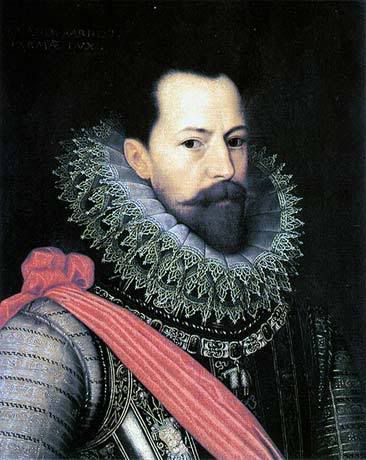
Alessandro Farnese

user posted image
Alessandro Farnese

user posted image
Alessandro Farnese

user posted image
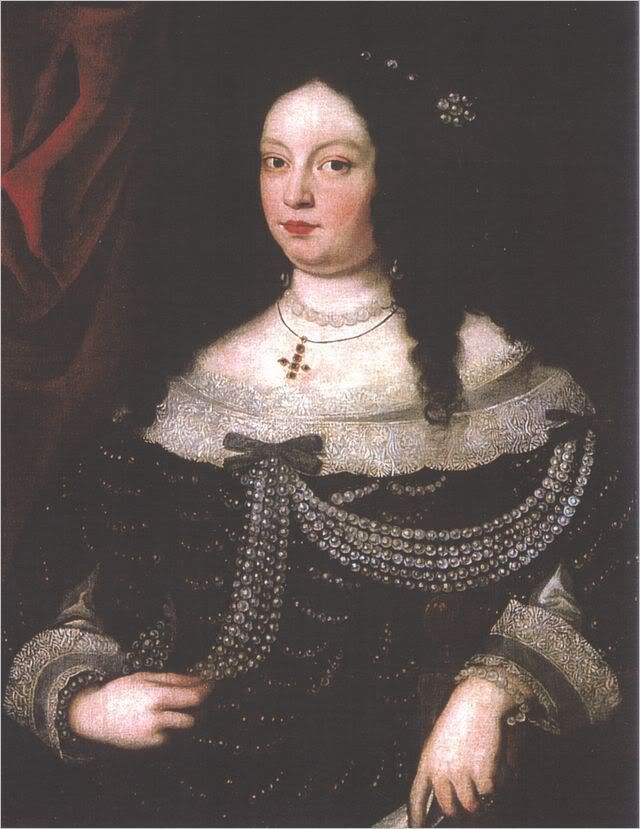
Vittoria Farnese
Seconda moglie di Francesco I d'Este, duca di Modena e Reggio col dominio della Garfagnana.
Duchessa dal 1648 al 1649.
Ritratto di Vittoria Farnese, anonimo del sec. XVII. Modena, Banca Popolare dell'Emilia Romagna

user posted image
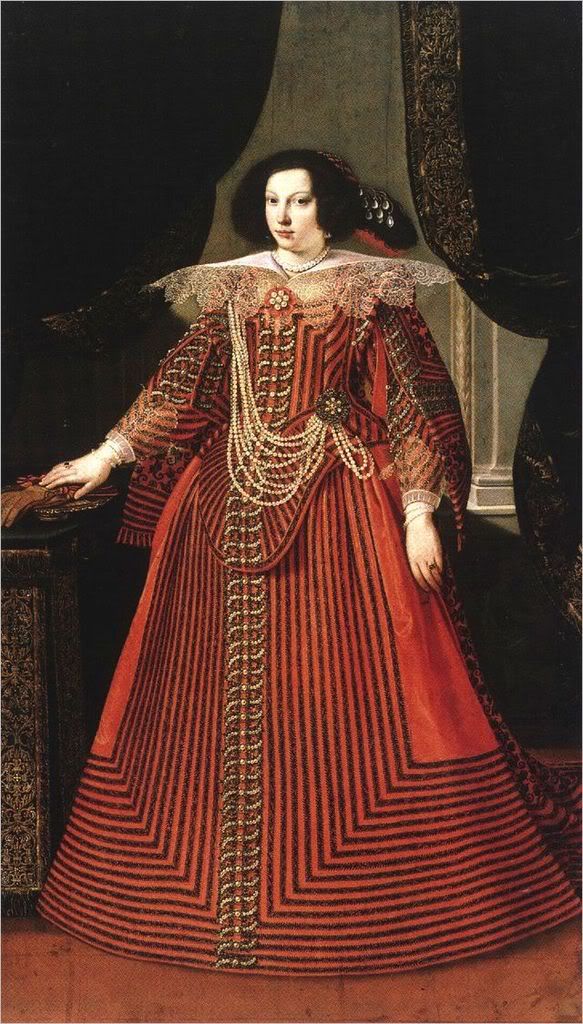
Maria Farnese
Prima moglie di Francesco I d'Este, duca di Modena e Reggio col dominio della Garfagnana.
Duchessa dal 1631 al 1646.
Matteo Loves. Ritratto di Maria Farnese, Ginevra, Museo delle Arti e della Storia

user posted image
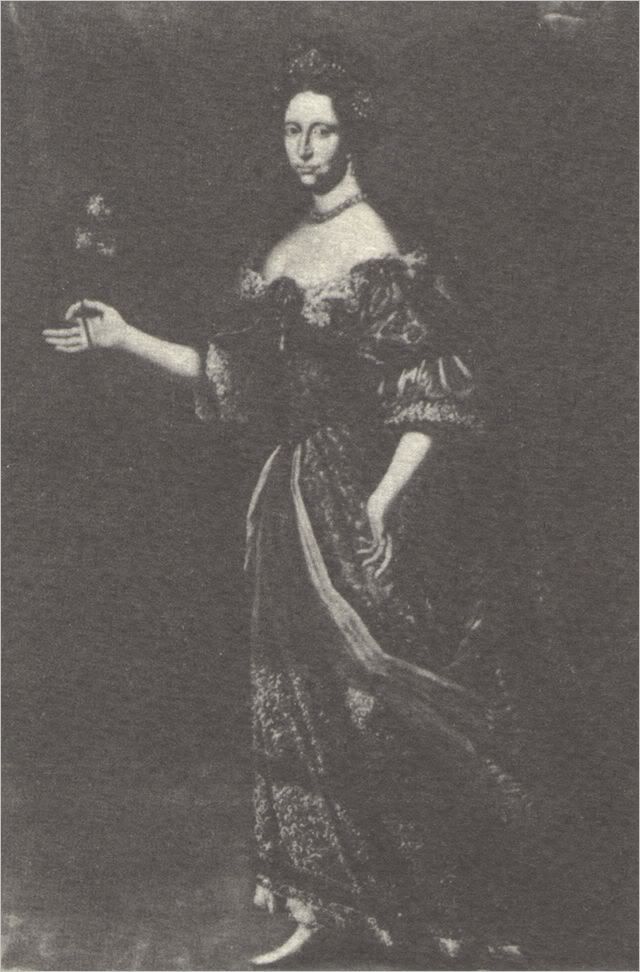
Margherita Farnese
Moglie di Francesco II d'Este, duca di Modena e Reggio col dominio della Garfagnana.
Duchessa dal 1692 al 1694.
Ritratto di Margherita Farnese, autore ignoto. Parma, Galleria Nazionale.

user posted image
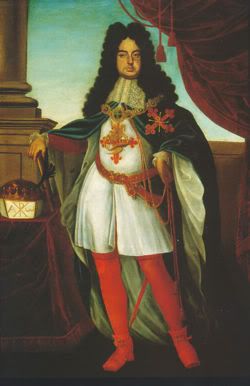
Francesco Farnese

user posted image
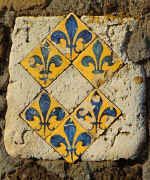
I sei gigli azzurri in campo oro dei Farnese (Torre campanaria della Chiesa Collegiata di Gradoli)(1)

user posted image
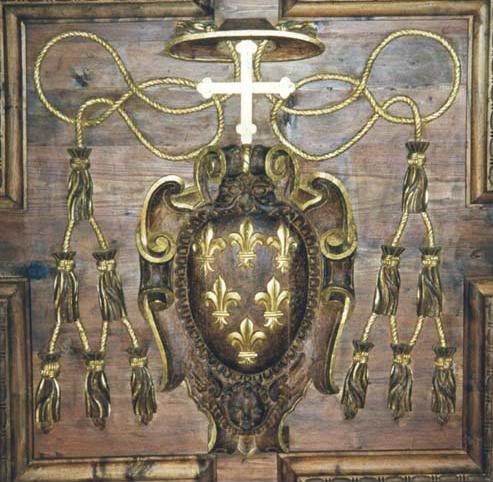
Arms of cardinal Farnese on a ceiling decoration, palazzo Farnese, Caprarola

user posted image
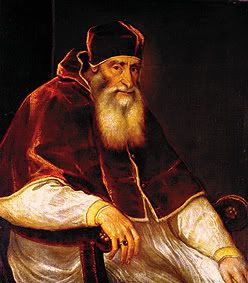
Pope Paul III. Farnese (1468-1549)


Rome's Pentagon Forerunner to Washington, DC

user posted image


From the UnHived Mind:
http://z10.invisionfree.com/The_Unhived_Mind_II/index.php?showtopic=6929

I have just concluded a trip to the Villa Farnese which was the ORIGINAL 'Pentagon' in Caprarola. What is amazing is that they arrogantly and proudly admit to controlling Washington D.C. and that the building was the original prototype. It was created as a secret and hidden meeting place for Cardinals to command their legions in Germany to counter the reformation and to plan the 30 years war. In its map room, we you can visit as a tourist, there are 5 maps of the United States dated to before the American Revolution 1600s. One of these includes a future capital where washington is today.

THESE PEOPLE DESIGNED AMERICA!
THEY LAID OUT WHERE EVERYTHING WOULD BE BEFORE IT CAME!


......Then, the brainwashed tour guide told us that: "Oh my, it's a very strange coincidence that the future capital would be positioned there 'between Maryland and Virginia' and that the Pentagon is on the map too. The Farnese might have been psychic. After all they were popes"

Pyschic, MY ASS --- They built Washington! and its even got the Washington Monument on the same map!

check this out; Washington D.C. is between VIRGIN (ia) & MARY (land)

These Jesuits admit to EVERYTHING! We are the stupid ones, in that we just don't care. They get away with everything. Look at the inscription on Ignatius Loyola's tomb: What does it read: ' CARDINAL ALEXANDER F A R N E S E '

http://en.wikipedia.org/wiki/Alessandro_Farnese_(cardinal) http://en.wikipedia.org/wiki/Villa_Farnese#History http://en.wikipedia.org/wiki/Pope_Paul_III http://en.wikipedia.org/wiki/The_Pentagon

ANYBODY WHO THINKS THE JESUITS DON'T CONTROL WASHINGTON ARE SIMPLY RETARDED PERIOD!!!

THE FARNESE RAN THE JESUIT ORDER AND STILL DO TODAY!

THE FARNESE CREATED THE FRENCH REVOLUTION!
(Look at where the current French Embassy is in Rome: my my, it is in Piazza Farnese and the Embassy is Palazzo Farnese or Farnese Palace)

THE 'FARNESE' NAME IS WHAT IS ON THE TOMB OF LOYOLA - they commissioned him

THE FARNESE BUILD THE PENTAGON(U.S. Dept. of Defense) IN WASHINGTON

THE FARNESE CONTROL WASHINGTON AND THE US MILITARY

WAKE UP PEOPLE!!!
http://en.wikipedia.org/wiki/Farnese

After the meeting with high-level illuminati's I wasn't able to photograph what I wanted to prove to you guys 'Martin Luther' wasn't a Rosicruscian.

In this Villa there is a famous 1600's fresco inside it's main lodge, depicting 'Martin Luther' and the Farnese war against him and his followers.

You can't even find the fresco at the Villa Farnese gift shop. I begged and begged them, and they plain-out refused the photography.

-Count Vivian Vivaldi III


I found it only in the Italian page of Wikipedia, the German and English ones dont mention about the Council of Trent fresco in the "anteroom of the Coucil", a room near the room of the cardinal and the room of the celebrities, the "Stanza dei Fasti Farnesia" (= room of the Farnese pomp). In the Council room there's also a paint with Paul Farnese III the pope of the Council clear:

QUOTE
Qui sono collocate la camera da letto del cardinale, detta Camera dell’Aurora, e la camera delle celebrità, detta Stanza dei Fasti Farnesia, con gli affreschi che riassumono la vita dei Farnese. Oltre è posta l’Anticamera del Concilio, che prende il nome dall’affresco del Concilio di Trento; nella stessa stanza vi è un affresco di Paolo III. Successivamente si apre la Sala di Ercole, che prende anch'essa il nome dagli affreschi presenti.


A pic of the global map is possible to see in the page:

http://www.tusciaitalia.it/itinerari/farne...n_caprarola.htm

Related arguments - see from Willinger's blog "Save the Capital":

Monday, June 11, 2007
Benjamin Franklin's Mysterious SunFire (See VIDEO)

http://savethecapitalcity.blogspot.com/200...us-sunfire.html

user posted imageuser posted image

Best regards etc.Avles

And concerning the masonic intersection of power of , Washington, D.C.'s most profound secret alluded to by Ovason:

http://continuingcounterreformation.blogspot.com/2008/08/college-frats-as-satanic-romish-masonry.html

Just follow the links.

The Original Pentagon of the Counter Reformation


From the UnHived Mind
http://z10.invisionfree.com/The_Unhived_Mind_II/index.php?showtopic=6929
Villa Farnese Caprarola

user posted image

Risponde con una soluzione architettonica particolarissima e una peculiare situazione sociale,in quanto e` stato costruito per rappresentare visivamente il potere feudale dei Farnese su quelle terre,oltre che come aristocratica residenza extraurbana.Si deve al cardinale Alessandro junior,come si e' detto,l'iniziativa risalente al 1556,di riprendere la costruzione della residenza Farnesiana di Caprarola,convertendo pero' l'originaria idea della fortezza in quella di una elegante e confortevole residenza umanistica,il progetto fu affidato a Jacopo Barozzi di Vignola. La costruzione deli Orti Farnesani fu affidata intorno al 1565 utilizzando per i terrazzamenti la terra di scarico delle fondamenta della chiesa del Gesu',e venne conclusa solo nel terzo decennio del Seicento sotto la direzione di Giacomo Del Ducae quindi di Gerilamo Rainaldi,entrambi attivi anche a Caprarola. Il Vignola e' riuscito a conferire al complesso una straordinaria unitarieta',riadattando con grande abilita' gli elementi marziali,e a ottenere una perfetta integrazione tra gli spazi architettonici coperti a quelli all'aperto ai primi adiacenti,e che da essi si irradiano,fungendo da elementi di raccordo tra l'edificio e il paesaggio circostante,quello costruito all'antistante borgo e quello naturale del colle che incornicia il complesso alle spalle e dalla campagna che lo delimita ai fianchi.


This is where the Italian aristocratic family of Farnese (Nephilim) funded the Jesuit Order and this is where the many Jesuit war rooms were located in which the counter-reformation was directed and Luther was fought. The war room in Borgo Santo Spirito is of lesser importance than this building, built by a Cardinal (Farnese?), and which was the model for the Pentagon in Washington DC (!) Together with the FED being modeled after the Roman Catholic Church this piece of bombshell information seems to be yet another piece of the puzzle called Roman Catholic Control over the World. -Phil
Jesuit Superior General #1


Jesuit Superior General #2


Jesuit Superior General #3


Jesuit Superior General #4


Jesuit Superior General #5


Wednesday, August 5, 2009

The Original Pentagon?

by the Jesuit founder-funder family Farnese

http://www.italy-weekly-rentals.com/webpages/ACCESSORI/UPPERLATIUM/CAPRAROLA.htm

A Little History

Over a rocky spur, five hundred meters on Sea level, the construction of the Farnese Palace, started in 1525, authentic architectonic jewel and great work, initially thought as fortress by cardinal Alessandro Farnese ( later the Pope Paolo III ), and projected by Antonio Sangallo il Giovane, was realized in only 27 years, completed by his grandson, The cardinal Alessandro Juniore, son of Pier Luigi Farnese (Duca di Castro) and grandson of Paolo III.

The Farnese needed a residence worthy of their acquired dukedoms.
The projects by Antonio Sangallo il Giovane and Baldassarre Peruzzi architects of what initially had to be a pentagonal fortress, was transformed by the Vignola in a magnificent palace.
He transformed the bastions at the fortress corners in airy terraces from which enjoying the panorama on the surrounding campaign, lightening the austere building with scenic ramps to access the palace, courtyards and garden.

The small medieval village below was restructured and connected to the palace through a rectilinear street axis.

The best artists, the most illustrious names of the age - among them the Zuccari brothers, entrusted with the direction of works inside - were invited.
Antonio Tempesti, Giovanni Il Vecchio, Giovanni Antonio Da Varese, Raffaellino da Reggio, Giacomo Del Duca and Jacopo Bertoia worked to realize the magnificent summer residence, a real expression of the new feudal power of the Farnese family, realizing an abundant heraldic, mythological and celebrative repertoire stiff to the exaltation of the family, as appears in the halls.

Immediately, from the entrance hall, it shows the originality of the Palace.
The splendid stone staircase that from the basements develops up to the noble floor - allowing the Duke to approach directly with the horse the upper floors of the palace - is supported by thirty gentle Doric columns and with allegorical frescoes dedicated to the Farnese family on the walls.

One after the other come the halls, rich of delicate architectonic elements and frescoes on walls and ceilings, some of which skilfully painted in perspective in order to simulate the vault.

The Farnese dedicated a large part of their revenue to the decoration of the palace.

Very beautiful the Sala dei Fasti Farnesiani (the Farnese Magnificence hall) the Sala dell'Aurora and the Sala del Mappamondo (mappamondo = world-map), one of the finest

rooms where all the walls are painted with maps of the four continents (the map shows also the Antarctic Continent), Palestine and Italy and with a large map of the world.
A thin appeal pervades the visitor while walking on the original XVI century cotto floors.

THE GARDEN
Two bridges connect the palace to the immense Italian garden

and to the park on the back side of the palace.
The Summer and the Winter gardens, superior example of Italian garden, encircles the Palace.

The Fountains, grottos, nymphaeums and numerous water games, the monumental Fountains and statues enrich the way between hedges and large staircases.

On the top of the hill, over 600 meters on the Sea level, at the end of a long path, encircled from the park, is the Mansion of Piacere (il Casino Del Piacere), with its water staircase, fountains, terraces, a casino and loggia.

This was the shelter of the Cardinal Alexander during the great warmth in the summery periods.


Caprarola (Km. 16 from Viterbo) is located in a dominant position overlooking the Tiber valley and the other fiefs of the Farnese family.

Recently has been object of study from part of the School of Architecture of Prince Carl of England. In 1995, he has come to visit its students, during their stage in Caprarola.
Few km far , the splendid scene of the Vico Lake, Regional Natural Park since 1982.


Caprarola also preserves the church of S. Maria della Consolazione as ordered by Odoardo Farnese. It is of great architectural value.

In the courtyard at Palazzo Farnese, from June to September, there are Renaissance music concerts (by order of the Farnese).

To be visited:
Santa Teresa Church

The Church, part of an entrusted religious complex of the Carmelitani, was finished in 1623 and entitled to S. Maria and S. Silvestro. Subsequently the church was dedicated to S.Teresa of the Carmelitane Order.
The building location outside of the town is not accidental but, as for other elements of the
city structure, has a tightened geometric relation with the Farnese Palace.
The facade of the church, harmonious and slander, is made of peperino stone with Farnese lilies on the top.
The inside, a single nave, has three altars with as many precious paintings. The annexed convent is rich of xvii century furnishings.

Church of S. Rocco
Located on the large square in front of the Palace, it has been transformed to Sanctuary for soldiers. Inside, a single space, the Chapels are nails head are rich of stuccos, fresco and decorations surely realized by the masters who worked to the decoration of the Palace.