The Counter Reformation of the Vatican's Jesuit Order did not end back in the 1600s - or more accurately, the Roman Catholic Inquisition did not end during the 1800s -------------------------------------------------------------
open their eyes, in order to turn them from darkness to light, and from the power of Satan to God, that they may receive forgiveness of sins and an inheritance among those who are sanctified by faith in Me. Acts 26: 18 NKJV
Showing posts with label Peter-Hans Kolvenbach. Show all posts
Showing posts with label Peter-Hans Kolvenbach. Show all posts
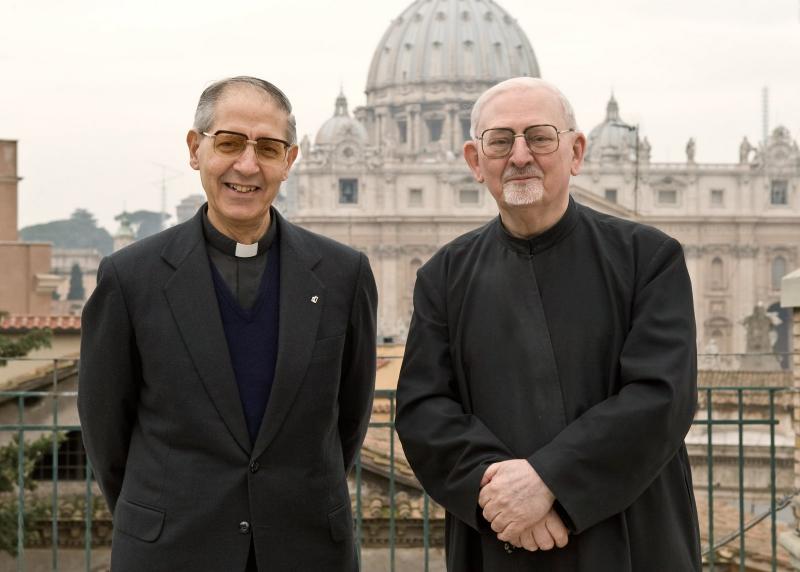
As far as I know, there have never before been 5 living current and former Popes, as both positions - Pope of the Roman Catholic Church, and Superior General of the Jesuit Order are customarily held until death.
ROME (CNS) -- The general congregation to elect a new superior
general for the Jesuits will begin with a Mass the evening of Oct. 2,
2016, the order announced.
Last May, Father Adolfo Nicolas, the current Jesuit superior, announced his intention to resign in late 2016 after he turns 80.
Announcing
the exact date for the meeting, Father Nicolas said, "It is
providential that we, as a society, are beginning this journey" toward
the congregation and election at the beginning of the Year of
Consecrated Life.
In his letter for the year, Father Nicolas said
Dec. 9, "Pope Francis expresses his hopes that religious such as
ourselves might rediscover the joy of consecrated life, recover our
prophetic witness that 'wakes up the world,' truly become 'experts in
communion,' and go 'out of ourselves to the existential peripheries.'"
The
pope, he said, "asks that all religious discern 'what it is that God
and people today are asking of them.' This is precisely the kind of deep
discernment we as a society are called to make."
The heads of
Jesuit provinces around the world and other superiors will schedule and
prepare provincial congregation meetings, which must be held before July
31, 2015, Father Nicolas said in a letter to the almost 17,000 Jesuits
in the world.
Each provincial congregation of the Society of Jesus
will be asked to forward to the order's Rome headquarters their
response to the question: "What do we discern to be the three most
important calls that the Lord makes to the whole society today?"
He
urged all of the men to enter into a process of "profound and genuine
spiritual discernment" about the life and mission of the Jesuits in the
church and in the world today, keeping in mind Pope Francis' calls for
the renewal of the entire church.
Last May, Father Nicolas told
his Jesuit brothers, "I have reached the personal conviction that I
should take the needed steps toward submitting my resignation to a
general congregation," an idea he said he already discussed with Pope
Francis, with officials at the Jesuit headquarters and with the Jesuit
provincials.
Like the pope, the superior general of the Jesuits is
elected for life, although the Jesuit constitutions include provisions
for the superior general to resign. In 2008, Father Nicolas succeeded
Father Peter-Hans Kolvenbach, who resigned at age 79.
Throughout history, the trend has been for Popes to die in office, whether as the 'White' Pope as head of the Roman Catholic Church, and that as commonly known simply as the 'Pope', and for the 'Black' Pope', as the head of the Jesuit Order officially known as the "Superior General'
It has been rare to non existent for a Pope - whether 'White' nor 'Black' to resign and thereafter serve as some sort of Pope emeritas. Thus the standard practice would be having the 2 Popes in current office, with their predecessors deceased.
With the current Black Pope Nicholas, and the 'emeritus' Black Pope Kolvenbach, plus the then current 'White' Pope Benedict XVI, that would make 3 Popes.
That is until early 2013, with the surprise February 11 announcement of Pope Benedict XIV's retirement, mere hours prior to the Vatican being struck by lightening twice, and the highly rushed proceedings for his replacement, culminating with the March 13 announcement of the selection of Pope Francis S.J. - the 1st Jesuit to become 'White' Pope - therefore making 4 Popes, with 3 - Kolvenbach, Nicholas, and Francis - as Jesuits.
Current and Former 'White' Popes
Former 'White' and 'Black' Popes
Current 'Black' and 'White' Popes
And then in May 2014, the Jesuit Superior General/'Black' Pope Adolpho Nicholas announces his impending retirement.
Communication of General Congregation 36 2014/08 TO THE WHOLE SOCIETY Dear Brothers, P .C. [Pax Christi] Several
years have passed since my election as Superior General of the Society
and I have recently reached the age of 78. Reflecting on the coming
years, I have reached the personal conviction that I should take the
needed steps towards submitting my resignation to a General
Congregation. After obtaining the initial approval of the Assistants ad providentiam and having informed his Holiness Pope Francis, I formally consulted the Assistants ad providentiam
and the Provincials, as our law requires (NC 362). The result of the
consultation is favorable towards the convening of a General
Congregation. After having
discussed the matter with my Council, through this letter I wish to
inform the whole Society that, towards the end of this year, I will
convoke the 36th General Congregation, to be held during the final
months of the year 2016. Therefore,
the meeting of Provincials originally scheduled for January 2015 in
Yogyakarta and convoked on 12 March of this year (Circular Letter
2014/03) is canceled. Let us ask Our Lady of the Way to place the Society with Her Son on this journey of discernment that we now begin. Fraternally yours in the Lord, Adolfo Nicolás, S.I. Superior General
That impending 36th Jesuit Jesuit Convocation to announce Nicholas' replacement in early 2016, would be a mere 8 years after the 35th which had selected Nicholas to replace the as of 2015 still living Kolvenbach. As such, that would make 5 living Popes.
Notably, accompanying all of this is the pronouncement of Pope Francis S.J. that he expects his Papacy term to be short lived, expecting to die in office via some sort of unusual circumstances.
Once more the 78-year-old Francis seems to be racing against the
clock, and many in Rome are speculating that his decision to declare
such a momentous event so soon in his papacy, barely two years after his
election, is to be sure he gets one in before time runs out, as if he
is holding a sort of last hurrah or a farewell ceremony. And there are
sad, almost sinister undertones.
“This pope seems to be in a hurry to get as much done as he can, as
if he’s got a deadline,” Marco Politi, a Vatican expert, said at a small
roundtable discussion on Francis and the length of his papacy last
week. “He keeps talking about how his time is short, but it’s not
because he’s sick. He has told his friends that he feels it will be an
‘event’ that wipes him out, not a natural end.”
In an interview with the Mexican network Televisa this month on the
occasion of his second anniversary as pope, the pontiff repeated the
idea that his days are numbered. He said he had a feeling that his reign
at the helm of the Roman Catholic Church wouldn’t last too long,
echoing previous comments in which he said he had a “vague sensation”
that his time was short. “I have the feeling that my pontificate will be
brief—four or five years,” he said. “I don’t know, even two or three.”
3 Popes as of 2008; 4 Popes as of 2013; and 5 Popes as of 2016.
And with Francis S.J. predicting his demise within 2 or 3, or 4 or 5 years - by 2018 or as early as 2015 - and with Kolvenbach, Nicholas and Benedict remaining alive, the question remains whether this number of living Popes may rise as high as 5 or 6- depending perhaps, regarding Francis S.J., on the definition of "demise".
Perhaps for some sort of satanic ritual?
After all there are versions of the satanic horned god figure with 5 or 6 points.
Reveals why so many Popes after 2008 with the resignations of Kolvenbach, Benedict 16 and now Adolpho Nichols... along with Francis S.J.'s prediction that his Papacy shall be short lived...
Interviewer- Pope Francis, after 24 months of becoming Pope you have conducted quite a successful PR campaign. You have had a few photo ops of you washing some people's feet. You have had a few media spot stories about a handful of Catholic Church officials getting less expensive apartments, You have shown tolerance by spotlighting homosexuality, quoted as "who am I to judge", as somehow the main human rights issue. Yet all the while you call for ramping up the pharmaceutic inquisition repression which is what fills the courts and prisons and destroys peoples' lives for non-crimes that you would lie by calling crimes. And you would deny God's gift of Medical Cannabis, so your Vatican run pharmaceutical corporations can continue to bilk the public upon such quackery as chemotherapy. You are really some piece of work.
Could you please explain the circumstances behind you becoming Pope?
Pope Francis- I was selected to be Pope Petro the Roman in early 2013 in order to attempt to place a new face upon the Roman Catholic Church. A face that people would not look beyond, as a PR project, for I am the PR Pope.
That was quite a scary time, starting with April 2012 when Farnese King Juan Carlos of Spain broke his hip, ultimately getting us to sped up the process. Catholics in Action came across some interesting telecommunications chatter that really perked their interest.
Remember the day that we selected to announce Benedict's retirement- February 11. That was the anniversary of Wlodimir Ledochowski becoming the Jesuit General in 1915: the figure who indisputably painted the Roman Catholic Church into a corner that it could not escape if his influence were to ever become widely known- as we could no longer claim that the counter reformation was something that ended in say 1648.
Wlodimir Ledochowski
And mere hours later, the Vatican dome is struck by lightening- twice.
But there is more, as these are unprecedented times for the church.
Do you remember 2008? That was when the Jesuit General Peter Kolvenbach resigned, which is unusual as the usual custom for such a figure is to die in office, as it is with the Pope. And Kolvenbach was replaced or rather supplemented with his successor Adolpho Nichols.
Since 2008, Two Black Popes.
And Since 2013, Two Living ex-Popes, one Black and one White:
Interviewer- Yes.
Pope Francis- Now, flash forward to 2013, when Benedict the 16th does the same.
And two living White Popes
Four Popes In Total
So thus, with me as Pope, we now have a grand total of 4 living Popes. 2 Jesuit 'Black' Popes. And 2 'White' Popes- all living at the same time. Unprecedented in the history of the Church. Four living Popes!
Interviewer- OK. When has that ever happened before? Popes usually die in office. We don't have "emeritus" Popes. What could have happened to bring that about?
Pope Francis- Since 2007 the release of damning information about the Church released upon the internet, through that infernal invention of "the Blog". And from source or sources that we have long had suspicions about. Its something that we have feared for quite some time, of someone stirring up things with the sort of writings that would never be published in the controlled press, as we have had various people working for us in the past of dubious loyalties: those with a sense of irony and talents to show us the threat that we would ultimately face.
So by 2008 came the decision to begin the process with Kolvenbach's retirement and supplementation with his successor Nichols.
And then as one can gather from Farnese King Juan Carlos breaking his hip, some stuff spilled upon the intranet telecommunications grid that really let the cat out of the bag, in early April 2012. As came up upon the 1st anniversary of that, enough of us in the Vatican began getting scared. So we initiated stage two of the process, with Benedict's resignation and replacement or rather supplement- me. Recall that we announced Benedict's impending resignation on February 11, 2013 - hours before the double lightening strikes upon St Peters later that evening. And we announced that Benedict's replacement would come by mid April. Yet we got the whole process sped up with my selection announced a month earlier , in mid March. THAT is unprecedented in Roman Catholic Church history.
So for a few months things seemed to settle down. The public was buying our PR Pope campaign hook line and sinker. And readership of that blog Continuing Counter Reformationplummeted some 40-50%, showing the masses that they could now relax as the Vatican now had some supposedly 'reformist' Pope.
Interviewer- Previous life? I thought that the Roman Catholic Church did not recognize re-incarnation.
Pope Francis- Please. There's a difference between what we tell the public and what we acknowledge ourselves. We are masters at deceiving the public. We suppressed the doctrine of reincarnation going back to the Council of Nicaea. We took books out of the bible. And we infiltrated everything, getting Christians and Protestants to blatantly misread the Bible, such as Hebrews 27 which states "And as it is appointed unto men once to die, but after this the judgment" - never-mind that a man or person is the sum of a body and a spirit. Yes, a man-person dies once. He/she is not resurrected in body with spirit as was Jesus. Rather the spirit goes on to a next life. The ancient Jews knew that. the modern day Jews like the modern day Christians are babylonian influenced more than they dare imagine.
Just look at Vladimir Putin and Wlodimir Ledochowski.Both born October 7. Putin born in 1952, exactly 14 years before the 100th anniversary of Ledochowski's 1866 birth. Look into their eyes. And recall what former U.S. Defense Secretary William Gates wrote about Putin- looking into the eyes of a stone cold killer.
Putin takes this as being a part of some great prophecy, of serving our lord then and now for advancing our church.
Interviewer- Our church?
Pope Francis- The great schism is really a charade. Both Rome and Moscow are its twin pillars.
The great wars that we orchestrated were all about suppressing dissent from the Church. Do you thin that the reversal of Roman Catholic demographics in Eastern Poland starting right after the supposed end of the counter reformation in 1648 were about the 'righteous' Eastern Orthodox Church 'liberating' the 'ukrainian' borderlands from the Polish 'overlords? We sold out united Poland. Poland had some loyal to Rome leaders. But ultimately, Poland was way too tolerant of religious heretics. While France brown-nosed Rome with its St. Bartholomew Day's Massacre, those infernal Polish szlachta explicitly rejected that. They thumbed their nose at us, with that Warsaw Confederation of 1573. Then they rejected our plan for Poland to merge with Russia. And they even objected to our 1596 creation, the Unite Church. Though we had some loyal leaders, the infernal Szlacta showed us that the Polish Lithuanian Commonwealth ultimately could not serve as a sufficiently effective tool to expand Romish power eastwards. So first we subverted it.
We crafted the 'urkainian' borderlands people identity - after all 'ukrainiain' means borderlands in Russian -- as an evolution of the Kieven Rus identity so as to suppress the people there's original identity as the Eastern Poles.
And more then a century later we outright sacrificed it, via our Jesuit tools established in Russia and Prussia to partition it off the map.
And then when Poland emerged towards the end of that Great War (WW1) under the leadership of that too independent for our liking Joseph Pilsudski, and his alliance with East Polan leader Symon Petliura, we subverted that every which way we could.
We had reliably Papal loyal regiments from the Poznan area subvert the Pilsudski-Petlura drive to Kiev.
And we backed our puppet, the aptly named 'Roman' Dmowski and his reliably loyal Papist National Democrats, who subverted Pilsudski every which way they could.
We did it all to placate Moscow, which we shall ultimately take in its entirety.
What do you think that double headed eagle is really all about?
So, Putin is all excited about continuing his mission, and insists upon meeting with Pope Francis.
He already had an inkling of what was going on. For instance back in 2008 he offers to split Ukraine with Poland. But they refuse to take the bait.
And so it would appear, others. There were some in the Vatican that liked the idea of a revived Polish Lithuanian Commonwealth. Not of course one independent of Rome, but rather a puppet creation, for the sake of a Romish agenda of a Unite Church combining Roman and Muscovite tendencies. And then there was this massive growth in groups on Facebook in latter 2013 promoting some form or another of such, including that of a group sponsored by the Polish government calling for Byelorussia to re-join Poland. As if something happened in late summer 2013 spurring all of this.
So Putin gets more energized.
He wants to know what Rome wants him to do.
So in November 2013, Putin visits the Vatican and has a 35 minute private conversation with me.
He was particularly concerned with the sudden emergence of the 'maiden' political movement in Ukraine with its massive protests against the Russian clientèle regime in Kiev. He is likewise intrigued by the juxtaposition of stories about German Chancellor Angela Merkel - who was by then speaking out publicly in favor of the protests in Kiev -- being spied upon by the U.S. NSA tapping her cell phone, along with those of various powerful families with Spain. He said that he felt like he was being set up.
I assure him not to worry, that we have a plan.
And that, in the event of a regime change in Kiev, that he should have Russia seize the Crimea, and perhaps portions of eastern Ukraine. But I warn him that going so far to seize the entire southern portion of the country to link up with that Russian outpost of the Trans Dniester Republic might provoke too much of a response as that would cut of Ukraine from the Black Sea. Russia has its well established since the days of the Czar Sevastopol navel station in western Crimea, with that peninsula perhaps the most Russian loyal part of Ukraine, which only received it as a gift from a drunken Khrushchev in 1954. So, seizing Crimea would be relatively safe, and would provide a goal of at least taking the western shore of the Azov Sea.
The following February, regime change comes to Kiev- Ukraine is now officially pro West. And Putin's Russia seizes the Crimea peninsula, stamping its attachment to Russia with a referendum, and starts a war or reconquest localized in the easternmost provinces of Ukraine.
Meanwhile, we in Rome begin doing what we have to do in order to continue the process.
Interviewer- What was that?
Pope Francis- We have the current Jesuit General Adolpho Nichols announce in May 2014 that he shall resigneffective in 2016, with the Jesuit Convocation #36 where they choose Nichol's successor.
Meanwhile, the previous Jesuit General Peter Kolvenbach remains alive.
So that shall make a total of Three living Black Popes, and two living White Popes, equaling Five in total.
The Two Current Popes - Nichols and Francis
Interviewer- So what's the relevance of that?
Pope Francis- Well it involves the process.
Interviewer- What process?
Pope Francis- What we have to do for victory.
Interviewer- For victory of what?
Pope Francis- For the victory of the Church of course. And for our lord.
Interviewer- Well, what is this process?
Pope Francis- Well, the process specifically is the ritual. You do understand that our church consists of many elaborate rituals including the taking of he holy eucharist: all of which are rituals of ancient magic passed down from millennium ago straight from Babylonian Church customs.
Interviewer- Babylonian church customs
Pope Francis- Yes, have you not noticed for instance our weird head garb? It dates from well before 330 AD, before Roman Catholicism adapted the veneer of Christianity. All of this ties into the uncertainty of whether I shall either resign from the papacy or die in office.
Interviewer- Why the uncertainty? Either you will resign or die in office but why don't you yet now which?
Pope Francis- Well I have to travel to the US. I will be speaking before the U.S. Congress. And I will be visiting your city of Philadelphia, city of brotherly love for world family day. I have some things that I have to do there. We shall see how things go this year and then I shall know if the number is Five or Six?
Interviewer- Five or Six, for what?
Pope Francis- Well it is because of the ritual that we shall soon undertake- namely that we are not yet sure if it requires five or six living Popes.
Peter Kovenbach; Adolpho Nichols; Nichol's successor; Benedict 16; and myself. That equals 5.
Plus 1 - my successor - equals 6. And right now we are at Four, until the 2016 Jesuit Convocation #36 selects Nichol's successor, bringing us to Five.
The open question being shall the ritual require 5 or 6 living Popes.
Interviewer- What ritual?
The ultimate satanic black mass, which comes in two versions. One with Five. The other with Six.
Interviewer- Satanic?!
Yeah, satanic. Have not you figured it out yet? The Roman Catholic Church IS satanic. Our rituals are satanic black magic, particularly the so called 'taking of the holy communion' where we eat Jesus. Think about it- why are we so bent upon the crucifix displaying a dead jesus- sort of like 'worshiping' a dead deer displayed upon the hood of one's automobile.
Interviewer- what is this ritual?
Pope Francis- Well it involves this. We gather together, the 5 or 6 of use. We assemble in the outline of either a pentagram or a hexagram. And I would rather end the description there as it's too disgusting to repeat in mixed company. Suffice to say it's rather vulgar and disgusting, and as you may guess involves perverted forms of sex. Why do you think that we talk about homosexuality so much? Why do we have such an emphasis in the name of compassion, even though its the drug war rather than sodomy statutes that clog the courts and fill the prisons. We are so full of sh*t with our pretense over human rights as a massive distraction from the massive economic exploitation of the general public. But it is what we have to do to placate our lord Lucifer.
Interviewer- Lucifer?
Pope Francis- Lucifer!
Who has appeared in so much of our art, and who made his mark in politics, and happens to be bi-sexual.
Come on now, we all know that Jesus as not a blond.
Francis S.J. Our First Jesuit (White) Pope, March 13, 2013 succeeding B 16 who announces his resignation on February 11- the 98th anniversary of Wlodimir Leodchowski becoming the 26th Jesuit Superior General Adolpho Nichols S.J. current Jesuit Superior General (Black Pope), January 19, 2008 - b. April 29, 1936 succeeded Peter Kolvenbach S.J. September 13, 1983 - January 14, 2008 - b. November 30, 1928
BOTH B-16 and Peter Kovenbach, the first White and Black Popes in a very long time to retire, to potentially serve emeritus roles.
Black Popes Adolfo Nicholas (current) Peter Hans Kolvenbach (former)
White Popes- Pope Francis meets Pope emeritus Benedict XV
Jorge Bergoglio was elected Pontiff of the Roman Catholic Church on 3/13/2013, and Nicolas Pachon was elected Superior General (Black Pope) on January 14, 2008. With the abdicationof Joseph Ratzinger on February 11 of this year, and Peter Hans Kolvenbach's (the previousSuperior General of the Jesusits) resignation in Janurary of 2008; There are now 4.
Joseph Ratzinger is Pope Emeritus in Rome, and Peter Han Kolvenbach is retired (in Lebanon). That equals 2 White Popes and 2 Black Popes, at once in totality. .
There seemed, indeed, during those years of Ledochowski, Pius XI, and Pius XII, no real limit to what both Jesuitism and overall Roman Catholicism could achieve. Even – especially, we should say – in the afterglow of Ledochowski’s long reign and into the Generalate of his successor, Belgian Jean-Baptise Janssens, the magic power of the momentum seemed to continue.
William Jefferson Clinton would waste even less time displaying that-- as Commander in Chief -- he was a cold blooded murderer of some 88 people, for the sake of enforcing ancient Vatican dictates against heretics, via his cowardly approach to the Branch Davidian sect in Waco, Texas.
Its leader David Koresh, was ostensibly targeted for arrest on never substantiated methamphetamine manufacturing charges (that would statutorily allow such a use of military in domestic law enforcement), though was writing a paper about the Bible’s Book of Revelations Book of Seven Seals.
I find it incomprehensible that there has been so little attention placed on just what Koresh was writing, particularly amongst anti-Vatican Bible scholars, as it is plausible that some writings could displease established religious authorities, that Rome has a long history of suppressing the written words of ‘heresies’, and the connections throughout the government and the MSM to pull that of.
Such over-the-top ‘law enforcement’ -- to arrest a man who routinely jogged providing numerous opportunities for an easier arrest -- starting a 2+ month long siege culminating with armored tanks crashing their turrets into the Branch Davidian building, and the shooting of flammable gas into this building which the FBI had turned off its electricity and knew was being lit via lanterns, starting a fire killing 88 Branch Davidians, including many children, marks a military action of a religious inquisition.
Waco ended any doubt that such Naziesque behavior by the government could indeed happen here and more disturbingly with the acquiescence if not support of the general public.
The reporting by such MSM entities as The Washington Post -- infamous for lying about some of the most monumental things within the Beltway -- could serve as textbook examples of spin to deny sympathy to Koresh and by extension his followers, and continually distract from the $64,000 question of just what was Koresh writing about the Book of Seals, and particularly just what within would have been so objectionable?
Vatican Tool: Donald Graham,
Executive Publisher, The Washington Post
Wojtyla & Kolvenbach’s Bill Clinton- Jesuit Tool for ‘Drug War’ Criminal Mercantilism
There seemed, indeed, during those years of Ledochowski, Pius XI, and Pius XII, no real limit to what both Jesuitism and overall Roman Catholicism could achieve. Even – especially, we should say – in the afterglow of Ledochowski’s long reign and into the Generalate of his successor, Belgian Jean-Baptise Janssens, the magic power of the momentum seemed to continue.
The slavish devotion of this next U.S. President, the first of the Democrat Party in 12 years, since Jimmy Carter, would clearly indicate that like the Republican Party, the Democratic Party to was and is a complete tool of the Vatican.
This was evident with the Jesuit’s grooming relationship via their political powerhouse Georgetown University, with their next major political tool, William Jefferson Clinton, with his cowardly approach to the ‘drug war’.
Clinton wasted little time demonstrating his loyalty to Rome’s pharmacratic inquisition-criminal mercantilism with his administration’s slavish devotion to the status quo to simply bury the facts, such as the Clinton Administration’s suppression of the 1993 US Congress Office of Technology Assessment endorsement for legalizing Coca, and the 1994-95 UN World Health Organization reports regarding Coca and cocaine.
Clinton was slavishly continuing Rome’s pharmaceutical-cigarette protectionist policies dating back to whatever transpired between the Vatican and Angelo Mariani when they were giving him the papal medals as a benefactor of humanity.
He was found of using the example of his brother as why ‘drugs’ particularly cocaine must remain illegal- altogether disregarding that it is probation that ensure that drugs popularization in concentrated abuse promoting modes. IOW- Bill Clinton was a complete lackey for the very drug policies that suppressed Coca while promoting highly concentrated cocaine, who deserved to be forced to publicly snort NoDoz and apologize for his shameful participation in these endeavors of criminal mercantilism.
He did finally get around to admitting that marijuana should be ‘decriminalized’ in an Esquire magazine interview at the end of his 2nd 4 year term- an 8 year period where arrests for marijuana prohibition violation had escalated sharply.
Telling Nancy Reagan Not to Think: Continuing Drug War’ Criminal Mercantilism
There seemed, indeed, during those years of Ledochowski, Pius XI, and Pius XII, no real limit to what both Jesuitism and overall Roman Catholicism could achieve. Even – especially, we should say – in the afterglow of Ledochowski’s long reign and into the Generalate of his successor, Belgian Jean-Baptise Janssens, the magic power of the momentum seemed to continue.
The Vatican reign of Wojtyla and Kolvenbach turned up the wick with its pharamacratic inquisition – by the numbers of people arrested-punished, and of the social costs of the market protection – of the ‘war on drugs’ popularized by very self-defeating hysteria protecting and encouraging more dangerous modes of consumption, both by banning the safer substances of Cannabis and Coca protecting alcohol and tobacco, and by so banning Coca with statutory definitions equating raw leaves with alkaloids refined and concentrated.
During the early 1980s, ‘1st Lady’ Nancy Reagan, wife of then U.S. President Ronald Wilson Reagan, was known primarily – via the reporting by the MSM – for her tastes in chinaware.
However shortly after an audience with Pope John Paul II in 1985, she begins her public crusade to ‘just say no’ to whatever is defined as contraband rather then any actual facts.
The following year, the MSM used the tragedy of the death of a student at the University of Maryland who had just been accepted to play for the Boston Celtics, of a fatal overdose of cocaine, to issue a mass call for new draconian legislation with severe social costs.
Central to this was a great deal of hysteria regarding cocaine as intrinsically extra dangerous and ‘addictive’ that failed to explain the history – which I then began researching – about the drug’s dangers emerging with the uses of its concentrated forms 1st widely manufactured during the mid 1880s, yet such was not the case with the drug’s dilute form.
This reality was marked by the history of Vin Mariani, first manufactured during the 1860s and sold and used for half a century, that was banned via an effort erupting just months after the 2nd time the Vatican summoned Vin Mariani creator Angelo Francois Mariani to be rewarded a gold Papal medal award as a benefactor of humanity
Indeed, after decades of use, with Coca wine, specifically Vin Mariani seen as: Excellent for alcoholism, nicotinism and opiate withdrawal… French surgeon general The spectra of drug abuse enabled by the hysteria deliberately neglecting the quite varied pharmacokokinetics of concentrated rather then dilute modes of drug use – directly versus indirectly is a Jesuitical concoction popularized through the rash yellow ‘journalism’ of such as the rabidly Vatican-loyal publishing empire of William Randolph Hearst, working with AMA-APhA connected, USDA Bureau of Chemistry Chief Harvey Washington Wiley, noted in 1908 as a ‘Knight’ amongst those showing ‘great prowess’, starting shortly after Angelo Mariani’s 2nd audience at the Vatican.
It is not only Jesuitical in encouraging cocaine abuse but in protecting and popularizing the most dangerous from a long term health perspective – Virginia Bright Leaf Tobacco cigarettes.
Quote: USDA Farmers Bulletin “Habit Forming Agents” the ‘menace’ of the free sale of Coca products particularly when and where sold in the U.S. south-east as a “Tobacco Habit Cure”.
Quote: Dr. Ronald K. Siegel off all the stimulants coca ranks the safest least likely to cause problems
In each major category of intoxicant used by our species, there appear to be one or two drug plants that researchers have noted, are more controllable, hence safer, than all the other plants or synthetics in that category. Coca leaf stands out among all the stimulants, licit and illicit, as the easiest to control and the one least likely to produce toxicity or dependency.
And they would know that in 1914:
... there are tens of thousands of people in the United States who die every year from the excessive use of cigarettes; and yet I find Senators still pulling away at the cigarette as though it were a perfectly harmless thing. I believe the Senator will agree with me that there are many thousands of people who die from what is called tobacco cancer, a cancerous growth affecting the throat from overuse of cigars; and we find perhaps 60 percent of the Senators pulling away at the cigar as unconcerned as though no one were dying as a result of these cigars...
Nonetheless our governments have proven their loyalty to this apostasy from common sense with the descent into and continuation of this criminal mercantilism primarily for the sake of Virginia Bright Leaf Tobacco that came in the early 1900s.
Given the involved substances relative safeties, the consequences of suppressing Coca to protect Virginia Bright Leaf are severe, consisting of a significant portion of the 100s of millions of cigarette shorted lives, and the attendant medical problems so induced (and intensified via additives including burning accelerants increasing consumption – hey I turned away and my cigarette kept burning all the way down! – and house fires’ destruction and deaths).
The acquiescence of insurance companies to this is that of an industry intimately connected to the very things it would openly oppose for its own interests if not for being influenced or outright controlled by those thing’s controllers.
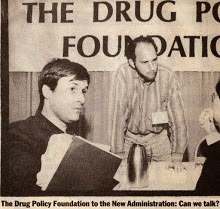
The Vatican was continuing the polices set during the early 1900s, with selective ‘anti-drug’ crusades erupting through the Hearst publishing empire and those of other media entities controlled by those with loyalties to Rome, such as membership in fraternal-social-religious orders with a definite ‘all roads lead to Rome’ network of college fraternities connected and controlled to Masonic orders connected and controlled by the Vatican, particularly that displaying the letters “IHS”: aka the Vatican’s military-strategic wing- the Jesuit Order. The drug related doctrine initially spread widely by Hearst had become that enshrined at the top of the world political body, as reflected by entities as the United Nations, with its 1961 Single ‘Narcotics’ Control Convention mandating the elimination of Coca in its native Peru and Bolivia by 1988. That was the year that Bolivia would instead openly rebel by re-legalizing a broad spectrum of commercially produced Coca leaf products, including Coca Wine, and that the Washington, D.C. Drug Policy Foundation – an organization founded in response to the drug war-cocaine centered hysteria of 1986 – was tied to the powerhouse food, drug, pharmaceutical, cigarette industry Covington and Burling, with the assignment of an attorney later described as prominent in the fields of food, food supplement, pharmaceutical and insurance industry.
The entire ‘drug war’, banning the safer substances (with the consequences of perverting coca and opium into concentrated cocaine and heroin) for the sake of protecting pharmaceuticals and cigarettes, has cost greater of numbers of shortened lives then Wlodimir Ledochowski’s wars. If it is any consolation, whereas Ledochowski had a lingering death that at times would be prematurely reported, with notations of gastro intestinal problems, the Superior General at the time of the establishment of the criminal mercantilism for pharmaceuticals and Virginia Dope cigarettes, Luis Martin, had a far worse death:
Even at the beginning of his term Martín's physical health had been poor and it grew steadily worse with the years. In 1905, a tumor forced the amputation of his right arm. Pope Pius X granted him permission to celebrate mass despite his disability, a privilege for which he was most grateful. The cancer, however, soon invaded his lungs and he died in Rome, on 18 April 1906.
Luis Martin; born 1842 25th Jesuit Superior General 1892-1906
29th Jesuit Superior General Kolvenbach’s Continuing Counter Reformation from the Mid East
There seemed, indeed, during those years of Ledochowski, Pius XI, and Pius XII, no real limit to what both Jesuitism and overall Roman Catholicism could achieve. Even – especially, we should say – in the afterglow of Ledochowski’s long reign and into the Generalate of his successor, Belgian Jean-Baptise Janssens, the magic power of the momentum seemed to continue.
Peter Kolvenbach; born November 30, 1928
Succeeding the ‘leftist’ Arrupe nearly 2 years after his stroke, and 5 years into the Papacy of Karol Woytyla as JP2 was Peter Hans Kolvenbach, born November 30, 1928, who became the Jesuit Order Superior General September 13, 1983
That was the time that the eastern Mediterranean began getting hotter with high profile terrorist assaults, notably the simultaneous suicide truck bombings of the French and the US. Marine Corps barracks in Beruit that killed 241 U.S. servicemen and 58 French paratroopers and 6 Lebanese civilians on October 23, 1983- a mere 40 days after Kovenbach became Black Pope.
It was from this area where Kolvenbach was most active during the preceding years, serving as Professor of General Linguistics at the University of St Joseph in Beirut, Lebanon until 1981 when he became rector of the Pontificial Oriental Institute (for the study of eastern Mediterranean area Christianity), while serving as the Provincial Superior of the Jesuit vice province of the Middle East.
Kolvenbach continued as the Jesuit Order Superior General until his resignation at the Jesuit General Congregation, in January 2008 which elected his successor, Adolfo Nichols, whose area of expertise is the Far East.
Karel Glastra van Loon was a novelist and journalist, closely associated with the SP, who has died, at the age of only 43, since this book was published in the original Dutch. His best known work in English was The Passion Fruit
The Last War of the 20th Century - Chapter 13
May 14, 2008 8:35 |by Jan Marijnissen and Karel Glastra van Loon
A new 'new world order' As long as our world, which has the resources to end poverty everywhere, is divided into those addressing the problems of plenty and those confronted by the problems of scarcity, peace and freedom will remain fragile.
Nelson Mandela, 24th July, 1998, at the Mercosur Heads of State Summit, in Ushuaia, Argentina
In the foregoing chapters we have seen that in the West in general, and within NATO and the European Union in particular, a great deal is expected of the potential of military intervention in domestic and regional conflicts. NATO's new strategic concept and the EU's efforts to develop its own 'military capacity' flow directly from this.
On the basis of the wars in Bosnia and Kosovo we have tried to make it clear that these expectations are unfounded, dangerous and shortsighted. Unfounded because the political goals have not been achieved (see Kosovo); dangerous because the violent imposition of peace unleashed new tensions, which in time will lead to new conflicts (see Kosovo and Bosnia); and shortsighted because only short term and limited solutions are considered, with no estimation of the geopolitical consequences (such as for example in terms of relations with Russia), while insufficient account is taken of the history and other aspects of the background to conflicts (see almost all recent military interventions).
In order to achieve a lasting peace - or more modestly, to prevent conflicts - other means than violence are much more appropriate. That is why to close this book we want to put forward a few initiatives towards a fundamental debate around a more structural approach to international tensions, and by those means the prevention of violent escalations in the future.
Relations between ethnic and/or religious majority and minority groups within states, but also relations amongst states, are often seen in stereotypical terms. Too often tensions are described on the basis of a limited observation of a few incidents, as well as on the basis of platitudes and myths which do no justice to the complex reality. Precisely because it is not straightforward, given this complexity, to develop a truly effective insight into the background to problems elsewhere in the world, it is imperative to operate in international politics with the greatest possible caution. The byword of responsible members of governments should be heeded: better no foreign policy than a bad foreign policy. It is after all true that the greater the distance, both geographic and cultural, the smaller the empathy. And without empathy it is wellnigh inevitable that each intervention will eventually turn out badly, as has been the case time after time during this decade.
When in Rwanda the Hutus and the Tutsis became enemies, many thought that what we were dealing with were tribes who had for years lived in discord with each other, that people were being identified only by their appearance and on that basis considered each other friend or foe. These are dangerous simplifications. The historical and socio-economic background, involving poverty, overpopulation and social inequality, continues to be seriously underestimated in many analyses of Rwanda. This has also been the case in the Yugoslav crisis, in the conflicts in the Caucasus, in Indonesia, in short in almost all conflicts which have demanded the attention of the international community over the last few years, despite the fact that it is precisely this socio-economic background which is so extremely important for the forming of a correct picture of the causes of these conflicts. And without knowledge of the causes there can be no adequate solutions, without a good diagnosis, no good medicine.
The Pakistani development economist Mahbul ul Haq says with regard to the violence that has flared up in so many places in the world in the past ten or fifteen years that 'You can call these conflicts ethnic or regional, but the real causes are social and economic.'
If that is the case, and the 'international community' is truly concerned by all of the injustice to which people subject each other, then you might expect that everything would be done to ensure a fairer division of the world's wealth, in order to help the poor countries in their development, and to create opportunities for those who currently have none.
Nothing, however, could be further from the truth: the contradictions in the world continue to grow. The immense debts owed by poor countries to rich ones mean that each year 200 billion dollars net is transferred from South to North, from poor to rich. The average income in 1960 in the richest countries was thirty times greater than in the poorest; in 1990 the ratio was 1:60, while by 1997 it had further deteriorated, to 1:74. The United Nations' Human Development Report for 1999 included - by way of further illustration - the following bizarre comparison: the wealth of the three richest people in the world is greater than the value of the economies of the thirty-five poorest countries combined. The army of the world's really poor currently numbers 1.3 billion people, and that figure continues to climb. What does the expression 'global village' mean in such a perspective? In what village is one person in three allowed to suffer miserably from hunger, while at the same time a minority can abandon themselves to their hearts' content to the thorough enjoyment of life? The expression 'global village' was invented and propagated in order to describe so-called globalisation, and to depict it as a fait accompli. This globalisation forms in its turn a justification for the carrying out of a free trade which goes ever further and the lifting of all restrictions on the movement of capital, with no regard to the social consequences for the 'village'. Or as Sakiko Fukuda-Parr, one of the compilers of the Human Development Report 1999, puts it: 'Globalisation has great advantages for some but for most of the world's citizens it means only further exclusion and impoverishment.'
At the end of the 'nineties a major financial crisis hit Asia. The managers of the enormous quantity of money - 1.5 trillion dollars per day - from wealthy countries which roams the digital highway in search of the highest profit levels, were for a number of reasons afraid of losing their money, and decided over a short period of time to withdraw it from countries such as Thailand, Malaysia, Indonesia and South Korea, once known collectively as the 'Asian Tigers'. Within a few days millions of people in the countries involved had lost their jobs and local currencies tumbled to record lows. The crisis resounded long afterwards - not in the rich West, where there was relief and an almost triumphalist assertion that the world economy could indeed survive some rough-handling, but far more in the affected countries themselves. According to the UNDP report discussed above, the crisis led to ''erosion of the social fabric, to social unrest and to a growth in criminality'.
The flaring up of all sorts of 'ethnic-religious' conflicts in Indonesia in recent times cannot be seen as unrelated to the economic crisis in which the country has found itself. When as a result of this crisis the Suharto regime fell, countless western experts (amongst whom was the biggest boss of Dutch bank ING's subsidiary in Jakarta) all knew precisely what had gone wrong in Indonesia: the country was corrupt through and through, its 'democracy' was a farce and there was no respect for human rights. The crisis was, in other words, the fault of Indonesia itself. This analysis stood in stark contrast to everything that had been called for in preceding years in regard to the country of Suharto. Human rights activists had been told not to moan and whinge, and Development Cooperation Minister Jan Pronk got a dressing down for his trouble when he had the nerve to approach the Suharto government about the massacre in East Timor. During a royal visit to Indonesia in the year that the country celebrated fifty years of independence, a heavyweight delegation of Dutch entrepreneurs travelled in the footsteps of Her Majesty in order to do business in what was then still referred to as an exemplary growth economy. Top Philips boss Jan Timmer took this opportunity to announce that if he were still young he would certainly set out for South East Asia in order to seek his fortune. We heard not a word then about corruption, while human rights also went unmentioned. As long as there was money to be earned it would turn out time and again that concern over the fate of one's fellow human beings would melt away like snow on a sunny spring day, only to be wheeled out when the situation deteriorated and foreign investments and earnings were at risk.
In order to put an end to the vicious circle of lopsided economic growth, exploitation, poverty, migration, instability, crisis and violence in which so many countries are trapped, it is necessary that the western powers at long last show the courage to take a critical look at their economic interventions in those countries. It will then emerge that structural measures are needed if the constant repetition of humanitarian tragedies is to be prevented.
In the first place the developing countries must have - and retain - the freedom to determine their own development strategy. This would stand in complete opposition to the Multilateral Agreement on Investments (MAI), which the OECD - the organisation representing the richest industrialised countries - and the World Trade Organization currently have in mind. The countries of the Third World must no longer be pressured to accept the International Monetary Fund's neoliberal prescription before they are given any support by the wealthy countries. Even Henry Kissinger, ex-US Secretary of State, criticises the shortsighted approach of the IMF as being 'just like a doctor specializing in measles [who] tries to cure every illness with one remedy", as he wrote not so long ago, complaining that the Fund always prescribes 'moderation', large increases in interest rates to counter capital flight, and strong devaluation in order to discourage imports and stimulate exports. This, he argued, always leads to a dramatic fall in living standards, explosive growth in unemployment and a growing malaise in the general population, undermining the very political institutions that must carry out the IMF programme. Kissinger sides with a long line of former political leaders who, no longer being in office, suddenly begin to say things which are both intelligent and critical.
Organisations such as the WTO and the IMF currently represent exclusively the institutionalised 'market think' and interests of the countries which stand to gain most from their approach. They talk constantly of total freedom of trade as opposed to a total lack of freedom, but equal rules for unequal countries simply perpetuate inequality. Moreover globalised free trade means little more than the ability to set worker against worker throughout the world in a new race to the bottom when it comes to wages, social security, social provisions and working conditions. Not only people but nature and the environment will inevitably pay a high price for this.
Poor countries must have the right to protect their own domestic markets from cheap western products, in order that they can have enough time to build up their own industries and security of food supply. On the other hand low income countries must have the right and means to sell their products on the markets of wealthy countries without being confronted with barriers in whatever form. In 1976, 7.2 percent of the European Economic Community's total imports originated in developing countries, while in 1995 this percentage had fallen for the European Union to 4.5 percent. It is completely morally objectionable that we continue to think that we should protect our European markets from cheap products from these countries, while we at the same time force them into an unlimited opening of their own markets to our products and corporations. The foreign exchange which they could earn through their exports is indispensable, for example for acquiring new technology.
A concrete possibility to do something about inequality in the world could be provided by the introduction of a solidarity levy. Whenever countries gain a competitive advantage through their indifference to social rights or to the interests of the environment, their products should be excluded from the international market by means of a levy imposed at the borders of the importing country. In keeping with the unequal economic position of different countries the size of this levy should be proportionate with the size of the Gross National Product of the exporting country. All of this should be conditional on the poorest countries - as we have already argued - being at all times given free access to 'rich' markets. If we are then also prepared to pay a fair price for their products, so that they too have the chance to work on building a just society, we will have provided ourselves with an effective means of bringing about a redistribution of global wealth and thereby a safer world.
Another possible measure is the taming of what former German Chancellor Helmut Schmidt described as 'predator capitalism'. This could be achieved by means of a reintroduction of restrictions on international capital movements, so that economies can no longer - as a result of the herd behaviour and blind hunger for profit of owners of capital - be brought to ruin in a single day. Even the former senior adviser to the GATT (now the WTO), American economics professor Jagdish Bhagwati, seems to have grasped this, as he shows at the end of a lengthy article in the Dutch business daily Financieele Dagblad of 26th September 1998:
'And despite evidence of the risks attached to the free flow of capital, the Wall Street financial complex continues to make the self-serving assumption that the ideal world is indeed one of free capital flows, with the IMF presiding over all. But the weight and the force of logic points in the opposite direction, towards limits on capital flows. It is time to shift the burden of proof from the opponents to the supporters of free capital.'
In order to limit these capital flows we must be able to move towards the introduction of the so-called Tobin Tax. James Tobin, American economist and Nobel Laureate, proposed at the beginning of the 'seventies the imposition of a 0.1 percent tax on international monetary flows. By these means situations such as that in Asia in 1997 and 1998 would occur less frequently, while, still more importantly, the United Nations, which would have to collect this, would for example for the year 2000 have available over 188 billion dollars, twice as much money as experts argue would be necessary to combat the world's most severe poverty.
In conclusion, a development plan for the Third World's countries must be established under the aegis of the UN - it goes without saying that this should be done with the involvement of the countries in question - and financed by the wealthy countries. Under the slogan 'debt clearance is the best conflict prevention', a start could be made on debt forgiveness for low income countries, the central demand of the Jubilee 2000 initiative. Annual interest and repayments hang like a millstone around the neck of these countries and prevent them clambering up out of the depths of poverty. A country such as Ethiopia is currently forced to pay four times as much money in interest and debt repayment as it does on health care, to give just one harrowing example. And while we are on the subject of a development plan under UN supervision, we should not refrain from calling on this same UN to screen for once instances of multilateral development aid for efficiency and effectiveness. As things stand development cooperation - bilateral and multilateral - is in general a hotchpotch of good intentions, as emerged in practice in, amongst other places, former Yugoslavia. In Bosnia, for example, there are no less than 450 different aid NGOs and consultancies active in spending the 10 billion Deutschmarks which has in total been made available by the various donor countries. The fact that the results fail to meet expectations is logical, as is the fact that there are exceptionally high levels of waste. While corruption thrives in luxury, the reconstruction for which the money was intended stagnates.
As we have already said, an 'international community' which was really concerned about the humanitarian tragedies unfolding in countless parts of the world, would put a comparable measure high on the political agenda. That this is not happening says as much about the sincerity of the politicians involved as it does about the relations of power in the world since the fall of the Berlin Wall. A nice illustration of how these relations currently lie was provided by the WTO negotiations which took place in Seattle in December 1999. Corporations such as Microsoft, Hewlett Packard, General Motors and Northwest Airlines belonged to the exclusive community of sponsors that by means of a payment of less than 100,000 dollars assured themselves of the necessary privileges. They each took a place on the front row as well as gaining - to the advantage of their lobbyists - direct access to the informal circuit for direct contact with the heads of state, government leaders and other delegates present. Meanwhile an enormous force of police held the thousands of demonstrators back, while the demonstrators outside the conference building gave voice to the huge dissatisfaction which is growing in ever broader circles over the monomaniac way in which the WTO operates. If we really want to move towards a truly new world order, then this gap between participants to the WTO negotiations and those demonstrators must be closed. Only then will the one-sided fixation on free trade, if needs be at the cost of state sovereignty, and with no regard for the political, social, ecological or safety consequences, have to give way to an awareness of the interests of all of those now ground down by the unrestrained forces of the free market.
If it is the most important causes of many conflicts with which we are concerned - poverty, neglect, lack of development and absence of hope - then there is still a world to win. But if this 'new world' is really our goal, we cannot avoid first of all answering the question, 'Who do we want to rule this world?' Is it the rich countries within which this service is provided by those who possess the economic power? Is it organisations such as the WTO, the IMF, the OECD and the G7 in which the wealthy countries set the tone and impose their will on the rest? Or is it the political forces, legitimised by democracy, which are striving for development and progress within and for all countries, for a fair distribution of wealth and for protection of nature and of the environment?
Earlier in this book various people stressed the role of the United Nations and of regional organisations such as the OSCE. The Netherlands Advisory Council on International Affairs had this to say about this question: 'Both the UN and the OSCE have a coordinating responsibility in relation to the preservation of international peace and security. The UN is the sole global forum in which security and stability, human rights, sustainable socio-economic development and environmental problems are on the agenda in their internal cohesiveness.' Everyone - with any knowledge of these matters - will only be able to agree with this assessment. But this assessment should also have consequences for policy. Anyone who takes these words seriously cannot at the same time defend a situation in which countries off their own bat and whenever it suits them break the UN's monopoly on the use of violence and with no legitimacy enter into conflicts in foreign countries. By such actions international law is desecrated, the position of the Security Council undermined and geopolitical stability placed in the balance.
The Pax Americana, by which the monopolar world which has existed since the fall of the Wall is characterised, has led in the west to the arrogant belief that we can do everything on our own. The manner in which the west has behaved since the departure of Gorbachev, is therefore illustrative: the enlargement of NATO towards the east; the disregard of the Russian (and Chinese) standpoint in relation to the conflict in Kosovo; using, certainly, Russia's diplomatic offices in solving the conflict but granting the Russians no significant role in the framework of KFOR; the continuation of the development of a defence shield in space by the United States, despite the fact that this is in conflict with the Anti-Ballistic Missile Treaty; the development of a new frontline to the south of Russia as a result of strategic interests connected to the oil which is to be found in that region. Where these policies have led within Russia was made clear in Chapter 8 of Part 1 of this book by Georgi Arbatov en Vladimir Lukin; to what foreign policy consequences it will lead only the future can tell us.
Although many criticisms can be made of the functioning of the UN - we have written about this above - it is as things stand (and probably this will remain the case) the only place in which the major powers and other countries can together discuss geopolitical questions. Intelligent foreign policy must include the goal of strengthening the United Nations and its institutions, as well as the Organisation for Security and Cooperation in Europe, the OSCE. Max van der Stoel, OSCE High Commissioner for national minorities, takes every possible opportunity to complain about the lack of interest from the international community in investing in inter-ethnic cooperation directed at the early prevention of conflicts. In his lonely struggle he finds it absolutely impossible to assemble financial resources for such projects. 'The states which must contend with economic stagnation or even decline, with as a consequence the threatened loss of of the hope for a better future, deserve particular attention,' said Van der Stoel in his inaugural professorial address at the University of Leiden. 'In such situations political extremism thrives. Giving new impulses through outside aid can help to turn around such dangers and belongs in a modern security policy.'
The fire brigade have a popular saying: 'Any fire can be extinguished with a bucket of water if only you get there quickly enough.' For those who really want to contribute to a safer world there are therefore two questions to be answered: do we have the will to get there early? And do we have a bucket of water?
In order to 'get there early' we must create a worldwide early warning system, which will enable the UN and regional organisations such as the OSCE to offer timely help in the prevention of conflicts and - where conflicts already exist - the avoidance of further escalation. It will then be necessary for the UN and the OSCE to have access to sufficient financial resources to enable them to offer effective help.
After the war in Kosovo the Western countries established a Stability Pact for the Balkans, excluding the Federal Republic of Yugoslavia. The question is this: why is there now a willingness to put billions into this region, while this was not the case earlier? Would Lord Carrington's plan not have had more chance of success when we were prepared to extend also a helping financial hand? It is a question which can no longer be answered with certainty, but what is certain is that the billions which are now being used to bring about damage and destruction is many times more than the sum that at the start of the 1990s would have been needed to reshape a declining economy into a growing economy. Had such a sum been provided at the time, and had the European countries put their efforts into the establishment of a confederation instead of the independence of all of the republics, the human tragedy now unfolding in the Balkans could very likely have been prevented.
To make a comparison with the development of armaments, preventative diplomacy, peaceful intervention, and structural aid and advice are perhaps at the level of the invention of the Colt around 1850.
That brings us to our last point: the reopening of the arms race. Just as the ubiquity of firearms is cited as one of the most important causes of the exceptionally high degree of violence in American society, so the ample stocks of weaponry provide us with one of the explanations for the violent escalations of regional and/or ethnic conflicts. Despite the fact that the Cold War, which held the world in its grip for decades, and the arms race which was linked to it, are now almost ten years in the past, the worldwide trade in arms continues to grow. The Netherlands plays a leading role in this, despite assertions from the ministers responsible that the Dutch defence industry is limited in size in comparison with other European countries. In 1998 our country was sixth in the league table of the world's biggest arms exporters. With no scruples our country supplied and continues to supply weapons to Turkey, and to Indonesia under Suharto, as well as to countries which spend a disproportionately large share of their GNP on buying weapons, such as Israel, Oman and Qatar. In addition regulated supplies go to areas of tension, such as South Korea and the Middle East. In 1998 licences were issued for the export of military goods with a total value of something over 350 billion dollars. And the Netherlands is no exception - neither in the West, nor in the world as a whole. Almost all countries, or, to put it better, the arms producers in these countries, are still profiting daily from armaments and the arms trade.
The member states of the European Union together spend almost 100 billion dollars a year on 'defence', of which a large proportion goes on armaments. It is high time that worldwide arms spending, and above all disarmament, came under international political attention. The extent and quantity of arms exported must be reduced, and in time the entire international arms trade perhaps indeed forbidden. The development of ever more new attack weapons must be stopped, beginning with those countries which have made the greatest progress in the development of sophisticated, 'smart' weapons. The further spread of existing, and the introduction of new, weapons of mass destruction can only be resisted if the nuclear powers are prepared to sign a no first use declaration and at last begin to run down their arsenals. Who are we to send inspection teams to Iraq to track down illegal weapons of mass destruction if we ourselves maintain major arsenals of nuclear weapons? In NATO's new strategic concept nuclear weapons are seen as essential to the preservation of peace. This is in conflict with the Non-Proliferation Treaty, which asserts that states which have signed the treaty have an obligation to conduct negotiations leading to complete nuclear disarmament under strict and effective international monitoring. Through the explicitly stated unwillingness of NATO to proceed to complete nuclear disarmament the fundamental precepts of this treaty have been jettisoned. And at the very moment that the United States Senate has rejected the Non-Proliferation Treaty, India and Pakistan are embroiled in a nuclear arms race, while the Russian nuclear policy, as we have seen, is being accentuated.
The course which Western military experts are now following in the area of non-nuclear armament, which is described in this book by, amongst others, the Editor-in-Chief of Jane's Defence Weekly, Clifford Beal, will lead without doubt to still more violence. Perhaps Clifford Beal will in the end have to recognise that whenever the West increases its 'lead' over other parts of the world, this inevitably provokes a reaction. This does not always necessarily take the form of a similar pursuit of smart weapons by those who resist the West, such as China, Iraq, Russia or India. It can just as easily be what has been called an asymmetrical response - such as the carrying out of terrorist attacks.
born October 7, 1866 -- 26th Jesuit Superior General 'Black Pope' - Feb. 11, 1915 - Dec. 13, 1942: 'one of the two or three greatest heads of the Jesuit Order' ... 'an almost merciless disciplinarian,and maintained a stream of instructions flowing out to the whole Society about every detail of Jesuit life and Ignatian ideals'...' Ledochowski can be called the last of the great Roman Generals of the Jesuits.'
NTNU slår ring rundt arabisk nazi-professor
-
Styret ved NTNU fjernar ikkje den arabiske professoren som kalla “7-oktober
2023 det vakraste som har skjedd. “ 7.otober 2023 vart det største
massemordet ...
Conclusion: 3 pillars
-
Three documents. Three pillars. One structure holding all of it up.
The first pillar is the claim that multiple-corpse cremation was physically
impossibl...
The Show Must Go On
-
I happen to have a Santa union suit, and though I don't have a long, full,
curly white beard, nor do I have white hair (yet!), and my "bowl full of
jelly"...
Kata-Kata Mutiara Ulang Tahun 2019
-
Kata-Kata Mutiara Ulang Tahun 2019 - Datangnya waktu perayaan ulang tahun
seseorang adalah suatu hal yang paling membahagiakan, di saat itulah banyak
sekal...
THE GREATEST LIE ON EARTH!
-
NASA'S SHOOTING PHALLUS / OBELISKS AT GOD'S THRONE… STILL TRYING TO REACH
IT SINCE BABYLON… HOLLYWOOD IS IT'S GREATEST HELP! TOTAL MIND CONTROL!
ED HEND...
Blog Hiatus
-
*Can anyone tell me how to download an entire blog and save it?*
Now is the time to copy and paste or save any articles you want. I have to
figure out how ...
Charles Spurgeon and the downgrade controversy
-
My friends this is the birth of modern evangelical movement with its
rejection of Biblical inerrancy, unbiblical practices, false doctrine,
loose living...
Meryl Streep: Martyr or Moron?
-
At the 74th Golden Globes, actress Meryl Streep received the Cecil B.
DeMille Award for lifetime achievement. She accepted the award with a
powerful speech...
"Disguised themselves as rebels".
-
>
Above imag
Saturday, August 30, 2014
PUTIN - PAVELIC - STEPINAC: three men - one star?
http://control-avles-blogs.blogspot.it/2014/08/putin-pavelic-st...
The American Fundament
-
Our Founders' "whig interpretation of history" answers every true American
Patriot's question.
Hannity's faction's ancient "logo" was openly affixed to th...