Showing posts with label Kulterkampf Revenge. Show all posts

Wednesday, December 9, 2009

Amber Path North: Oder-Neisse Fallout 3


Germany: The dispute over Erika Steinbach
By Justus Leicht
9 December 2009

http://www.wsws.org/articles/2009/dec2009/stei-d09.shtml

Since taking office, the new German government has been involved in a conflict over the filling of one particular post. The roots of the controversy can be traced back to decades-old political and historical issues. It concerns the membership of the supervisory board of the government foundation, “Flight, Expulsion, Reconciliation,” or, more precisely, the appointment of Erika Steinbach, president of the Association of Displaced Persons (Bund der Vertriebenen—BdV), onto the board of this otherwise insignificant body.

Foreign Minister Guido Westerwelle (FDP—Free Democratic Party), like his predecessor Frank-Walter Steinmeier (SPD—Social Democratic Party), has rejected Steinbach’s appointment to the foundation’s board. He fears a serious conflict with Poland, where Steinbach is seen as the embodiment of “revanchist” German claims. (“Revanchism,” from the French word for revenge, describes the drive by a particular country or social forces within a country to reverse territorial losses, often following defeat or conquest in a war.)

On the other hand, the right wing of the Christian Democratic Union (CDU) and, above all, its Bavarian sister party, the Christian Social Union (CSU), are insisting on Steinbach’s appointment. They advocate a more aggressive foreign policy, without regard to the sensitivities of neighbouring countries. Chancellor Angela Merkel (CDU) has so far not taken a clear position.

The fate of approximately 12 million ethnic Germans who were forced to leave Poland, Czechoslovakia and other Eastern European countries, as well as the Soviet Union, at the end of World War II has been misused for political ends for decades. The transfer of the German population from these countries to Germany had been agreed between the Western allies and Stalin, and was carried out with extreme brutality. Millions lost their homes and often all their possessions. Large numbers of people were killed, mistreated or raped.

In this way, Stalin confirmed how far removed the Soviet regime was from the elementary principles of socialism, foremost among which is the international unity of the working class. Ethnic Germans were deported regardless of whether they were workers, capitalists or Junkers (wealthy landowners); whether they had been supporters or opponents of Hitler. The resentment this generated was then exploited for decades by anti-communist forces for their own ends.

Although the displaced were integrated relatively quickly into the economy and society of West Germany in the 1950s and early 1960s (about one quarter remaining in East Germany), influential political circles sought to preserve them as a special interest group. With the aid of various “displaced persons’ associations,” these circles kept alive the demand for the return of Germany’s eastern territories lost in the war and sabotaged all efforts for the recognition of the existing borders.

In the expellees’ associations, formed in the late 1940s and heavily subsidised by the government ever since, Social Democrats and Catholic conservatives could be found alongside old Nazis and revanchists by the end of the 1960s. The SPD and the trade unions sought to foster close collaboration with the associations and took advantage of their anti-communism in the fight against leftist movements in their own ranks.

In 1963, for example, greetings from SPD leaders Willy Brandt, Herbert Wehner, and Erich Ollenhauer sent to a meeting in Germany of those expelled from Silesia—a region of central Europe that historically encompassed parts of Poland, Czechoslovakia and Germany—took on clearly revanchist tones. “Abandonment is a betrayal, who would deny that,” the greetings say about the “lost” territories.

In 1969, when Brandt’s “Ostpolitik” (an effort to improve relations with the Stalinist regimes, including East Germany) meant a change in course by the SPD—and, for all intents and purposes, the official recognition of Germany’s existing eastern borders—the expellees’ associations reacted with bitter opposition. Since then, they have stood on the right wing of the CDU-CSU.

From 1970 to 1994, the BdV was headed by Herbert Czaja, about whom the conservative Frankfurter Allgemeine Zeitung said the “term revisionism is far too innocuous,” when describing his political positions. Shortly before his death in 1997, Czaja summarised his views in a book, in which he called for the restoration of Germany’s 1937 borders, and added that this was “by no means the end point.”

Erika Steinbach comes from this political tradition. The CDU Bundestag (parliament) deputy was born in 1943 in Rumia (called Rahmel in German), which had been part of Poland prior to the German invasion of 1939. Her father came from Hanau in the German state of Hesse, and, as a soldier in Hitler’s Wehrmacht (army), took part in the invasion of Poland. Her mother moved there from Bremen in Germany. The fact that the daughter of a family that only came to Poland in the wake of the Nazi invasion is now a spokeswoman for the expellees meets with special outrage in Poland.

Steinbach’s family background was first made public only some years ago by Polish journalists. She herself had never discussed it, and sought later to justify it with the cynical phrase, “one doesn’t have to be a whale to speak up for whales.” In Poland, where virtually every family has relatives that were killed, imprisoned or forced into hard labour by the Wehrmacht, it is regarded as relevant whether someone belonged to the indigenous German minority or to the German occupying army.

In 1974, Steinbach joined the CDU in Hesse, which under Alfred Dregger pursued an extremely right-wing agenda. From 1977 to 1990, she represented the CDU in Frankfurt’s city government and has sat in the Bundestag since 1990. She consistently campaigns against abortion and same-sex marriage, and was associated with the right-wing grouping “Voice of the Majority,” formed at the end of 1996, which agitates “against the epidemic abuse of welfare and asylum.”

In 1991, Steinbach voted in parliament against the “Treaty of Good Neighbourship and Friendly Cooperation,” which confirmed the Oder-Neisse line (established after World War II) as the definitive German-Polish border. In 1997, she also rejected the Czech-German Declaration, in which both sides said they would “not burden their relations with past political and legal issues.” To this day, she justifies her earlier voting record with reference to “open questions, such as the compensation issue,” thus deliberately leaving open the question whether she will continue seeking the return of expropriated property. That is the major reason for the massive opposition she encounters in Poland and the Czech Republic.

With her appointment as president of the BdV in 1998, Steinbach gained greater prominence. At that time, openly revanchist positions, such as those expressed by Czaja, were regarded as outmoded. The state borders of Poland and the Czech Republic had also been recognised by Germany under international law. Both countries joined NATO in 1999 and, in 2004, the European Union (EU).

Steinbach tried to block this, too. She spoke out against the EU accession of Poland and the Czech Republic, as long as the demands of the German expellees were not met. In 2002, she said: “There is no need for fighter aircraft. A simple veto against unrepentant candidate-states is sufficient.”

Even now, BdV staff work closely with the “Prussian Trust,” seeking the return to their former German owners of properties that were expropriated after 1945 in Poland. An (unsuccessful) appeal was also submitted to the European Court of Human Rights. Although Steinbach has distanced herself from this case, she has not done so in court actions brought by individual plaintiffs.

Steinbach systematically uses the fate of the expellees to push the government to adopt a more aggressive line against Germany’s eastern neighbours. Although she does not deny the crimes of Nazi Germany, she relativises them by placing the suffering of the expelled Germans on a par with that of the Nazi regime’s victims.

In a 2008 speech, she accused Tito’s partisans, who fought in Yugoslavia against the German occupiers, of having “committed genocide” against Germans.

For years, Steinbach has sought the erection of a memorial to the German expellees, much like those honouring victims of the Holocaust and other war crimes. In the end, the government gave way. To placate Polish and various other reservations, a “Centre Against Expulsions” was agreed, dedicated to all displaced persons of the twentieth century. The initiative for this can be traced back to the period when the SPD-Green Party government of Gerhard Schröder, sent German troops to Yugoslavia under the guise of combating “expulsions” and ethnic cleansing.

So, finally, the “Flight, Expulsion, Reconciliation” foundation was created, with an exhibition and a documentation centre to be built in Berlin. Officially, the purpose of the foundation is to “keep alive the memory of flight and expulsion in the 20th century in a spirit of reconciliation.” According to the words of Culture Minister Bernd Neumann, thus “the fate of millions of displaced persons in Europe and especially the displacement of 14 million Germans are to be commemorated appropriately and with dignity.”

The foundation’s supervisory board includes, in addition to the BdV, the churches, the Jewish community, parliament and the government. The individual organisations nominate their own representatives, but they are subject to approval by the government. It is the nomination of Steinbach for membership of this body around which the current dispute now revolves. The BdV and the right-wing forces that stand behind it are using Steinbach specifically to put the government under pressure.

BdV officials want Steinbach to take one of the three seats in the 13-member board to which their organisation is entitled, but has so far not officially nominated her. In March, Steinbach described the vacancy of “her” seat as a “wonderful sword of Damocles” and left open whether she would be nominated “in three weeks, three months, three years.” This question can always be harnessed for nationalist campaigns, as the need arises.

Thus, during his first visit to Poland, Westerwelle, the new foreign minister, attempted to dampen fears of Germany’s claims and strengthen the country’s pro-EU prime minister, Donald Tusk, against the Polish nationalist opposition, when he declared: “We want it [the “Centre Against Expulsions”] to be a project that will bring our countries together, a contribution to reconciliation. We will refrain from anything that precludes this notion.”

On the other hand, quite different noises can be heard from the BdV. Steinbach’s nomination campaign is meant to send a signal that other countries’ political concerns should not be taken into account in the formulation of policy. “It is the responsibility of the new foreign minister to set a new course here, rather than buying the trust of neighbouring countries through the sacrifices of his own citizens or organisations,” the BdV president told Bild Zeitung.

Other conservative newspapers and politicians from the CDU-CSU similarly declared that Westerwelle should be representing Germany’s interests and not Poland’s. For example, the domestic policy spokesman for the CDU-CSU parliamentary faction, Hans-Peter Uhl (CSU), declared, “Westerwelle must seriously ask himself whether he is foreign minister of Germany or Poland.” This controversy has ominous political overtones.


Amber Path North: Oder-Neisse Fallout

Amber Path North: Oder-Neisse Fallout 2


German Foreign Minister's Row Puts Merkel in Tough Spot
By MARCUS WALKER

BERLIN -- Guido Westerwelle is making his first mark as Germany's new foreign minister by blocking a controversial appointment by the lobby of Germans expelled from Eastern Europe after World War II -- a move that puts Chancellor Angela Merkel in a bind.

Agence France-Presse/Getty Images

Chancellor Angela Merkel and Foreign Minister and Guido Westerwelle meet in Meseberg, north of Berlin.

Mr. Westerwelle, head of Ms. Merkel's governing partner, the Free Democratic Party, vowed to veto an effort by the lobby's leader, Erika Steinbach, to join the board of a planned state museum about the expulsions, saying her appointment would jeopardize reconciliation with Poland.

The foreign minister's stance, part of his effort to boost Germany's ties with Eastern Europe, leaves Ms. Merkel at risk of alienating part of her conservative base.

The chancellor has avoided taking sides in the row, which has revived debate in Germany over what is an extremely delicate subject here. About 12 million ethnic Germans were forced out of Eastern Europe after the war, including from German territories ceded to Poland in 1945. Some 600,000 of the refugees died, many as a result of rape and acts of revenge -- carried out by Soviet soldiers, Poles, Czechs and others -- for the Nazi conquest of the region, historians say.

Germany has struggled for decades to find a way to commemorate the dispossessed Germans' loss without arousing fears, particularly in Poland and the Czech Republic, of a German campaign to reclaim property. Ms. Steinbach has long advocated for a museum.

Ms. Steinbach, a lawmaker in Ms. Merkel's Christian Democratic Union, demanded Thursday that the cabinet clear the way for her appointment by year-end, calling it "a question of freedom" and "a test of democracy."

Agence France-Presse/Getty Images

Erika Steinbach addressed a news conference in Frankfurt on Tuesday.

Many Poles fear that Ms. Steinbach and her organization, the Federation of Expellees, want to rewrite history, casting Germans as victims instead of aggressors. Ms. Steinbach says she recognizes the Nazis' crimes, but says those crimes don't justify the collective punishment of German civilians.

Blocking Ms. Steinbach's bid to sit on the board has allowed Mr. Westerwelle to establish himself as a champion of improving Germany's historically fraught relations with its eastern neighbors. But some say he has gone too far. "One has to wonder if Westerwelle has lost sight at times of which country he is supposed to be serving as foreign minister," Germany's conservative Frankfurter Allgemeine Zeitung said in a front-page editorial this week. The newspaper said Ms. Steinbach has made the expellees' lobby more moderate, and kept its more nationalistic elements in check.

Mr. Westerwelle had little to say about foreign affairs before he took office last month, but since then he has called for building a German-Polish relationship that is as strong as the Franco-German alliance.

"There is a feeling in Eastern Europe that the Germans, who exercise so much care and attention on reconciliation with France, have never bothered to make the same kind of effort with Poles and Czechs," said Jonathan Eyal, director of studies at the Royal United Services Institute, a London foreign-affairs think tank.

Ms. Steinbach voted in parliament against a 1991 treaty to finally recognize Poland's western border with Germany, saying it left open questions of expellees' property. For Mr. Westerwelle, that vote disqualified Ms. Steinbach from sitting on the board that will oversee the museum.

Polish politicians and media protested this year when the German expellees put forward Ms. Steinbach for the museum board. One objection is that she wasn't a part of the former German community in the territory of today's Poland. Rather, she is the daughter of a Luftwaffe sergeant from western Germany who was part of the Third Reich's army of occupation.

"She came with Hitler, and she had to leave with Hitler," Polish Foreign Minister Radoslaw Sikorski said earlier this year. Ms. Steinbach retorted that "one doesn't have to be a whale to fight for the whales."

Write to Marcus Walker at marcus.walker@wsj.com

Printed in The Wall Street Journal, page A5


Amber Path North: Oder-Neisse Fallout

Amber Path North: Oder-Neisse Fallout 1


Group says to name disputed Merkel ally to museum
BERLIN, Nov 16 (Reuters) - A German lobby group plans to nominate controversial conservative Erika Steinbach to head a new World War Two museum, in a move likely to heighten tensions in Chancellor Angela Merkel's cabinet and alienate Poland.

The vice president of the German League of Expellees told the Augsburger Allgemeine newspaper that the group would name Steinbach, a member of Merkel's Christian Democrats (CDU), as its nominee to the board of the museum.

"On Tuesday, we will make use of our right to propose a candidate and naturally we will select Frau Steinbach," Christian Knauer told the paper.

Steinbach is head of the League and the driving force behind the planned "Centre for Expulsions", a museum which will depict the plight of Germans and other groups forced out of eastern Europe after the war.

She has been a hated figure in Poland ever since she voted against recognising Germany's current border with Poland in a symbolic parliamentary vote in 1990.

The Polish government long opposed the museum, which it saw as an attempt to portray Germans as victims of a war they started. Last year it agreed not to stand in the way of the project, but made clear it would not accept a board seat for Steinbach.

Merkel's cabinet, which meets north of Berlin on Tuesday for a two-day session to resolve divisive policy issues, must approve the nomination but is deeply divided.

Foreign Minister Guido Westerwelle, a member of the Free Democrats (FDP), vowed at the weekend to veto Steinbach's appointment if the League nominated her, saying the move risked damaging Berlin's relations with Warsaw.

However, Steinbach is supported by some CDU officials and by the other party in Merkel's coalition, the Bavarian Christian Social Union (CSU), who have said that a veto by Westerwelle would seriously damage ties in the new German government.

Merkel has avoided taking sides on the issue, concerned about hurting ties with Poland but also fearful of a backlash from members of her own party.

Poland's borders were shifted west by international treaty after the war and German communities were forced to leave their homes in Poland, Hungary and the former Czechoslovakia.

Earlier this year, Polish Prime Minister Donald Tusk personally lobbied Merkel to drop Steinbach, saying a role for her on the museum's board would be painful for Poland.

(Writing by Noah Barkin)


Amber Path North: Oder-Neisse Fallout

Amber Path North: Oder-Neisse Fallout

Over Wlodimir Ledochowski's 'aim' of the counter reformation, resulting in the 'transfer' of millions of primarily Protestant peoples from the lands of pre-1945 Eastern Germany


Wlodimir Ledochowski Counter-Reformation 'Aim' In Art?!


Wlodimir Ledochowski: Mission, Motivation, Geopolitical Chessboard


Wlodimir Ledochowski's Plausible Childhood Inspiration
Wlodimir Ledochowski's Plausible Childhood Revenge Vow To Destroy Prussia

Wlodimir Ledochowski Deranged Polish Roman Catholic Religious War

Wlodimir Ledochowski's Plausible Inspiration: his uncle Mieczyslaw Ledochowski

(imprisioned by Bismarck 1874-1876)


What The New York Times wrote about Mieczyslaw Ledochowski in 1892


Wlodimir Ledochowski's Goal 'Prophesized' by Maximillian Kolbe

Maximilian Kolbe on WW2: "God is Cleansing Poland"

Maximillian Kolbe- more


East Prussia- Europe's 1st Lutheran State (1525)

http://en.wikipedia.org/wiki/Albert,_Duke_of_Prussia

(excerpt)

Albert
(German: Albrecht; Latin: Albertus; 16 May 1490 – 20 March 1568) was the 37th Grand Master of the Teutonic Knights and, after converting to Lutheranism, the first duke of the Duchy of Prussia, which was the first state to adopt the Lutheran faith and Protestantism as the official state religion. Albert proved instrumental in the political spread of Protestantism in its early stage.


Yalta division of Germany, Prussia erased, Austria treated as innocent


Amber Path North: Oder-Neisse Fallout 1

Amber Path North: Oder-Neisse Fallout 2

Amber Path North: Oder-Neisse Fallout 3

Tuesday, December 8, 2009

Along The Amber Path 8

Wlodimir Ledochowski: 26th Jesuit Order Superior General 1915-1942

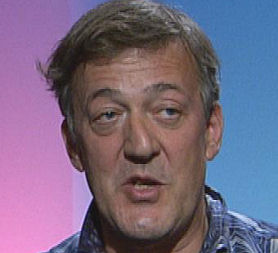
Fry said: "There has been a history, let's face it, in Poland of a right-wing Catholicism which has been deeply disturbing for those of us who know a little history, and remember which side of the border Auschwitz was on, and know the stories, and know much of the anti-Semitic, and homophobic and nationalistic elements in countries like Poland.

Complaints: Fry 'slandered' Poland over Auschwitz

http://www.channel4.com/news/articles/politics/domestic_politics/complaints+fry+aposslanderedapos+poland+over+auschwitz/3377697

Updated on 08 October 2009

By Channel 4 News

Stephen Fry is accused by embassy officials of making "utterly misleading" and "slanderous" comments about Poland after a Channel 4 News interview in which he mentioned links to the infamous Auschwitz concentration camp.

Stephen Fry on Channel 4 News

The Polish Embassy in London has launched a forthright defence of its country after the actor made his remarks in an interview with Jon Snow this week.

Fry appeared on the programme to voice his concerns over the alleged homophobic and anti-Semitic background of some Polish members of David Cameron's European Conservatives and Reformists (ECR) group in the European parliament.

Fry said: "There has been a history, let's face it, in Poland of a right-wing Catholicism which has been deeply disturbing for those of us who know a little history, and remember which side of the border Auschwitz was on, and know the stories, and know much of the anti-Semitic, and homophobic and nationalistic elements in countries like Poland.

"This is a problem that is not going to get smaller because as we start to pay for the financial disaster of the least year - as the bill comes in – a kind of great pimple acne of nationalism and homophobia and racism is going to erupt around Europe because there is going to be trouble with unemployment, there are going to be all the problems."

Fry is one of a group of activists, which also includes comedian Eddie Izzard and the Unite union, who have written to David Cameron asking him to reconsider the Conservative party's links with the Polish Law and Justice party, with whom the Polish MEPs are affiliated.

But Fry's comments on Channel 4 News, as well as prompting complaints from Polish viewers in the UK, also led the Polish Embassy to complain.

Robert Szaniawski, spokesman for the embassy, told Channel 4 News: "I have taken strong exception to the statement made by Stephen Fry in which he suggested Polish complicity in the Nazi atrocities in Auschwitz during World War Two.

"While Mr Fry has every right to express his opinion, be it regarding current political developments or, indeed, historical matters, nonetheless, it should be tempered with some respect for factual accuracy in his public pronouncements.

"Poland was not free from anti-Semitism before World War Two or under the Nazi occupation, but to imply, however vaguely, some form of collective responsibility of the Polish nation and Poland for the notorious death camp which came to symbolise the horrors of the Holocaust, is utterly misleading, and quite frankly, slanderous.

"The mere geographical reference in this context is also incorrect, as Auschwitz-Birkenau was set up and administered by Nazi Germany in the part of Poland directly annexed to the Third Reich at the time."

Michael Burleigh, author of The Third Reich: A New History, and Ethics and Extermination: Reflections on Nazi Genocide, agreed with the Polish objections.

He said: "At that time there wasn't really a Poland to speak of. They [the Nazis] had left a tiny rump of a state but that was about it. There wasn't really anything left.

"To talk about a border is nonsense really; and even if there was technically one the Polish will have been surrounded by Nazi troops anyway. It's absolutely ridiculous for Stephen Fry to imply this."


Wlodimir Ledochowski War Culpability Admission


Wlodimir Ledochowski Deranged Polish Roman Catholic Religious War


Amber Path West To South 14


If TIME can admit that U.S. President Ronald Wilson Reagan (1981-1989) and Roman Catholic Church Pope John Paul II "conspired to assist Poland's Solidarity movement and hasten the demise of communism", then what about the roles of U.S. President William Jefferson Clinton (1993-2001) and Pope John Paul II in steering the Vatican's Counter Reformation War against the Orthodox Serbian people?
http://continuingcounterreformation.blogspot.com/2009/12/amber-path-us-for-croatia-and-against.html
(excerpt)

In early August 1991, when western European-brokered talks on defusing the Yugoslav crisis were about to begin, Croatian special forces launched a secret and brutal raid on Knin, headquarters of the Krajina Serb government. During the raid, Croatian comandos killed 60 Serbian resistence fighters. The next day, EC's representative, Dutch foreign minister Hans van den Broek, requested a meeting of Yugoslav contending patries. No repriemnad were issued against the Croatian attack. Milosevic was furious and refused to attend EC negotiations. Far from sympathizing with the Serbs, however, the Dutch foreign minister blaimed Milosevic for scuttling the talks. The next day, Germany's foreign minister, Hans-Dietrich Gensher, threatened Serbia with economic sanctions. Again, no reprimand was issued against Croatia for its role in the dispute. Germany's close ally, Austria, put additional pressure on Serbia by announcing it was considernig recognizing Croatia.

The Vatican was also making its view clear on the issue. In an August 17, 1991 Mass in the Hungarian city of Pecs, less then 20 miles from Croatia, Pope John Paul II stated that Croatian actions to break away from Yugoslavia were "legitimate aspirations". The Pope's comments were eagerly welcomed by Cardinal Franjo Kuharac of Zagreb and thousands of Croatians who cheered and waved Craotian national flags throughout the Pope's speech.

Thursday, December 3, 2009

Wlodimir Ledochowski Great Roman General 7

Wlodimir Ledochowski Amber Path Great Roman General 7
Romish-Masonic Chessgame

Dr. Nicholas Murray Butler, who met Father Ledochowski in 1930, wrote later that "everyone in Rome I was told that Father Ledochowski would rank as one of the two or three greatest heads of the Jesuit Order," an estimate which would group him with such men as Ignatius Loyola, the first [Jesuit] general, Francisco Borgia, the third, and [Claudius] Aquaviva, the fifth.

It was during the twenty-seven year Generalate of Father Wlodzimierz Ledochowski (1915-1942) that the traditional character of the Society received the firmest stamp and clearest definition since the Generalate of Claudio Acquaviva in the sixteenth and seventeenth centuries. One might even say that Ledochowski insisted on fidelity to the structure of Jesuit obedience, was an almost merciless disciplinarian, and maintained a stream of instructions flowing out to the whole Society about every detail of Jesuit life and Ignatian ideals. He know exactly what Jesuits should be according to the Society’s Constitutions and traditions; and under strong hands of two quite authoritarian Popes, Pius XI and Pius XII, he reestablished the close ties that had once linked papacy and Jesuit Generalate. Ledochowski, in fact, gave renewed meaning to that old Roman nickname of the Jesuit Father General, “the Black Pope. Just as Pius XII can be described as the last of the great Roman Popes, so Ledochowski can be called the last of the great Roman Generals of the Jesuits.

There seemed, indeed, during those years of Ledochowski, Pius XI, and Pius XII, no real limit to what both Jesuitism and overall Roman Catholicism could achieve. Even – especially, we should say – in the afterglow of Ledochowski’s long reign and into the Generalate of his successor, Belgian Jean-Baptise Janssens, the magic power of the momentum seemed to continue.
Wlodimir Ledochowski's start was marked by deaths suggestive of a secreted agenda, as was his end 24 days after the November 19, 1942 turn of the war at Stalingrad. Those that might have assassinated Ledochowski by poisoning would have done it as their revenge against their betrayer, yet would not be able to effectuate any sort of general civil war or change in course.

How the Ledochowski counter reformation agenda was protected was the continuing existence of his vast Jesuit Order led compartimentalized network, including the array of fraternal orders, including those found at colleges (where most are initialted) and of course those masonic., which are based upon the very concept of the secreted agenda. Masonry is said to be notorious for this with its doctrine of false understandings particulkarly for those in the lower levels (degrees) from knowing what those above him/her know, with the initiate believing that he understands when in fact that's a decption. Simply because someone close to Ledochowski could have been decieved and then figured things out at the pinicle of the 3rd Reich's military thrust, and hence had him poisoned hardly meant this was any sort of mass consciousnous, nor that they could do much of anything to thwart his planned destruction of Prussia.

Serving the Superior General position’s administrative role during the interim following Ledochowski’s December 13, 1942 death and Janssens’ 1945 election was the Vicar General. Initially this was filled by the then current Italian Assistant, Allessio Magni, (who was accordingly almost as old as Ledochowski) until his April 12, 1944 death. Magni was followed by the French Assistant, Norbert de Boynes (August 24, 1870 La Trinité-des-Laitiers, Dep. Orne, - October 6, 1954 Rome), who openly supported the collaborationist Vichy regime in August 1941 via instructions that it was the only legitimate government of France, shortly after its declaration to comply with the Hitler regime’s anti-Jewish edicts.

Further down the pyramid were the ‘leaders’ of the powerhouse nations on both sides of the war. Within the United States of America, Ledochowski’s most significant tools were its Masonic President Franklin Delano Roosevelt, and General Eisenhower. Both Roosevelt and Eisenhower were critically important in enforcing Vatican directives, diplomaticaly and militarily, particularly by ensuring WW2’s continuation for at least 2 more years - nesitated by the Ledochowski counter refomation aim of the destruction of Prussia/Oder-Neise line. This occurred both by spurning German-Prussian overtures to assassinate Hitler and end the war without having the USSR occupy central-eastern Europe, and by military strategy- such as invading Italy from its southern tip of the boot, rather then landing on the coast nearest Rome and slicing the boot in half. This lets go slow allied invasion of western Europe to give the USSR time to invade deep into central Europe enabled through Roosevelt and Eisenhower, marked the supremacy of Romish-Masonic duplicity over the more true nationalists- a betrayal exemplified by another U.S. General, George Patton, with his assassination via automobile ‘accident’ squaring with a motive to stop him from exposing Eisenhower’s involvement with allowing the USSR to invade deep into central Europe by prolonging the war. (Eisenhower, recall, was deeply involved with the infamous Operation Keelhall to send anti-Stalin Russians back to the USSR to be executed by Stalin).

Such actions to extend the war were mirrored by those of Stalin against his military generals, enabling the 3rd Reich’s ‘Operation Barbarossa, to have a deep penetration by German military, including the Eizengrupen killing squads against civilians, to maximize deaths of Russian Orthodox peoples, Jewish peoples, dissidents/resisters, and ultimately as well, large numbers of Lutheran German soldiers. Extending the war until 1945 resulted in millions more deaths, given that some ¾ of WW2’s deaths occurred during its final 2 years, while Vatican ‘Ratlines’ at the war’s end and afterwards mocked the idea that spurning the German-Prussian peace initiatives that would have saved these lives, and avoid the destruction of Prussia within an eastern German border either at the pre WW2 or WW1 lines (different negotiations differed on this with Stauffenburg IIRC by one source favoring the 1914 border with Posen/Poznan within Germany).

The actions of Roosevelt (with a reported hostility to both Protestant Prussians and Jewish Europeans) and Eisenhower were consistent with the idea of WW2 as a war of the continuing Counter Reformation to help rid Europe and the world of ‘heretics’. Other actions consistent with facilitating such via NSDAP Germany include the failures to increase immigration quotas to facilitate Jewish emigration from Europe, symbolized by Roosevelt’s infamous refusal to allow the St. Louis – a German ship with Jewish asylum seekers – to land in the U.S., and later the refusal to bomb even the rail lines feeding the death camps in and near Upper Silesia, such as Auschwitz.

Within Europe, Ledochowski’s most important tools were the regimes nurtured for this Counter Reformation agenda, starting with those featuring a Red Flag, particularly around Poland: Germany’s NSDAP USSR’s Lenin and Stalin Slovak Hungary Arrow Cross Spain Falangists Italy, It was from its start, it’s spirit was genocidal: marked by its policies against Jewish peoples and Serbs (non-Roman Catholic South Slavs), it was, as per Maximilian Kobe's impending war description as ‘Our War’- Rome’s War.

From the Hitler NSDAP regime’s Jesuit Order blood (DNA) based Nuremberg Laws -- as Jesuit law excluded those of any part Jewish ancestry rather then any religious beliefs – that lead to the mass exterminations in the occupied Ost with elaborately architectural death camps with facilities to gas and incinerate human beings, with the gas unneeded for the actual killing via fire consist with ancient Roman Catholic burnings at the stake.

To Ante Pavelic Clerical-Fascist Ustashe Croatia’s -- a direct and open collaboration between the state and the Roman Catholic Church with a goal of a purely Roman Catholic Croatia via killing 1/3 of the Serbs (non Roman Catholic South Slavs), converting 1/3 to Roman Catholicism, while effectively driving out the remaining 1/3. In accordance with this, the Ustashe regime sent squads to round up non Roman Catholics (and anyone else deemed a threat to the Ustashe regime), with even those instances with the stated mission of conducting forced conversions, ending as outright extermination, including massacres within Orthodox Churches, and within concentration-death camps, with guards cutting victims’ necks, and often even gouging out their eyes before killing them: numerous sources report that human eyes were a ‘delicacy’ for Ustashe figures, including Pavelic, it was what it was.

Throughout its time, the war was covertly orchestrated to steer the war to maximize the deaths of ‘heretics’, starting with the creation and nurturing of the various regimes, including that critical component of Germany’s Hitler/NSDAP regime’s brutality- a brutality turned eastward at great cost disproportionately to liberal Poles, Jewish peoples and Russian Orthodox – with the duel purpose of eliminating many heretics while creating the reason for revenge that would be applied disproportionately to the more Protestant areas of Germany, particularly Prussia.. By refusing all attempts to end WW2 sooner, particularly via strategies designed to waste time, such s invading Italy starting from its southern tip rather then a slice across directly through Rome, Eisenhower was being loyal to Rome with its hidden inner agenda goal of revenge against Prussia

One with the covertly organized efforts at a cover up, encompassing both reducing the numbers of war criminals brought to public trial – as done at Nuremberg – as well as censoring any such Nuremberg trial testimony damaging to the Roman Catholic Church, which so thwarted much of such potential testimony by “Rat Line” conveying higher level war criminals to safe havens in overwhelmingly Roman Catholic South America to help obscure the Vatican’s support for such movements that came to power including Germany’s NSDAP (Nazis), Slovakia’s Tiso, Italy’s Fascists and Croatia’s Pavelic, who was conveyed to Argentina before being assassinated there in 1959. Lower level war criminals were generally far less fortunate, being targeted by end of the war mass killings in such places as in the northern Adriatic region around the junction of Italy, Croatia and Slovenia at the Iberian Peninsula, usually of lower level police by ‘communist’ partisans upon a chain of command leading back to Rome- a situation consistent with the post war Tito Yugoslavia government’s tendency to downplay the Vatican-Clerical Fascist Ustashe Croatia connection.

The 2 year 1943-45 extension of the war would allow the Ustashe to further ‘cleanse’ the areas under their control. And one where it was absolutely necessary – given the ferocity of the Nazi occupation – for bringing a vengeful USSR deep into eastern and central Europe -- for bringing about that ‘prophecy of Maximillian Kobe, later described by Polish Cardinal Wyzinski as “the aim” of the counter reformation of the destruction of Prussia with the Oder-Neisse line, and the USSR-Poland partition of East Prussia- the land originating the name ‘Prussia’ which in 1525 became the first Lutheran state, plus the subjugation of much of the remaining majority Protestant areas of northern Germany under totalitarian atheistic communist government.

What after all was the ‘counter reformation’ – it was and is the Jesuit Order’s on-going mission, founded during the 1500s to combat the Reformation that was largely sparked by Martin Luther, and headed from 1915 to 1942 by Wlodimir Ledochowski from Polish ‘nobility’ so-known for their fidelity to the Vatican, who was only about 8 years old when his Cardinal uncle Mieczyslaw was imprisoned for defying Bismarck’s Kulturkampf against Rome following the Pope’s declaration of Papal infallibility, who came to become Jesuit Superior General following the statistically unlikely hours apart deaths of his predecessor and Pope Pius X’s deaths August 19-20, 1914 just weeks after the outbreak of WWI, and who died reportedly with gastro-intestinal problems a mere 24 days after WW2 turned against Germany with the November 19, 1942 USSR counter-offensive at Stalingrad.

Ending the war in 1943 would have occurred while the battle line was still inside the USSR, with the USSR’s military finally pushing the German forces back to the pre-war USSR-Polish border by mid 1944, before invading Pomerania and Silesia within the eastern portions of pre-war Germany in February 1945- the month when Roosevelt, Churchill and Stalin representing the U.S., the U.K. and the USSR held the Yalta Conference where they would agree upon Poland’s shift westward and the mandated transfer of populations. With the war, Prussia wiped of the map, and with the gory clerical-fascist Ustashe regime covered over, starting with Tito connected killing squads of Ustashe forces to better ensure silence (rather then some sort of publicly open trials as those held after the war in Nuremberg, Europe’s religious demographics along its amber trade paths changed as they had not since the counter reformation wars of the 1600s, along with a concentration of power embodied by the creation and growth of government bureaus for continuing the Jesuit mission of infiltration for gathering information and subversion.

Selling the idea of the westward shift of Poland, particularly the Oder-Neisse Polish-German border as just punishment for starting a war, altogether obscuring the comments of Kobe and Wyzinski, would only further embolden the Jesuit Order to continue their counter reformation COVERTLY, obscuring their connections so that the masses would not even realize it for what it was – guided by ‘scholars’ who insist that Europe has not had a religious war since say 1648, forgetting even the India-Pakistan War 3 centuries later – as a demonstration that this is a very good reason for the Jesuit’s long commitment to education for Rome’s Learning Against Learning. By so obscuring history, they could hypnotize the masses into believing or acting like that the only people to loose their homes during the 1940s were ‘Palestinians’ and that the only people then targeted for their religion were Jewish peoples. And they could get away with so much more… through their romish-masonic tools internationally…

Wlodimir Ledochowski Great Roman General 6

Wlodimir Ledochowski Amber Path Great Roman General 6
Circumstances & Chessgame of 20th Century Counter Reformation war
Secreted Agenda Within 1914-1941 Papal War on Orthodox Russia (and more)

Dr. Nicholas Murray Butler, who met Father Ledochowski in 1930, wrote later that "everyone in Rome I was told that Father Ledochowski would rank as one of the two or three greatest heads of the Jesuit Order," an estimate which would group him with such men as Ignatius Loyola, the first [Jesuit] general, Francisco Borgia, the third, and [Claudius] Aquaviva, the fifth.

It was during the twenty-seven year Generalate of Father Wlodzimierz Ledochowski (1915-1942) that the traditional character of the Society received the firmest stamp and clearest definition since the Generalate of Claudio Acquaviva in the sixteenth and seventeenth centuries. One might even say that Ledochowski insisted on fidelity to the structure of Jesuit obedience, was an almost merciless disciplinarian, and maintained a stream of instructions flowing out to the whole Society about every detail of Jesuit life and Ignatian ideals. He know exactly what Jesuits should be according to the Society’s Constitutions and traditions; and under strong hands of two quite authoritarian Popes, Pius XI and Pius XII, he reestablished the close ties that had once linked papacy and Jesuit Generalate. Ledochowski, in fact, gave renewed meaning to that old Roman nickname of the Jesuit Father General, “the Black Pope. Just as Pius XII can be described as the last of the great Roman Popes, so Ledochowski can be called the last of the great Roman Generals of the Jesuits.

There seemed, indeed, during those years of Ledochowski, Pius XI, and Pius XII, no real limit to what both Jesuitism and overall Roman Catholicism could achieve. Even – especially, we should say – in the afterglow of Ledochowski’s long reign and into the Generalate of his successor, Belgian Jean-Baptise Janssens, the magic power of the momentum seemed to continue.
Whether WW1 and WW2 were strictly synonymous with the agendas that Ledochowski shared or secreted with Wernz and Pius X -- that both Wernz and Pope Pius X die in rapid succession, Wernz on August 19, Pius X on August 20, mere hours apart just weeks after WWI’s outbreak -- bespeaks a set of assassinations by the faction with its inner core agenda hidden within outer agendas they had openly presented- with both the ‘White’ and the “Black’ Popes enticed to start something before being pushed out of the way for the enticer – the one that devised the grand plan – to take over the command in order to effectuate various changes required for bringing about his obscured inner core agenda.

Circumstances would demand it be obscured. Perhaps because it was to extreme for some, and definitely because it would naturally be carried out in part by many unaware of the full agenda. This would naturally be particularly so for those from the country that you were going to have built up before having it knocked down (after it had knocked down millions of Jewish people, apostate, liberal Roman Catholics deemed as a class insufficiently loyal to Rome, Russian Orthodox, while chewing up large numbers of Lutheran German draftees led to clear the way for the predominantly Roman Catholic Austrian Eizengruppen killing squads, ‘cleansing Poland’ and the surrounding area of Jewish DNA), as part of a grand design to burn away millions of ‘heretics’ culminating in revenge disproportionately vengeful against Germany’s Protestant north-east with the elimination of the eastern core of Protestant Prussia (including the partition of East Prussia- the original Prussia and Europe’s 1st Lutheran State established in 1525).

With a chessboard of a continent straddled from west to east by three major powers -- Roman Catholic France, Roman Catholic western, Protestant central and eastern Germany, and orthodox Russia -- the obvious initial war scheme would be using the power in the middle -- Germany -- to ultimately defeat the power to the east -- Russia, with the remaining flow chart options concerning how many groups to target, and of course the question of what do do with predominently Roman Catholic Poland that had been partitioned between orthodox Russia, protestant Prussia, and roman catholic Austria-Hungary since 1795

With the presense of Wlodimir Ledochowski whose family was long established in Poland as 'noble' for its loyalty to Rome, the matter of Poland had to have been something at the forefront of Ledochowski's and Wernz's minds.

Most plausibly, Ledochowski had sold Wernz and Pope Pius X on the idea of a Papal War Against Orthodox Russia that among other things would free Poland from Russia - that is what was known as "Congress Poland" - with or without additional lands to the east with a Polish presence and history. Competing papal agendas would vary as much and more with the planned extent of the new post WW1 Poland. A point that Ledochowski may have secreted from Wernz was the extent of Poland- that is simply being reborn from the lands previously taken by Russia, or also including those lands taken by Prussia and Austria-Hungary. The latter had Galicia, while the former had Posen (Poznan). As his uncle had ruled the diocese of Posen Provinz, and had been jailed for defying Bismarck's Kulturkampf, Wlodimri Ledochowski would have understandably desired to have Provinz Posen become --- Poznan, and was better justified by the reality of the area majority Polish population, and for being part of Prussia only since the 1795 partition, rather then say areas just to the north and the west and southwest of East Prussia, Pomerania and most of Silesia which were majoriy self identified as German.

Another point would have been the extent of the number of targeted groups.

And a final point, certainly something to think about between a German Jesuit Superior General and his able Polish-Austrian assisstent, particularly as described by Tupper Saussy:

Whose Who at Number 15?

Eighty-two years ago, 15 Brienner Strasse housed three vital players in world politics: Eugenio Pacelli, Archbishop of Sardi, nuncio to Bavaria, and administrator of the Vatican’s foreign affairs; his housekeeper, a Holy Cross nun named Pascalina; and his Jesuit speech-writer Robert Lieber.

Eugenio Pacelli had served in the Church’s diplomatic service since his ordination in 1899. His international sensibilities had been mentioned by the Jesuits, one of whom – Vladimir (Wlodimir) Ledochowski – he idolized. I say “idolized” because this is the exact word an elderly Jesuit I interviewed in Rome employed to describe Pacelli’s relationship to Ledochowski. He’d known both figures personally.

Wlodimir Ledochowski was a Polish aristocrat who by 1906 had demonstrated such exceptional skills in international diplomacy that Jesuit Superior General Franz Xavier Wernz (under whose tutelage Pacelli had done his prost graduate research in canon law) appointed him Consultor General for Germany, Austria-Hungary, Russia, Bosnia, Serbia, Croatia, and Poland, as well as Belgium and the Netherlands.

“Consultor General” is the equivalent of a cabinet post. It empowered Ledochowski to lace the future of his nations with alliances that lay buried like so many land-mines. This is not an unusual feat for a Jesuit strategist. Indeed, the Society of Jesus (which is the pope’s private CIA and veritable Mother of Spies) is renowned for “Orthelloizing” nations- setting them up for mutual destruction, as when Othello’s trusted but treacherous advisor Iago gloats to the audience, “Now whether he kills Cassio or Cassio him, or each do kill the other, every way makes my gain.”

(It’s foolish, in my opinion, not to suspect a covert military strategist of anything he has the authority, means, and requirement to do. To ignore him is to be conquered by his strategy, which is usually to foster ignorance of his most decisive operations.

Triggering World War

Most historians agree that the first World War was triggered by the Serbian Concordat of June 1914. Eugenio Pacelli was the Concordat's acknowledged author, but Vladimir Ledochowski had authority, means, and requirement to ghost it. The Serbian Concordat promised (a) Vatican support of Serbia's liberation from Roman Catholic Austria-Hungary, while (b) pitting Roman Catholic evangelism against the Serbian state religion, Eastern Orthodoxy, a faith that denies the supremacy of the Roman papacy. Such a policy was sure to provoke belligerency between Austria-Hungary and Serbia, just as Jesuit military strategy created enmity between America and Great Britain to incite a Revolution that resulted in the world's first republic governable by Roman Catholic laypersons.

The underlying purpose of the Serbian Concordat, like the Declaration of Independence, was to restructure the world according to the requirements of Rome.
What those requirements were we shall learn presently. Four days after Eugenio Pacelli signed the Concordat, a Serbian terrorist assassinated the heir to the Austro-Hungarian throne. Within weeks, nations with no more reason to make war than the alliances they had signed began outfitting their respective soldiery for what looked like Armageddon.

Death hit the Vatican, too.

On August 19, 1914, Jesuit General Wernz died suddenly, followed the next day by Pope Pius X—of heartbreak, it was rumored, over the world's disintegration. To succeed Pius, the college of cardinals chose a professional diplomat, Giacomo della Chiesa, who assumed the name Benedict XV.

It took the Jesuits six months to elect a Superior General to succeed Wernz. There's no more powerful political office on earth than Superior General of the Society of Jesus. It commands absolute, unquestioned obedience. The proposition that Jesus Christ is to be seen in the person of the Superior General is repeated no less than five hundred times in the Society's Constitutions. Vladimir Ledochowski was chosen General by his Jesuit electors. The man idolized by Eugenio Pacelli now had full authority to cause America to desire war against Germany. We have heard many reasons why America entered World War I.

Statesmen argued that it was “the war to end all wars,” while pacifists charged it was a war to support British imperialism. Actual outcome points to another, less apparent yet more practical reason.

The Purpose of World War I

Immediately upon assuming his Generalate, Vladimir Ledochowski fled Rome (Austria, after all, was now at war with Italy) and set up office with two assistants in his mother's castle at Zizers, Switzerland. In 1917, Ledochowski invited Mathias Erzberger, a deputy from the German Catholic Center party, to Zizers for a secret meeting. Erzberger later reported to friends that the General had persuaded him to support a strategy of destroying the unified Reich under the Protestant Kaiser Wilhelm II in order to bring the Catholic nations of central and eastern Europe together in a pan-German federation under a charismatic dictator charged with subduing the communist menace from the east. Dr. Hans Carossa, documenting the deputy's fact patterns after Zizers, observed that “Every political maneuver that Erzberger has engaged in since his discussion with the Jesuit General has only served to advance this Jesuit political strategy.” (Manfred Barthel, The Jesuits, William Morrow, p. 254-5)

Means A: The Lusitania

As much as Ledochowski needed to mobilize America against Germany, America was disinterested in European events. In fact, President Woodrow Wilson repeatedly declared that Europe's calamities were of absolutely no concern to Americans. But soon after Ledochowski ensconced in Zizers (locals pronounce it "Caesar's"), things started going his way. A German submarine sank the RMS Lusitania off the coast of Ireland with 128 Americans aboard. This act, wrote Jim Marrs in his study of clandestine governments (Rule By Secrecy, HarperCollins, 2000), “set off a firestorm of anti-German feeling throughout the United States, fanned by the Rockefeller-[J.P.] Morgan dominated press.” Marrs added that “Morgan was the Rothschilds' American representative—some say partner.” The house of Rothschild is bound by fiduciary duty to facilitate the Jesuit General's needs. According to Encyclopedia Judaica, the Rothschilds are “Guardians of the Vatican Treasury.” The Rothschild press used the Lusitania to foment hatred among Americans toward “the hideous Hun.” But a stunt even more dramatic was needed to secure a declaration of war.

Means B: The Zimmerman Telegram

War resulted from the famous Zimmerman Telegram, which the Rothschild press sensationally published in America on March 1, 1917.

In the telegram, supposedly decoded by British interceptors, German foreign minister Arthur Zimmermann proposed to the German ambassador in Mexico a German-Mexican alliance against the United States in which Germany would support the Mexican recapture of territory in Texas, Arizona and New Mexico.

A German official talking secretly of invading Texas, Arizona, and New Mexico brought the war suddenly home!

Normally, when the alleged proponent of such an explosive notion—true or not—is asked for verification, he follows good diplomatic form and categorically denies responsibility. Not Arthur Zimmermann. At a Berlin news conference on March 3rd, a reporter for the Hearst papers—which columnist George Seldes terms "the most pro-Catholic press in America”—caught Zimmermann's attention and stated: “Of course Your Excellency will deny this story.” Zimmermann replied, “I cannot deny it. It is true.”

Is this a script, or what?

Zimmermann's inexplicable admission (and shamefully unprofessional, unless done in obedience to the General or the Rothschilds) gave President Wilson no alternative but to ask Congress for precisely what Vladimir Ledochowski desired: a declaration that a state of war existed with Germany.

Congress complied on April 6, the Guardians of the Vatican Treasury cranked out the credit (through the Rothschilds' brand new Federal Reserve), and over the next year and a half, more than 364,000 American lives were sacrificed (out of 4,355,000 mobilized) to Ledochowski's objective of destroying the Reich and replacing its Protestant Kaiser with a charismatic dictator.

Came Armistice Day, November 11, 1918, the Reich was devastated . The Kaiser had fled for the safety of Holland.

Power-drunk from overthrowing czarist Russia, Bolshevik mobs flying red flags overran Bavaria. All Munich's diplomatic legations returned to their home countries. The Vatican nunciature alone remained.

On June 28, 1919, the Allies presented the Treaty of Versailles for Germany to sign. The Diktat, as Germans called it (“dictated peace”), only perfected their devastation—forcing them to accept sole responsibility for the war, ripping great chunks of territory away from the Reich, and reducing German naval and military power to practically nil.

The moment had arrived for the introduction of Vladimir Ledochowski's “charismatic dictator.”

He entered history at 15 Brienner Strasse late one blustery night during the winter following the Diktat...

Mission Accomplished

Sister Pascalina recalled the moment for her biographers, Paul Murphy and Rene Arlington (La Popessa, Viking, 1983).

The nunciature was asleep. Pascalina heard knocking at the door. She answered to find a young Austrian soldier standing there, a corporal and a Catholic, bearing a letter of introduction from a leading Bavarian politician citing him for acts of bravery during the war.

Pascalina issued the young man into the sitting room and awoke Archbishop Pacelli. Their meeting went fast. The soldier vowed to check the spread of atheistic communism in Munich and elsewhere. Pascalina heard Pacelli say, “Munich has been good to me, so has Germany. I pray Almighty God that this land remain a holy land, in the hands of Our Lord, and free of communism.”

She then saw Pacelli give the soldier “a large cache of Church money to aid the rising revolutionary and his small, struggling band of anticommunists.”

“Go, quell the devil's works,” the archbishop told him. “Help spread the love of Almighty God.”

Sister Pascalina never forgot the young soldier's face or his name—Adolf Hitler.

Reflections

Of course, in 1939 Eugenio Paceli was elected Pope Pius XII, whom John Paul II moved toward sainthood with beatification in 1998.

Catholic author and Cambridge scholar John Cornwell contends in Hitler’s Pope: The Secret History of Pius XII (Viking, 1999) that Pacelli’s tactical subservience to Hitler, particularly his refusal to intercede with the Fuhrer’s treatment if the Jews, depended upon “a fatal combination of high spiritual aspirations in conflict with soaring ambition for power and control.” In other words, “Ignore Vladimir (Wlodimir) Ledochowski; look no further then His Holiness, in the same way you would look no further than Oswald, Ray, Koresh, or McVeigh.”

Although it fails to consider the pope’s very real legal relationship to the man he idolized, Cornwll’s estimable book is still our most revealing examination of Pacelli’s inner career.

Scholars need to learn that the Church is perennially at war with every no Catholic, a fact proved by the existence and record of the Jesuits. His task of defending the sacraments places the Superior General in control of the entire Church Militant. In certain circumstances, he is entitled to require obedience to the pope for the sake of Rome.

And so I submit that the policies of Pius XII were not his to make but rather those of Vladimir (Wlodimir) Ledochowski. The ‘society of Jesus’ will never agree to this I know. As Manfred Barthel has explained, “Jesuit sources always blandly insist that the General concerned himself entirely with spiritual and administrative matters and never gave politics a thought.”

“From this room, Your Grace, I govern not only Paris, but China; not only China, but the whole world –and all without anyone knowing how it is done.” – Society of Jesus Superior General Tambourini to the Duke de Brissac, Constitutions of the Jesuits, edited by Paulin, Paris (1843)

Michelangelo Tamburini (27 September 1648, Modena, Italy - 28 February 1730, Rome)

http://en.wikipedia.org/wiki/Michelangelo_Tamburini