Showing posts with label Pope John Paul II. Show all posts

Wednesday, December 30, 2015

Rome's Pharmacratic Inquisition - Series

Various Continuing Counter Reformation posts about Rome's Pharmacratic Inquisition

Pro-Papist Drug War Pusher William Randolf Hearst

A General Overview:
http://continuingcounterreformation.blogspot.com/2015/06/20th-century-pharmacratic-inquisition.html

Vatican Initiates 20th Century Drug War
http://continuingcounterreformation.blogspot.com/2015/12/1897-church-of-england-lies-about-coca.html
http://continuingcounterreformation.blogspot.com/2008/07/roman-catholic-church-cocaine.html
http://continuingcounterreformation.blogspot.com/2014/10/the-plausible-falling-out-between.html
http://continuingcounterreformation.blogspot.com/2011/09/luis-martins-curse.html
http://continuingcounterreformation.blogspot.com/2015/12/episcopalian-who-became-law-professor.html


Vatican Spurs U.S. President Ronald Wilson Reagan's escalation of drug war:
http://continuingcounterreformation.blogspot.com/2010/05/wlodimir-ledochowskis-afterglow-5.html
 Vatican Promotes Continuation of Drug War:
http://continuingcounterreformation.blogspot.com/2009/02/there-is-special-place-in-hell-reserved.html
So called 'reformist' Pope Francis S.J. Supports drug war:
http://continuingcounterreformation.blogspot.com/2015/01/mafia-pope-francis-sj-supports-crime.html
So called 'Protestants' Support drug war:

http://continuingcounterreformation.blogspot.com/2015/03/1911-protestants-fell-in-line-with-rome.html
http://continuingcounterreformation.blogspot.com/2015/01/crypto-roman-catholic-baptist-support.html
 http://continuingcounterreformation.blogspot.com/2014/12/the-unchristian-westboro-baptist-church.html

 Also- research Vatican Media Tool William Randolph Hearst.


Wednesday, November 19, 2014

Overly Hyped Religious Leaders as the 'Dalai Lama', Roman Popes and the Archbishop of Canterbury


http://www.huffingtonpost.co.uk/james-snell/dalai-lama-criticism_b_4421553.html

The Dalai Lama Deserves Criticism, Not Adulation


by James Snell

There is no greater demonstration of our passivity as a culture than the honorifics we attach to unworthy people. The Pope is always 'His Holiness', regardless of whether or not he knew about - and subsequently covered up - child abuse amongst the priesthood. The limp, insipid Archbishop of Canterbury is always 'His Grace', regardless of his cowardly abuse of power to block the legalisation same sex marriage for Anglicans and that most wonderful of things - equality [CCR note- that focus is jesuitical considering the question what has ANY of these religious leaders said about freedom of medicine and diet and the people unjustly persecuted under the pharmacratic inquisition which is the main thing responsible for imprisoning people?!]. Every terror-happy Islamist commander is 'Sheikh', and every gay-bashing evangelical 'Reverend'.

The Dalai Lama (who is always referred to by his title) is the prime example of the way in which the media and political figures bend over backwards to accommodate those who have certain reputations. These popular perceptions often supersede substance, but what else could we expect from the team of twenty-four hour news channel obsessed media studies graduates who 'advise' our political leaders? The Dalai Lama is a comfortable face, like a dozy kitten, which means that politicians can drop in for a quick meet and great, and appear well meaning by doing so. The reputation in question is also useful for attracting the slight superficial whiff of rebellion in going against the supposed wishes of the Chinese government (anti-Chinese feeling is certainly useful - see Mitt Romney's liberal use of trade-war hysteria in the 2012 US Presidential Election campaign if an example is needed). And nothing gets your average idealistic idiot on the street more interested than China, man.

I am under no illusions here: I know that the Chinese government is not nice, as both Peter Oborne and Hugo Rifkind have eloquently demonstrated, in a blog and a column respectively, in recent days. The Dalai Lama, you see, used to run Tibet, before being overthrown by the Chinese - lending him instant, unquestionable kudos in the minds of some. But Chinese nastiness does not mean that every twopenny 'dissenter' should be given an endless reserve of screen-time and a bottomless wellspring of respect. This is even more pertinent when considering the sort of Tibetan system to which the Chinese government have put an end. It has been convincingly argued; in a number of places, that the Chinese invaders (while cruel and dogmatic - of that there is little doubt) were on parity with the Tibetan lama priestly classes before the annexation. There are plenty of tales of cruel and unusual punishments enacted in the domain of the Lama: his theocratic fiefdom was well stocked with serfs - under the control of their oppressive feudal masters on the one hand, and shaped by their eternal karmic struggles on the other.

The Dalai Lama has become a televisual fixture because he is willing to grace the most mundane topics with his pseudo-divine presence. We've seen him on lovingly depicted on The Simpsons, and we've seen him on Masterchef Australia. It's all just a bit cheap, isn't it? Would he rather be debating the issues? Hell no! He is far more at home basking in the creation of animated schlock or wandering aimlessly around the set of a food cooking thingy.

Oh, and he's a Marxist as well. Just thought I'd mention it: not that I support clichéd rapid-fire anti-commie sentiment at the very mention at the term, but it is worth pointing out that as a political actor, the Dalai Lama is hardly neutral.

The Dalai Lama also came to the defense of India when it developed its thermonuclear weapons stockpile in 1998, in an area of immense cultural and political tension, giving the government a moral defense of its newfound ability to slaughter and self-immolate simultaneously. This intervention of course, was in no way related to the fact that he operates his 'government in exile' in India, and at the behest, and tacit support, of its government. No sir, nothing morally questionable about that.

What we see here is the truth: that this whiter-than-white demigod is a human being, with all of the inherent flaws and complications that humanity brings. My issue is that this imperfect primate sees it as his right to travel the world with lapdog celebrities and a fundraising bandwagon in tow, and to preach about how he deserves to have an entire nation state - which used to be his personal possession - restored to private control.

It is a great insult to the collective intelligence and goodwill of humanity that a man who claims to be the fourteenth reincarnation of a virtually prehistoric Nepalese princeling is granted the attention that he is. Maybe the Dalai Lama should stick to his platitudinous advice-spewing (for him, Buddhism is no more than a collection of vaguely mystical aphorisms anyway), and the rest of us should get on with our lives. Perhaps he could restrict his sphere of activity to writing forwards to potboilers about meditation and self-help and the political and cultural establishment could stop deferring to an outstandingly successful fantasist and conman on such an elaborately bended knee.

James Snell is Contributing Editor for The Libertarian.

Friday, March 8, 2013

Pope JP2's Ideal Romish - Imperium?

concerning Poland

Was Martin Malachi trying to warn us,
hinting at something ... yet another war?
or was the description merely misleading
with Poland essentially possessing Silesia AND Ukrainia simultaneously?


The 1989 book In the Keys of This Blood by Martin Malachi includes this description of Poland's in the context of its geopolitical role in the counter reformation:
[emphasis added] The nub of the matter was, however, that any strategic reckoning of these countries, which had been newly reborn as Protestant powers, had to envisage the removal of the First Polish Republic, if their dream of the great northern Protestant alliance was ever to take flesh. In the 1500s, Poland's eyes for culture, learning, art, thought and philosophy were on Paris. Its sabers were directed to the nascent duchy of Moscow in the east, and to the European Ottoman power to the south. Its heart remained fixed on Rome. Within its own borders, it was a federation of five or six ethnic groups within a republic based on constitutional freedom of religion and worship, which fostered Catholicism, lived at peace with the Protestants in its midst, and provided Jews with legal, religous and civil automomy in a homeland away form their homeland. The country had become militarily strong, economically prosperous, politically mature, culturally advanced. Geopoliticcally, it was still the strategic plaque tournante of Central Europe. Out of Europe's total population of 97 million, only France, with a population of 15.5 million, exceeded Poland's 11.5 million. Poland's borders ran from the river Oder, in the west, to 200 kilometers beyond the riverine land of the Dnieper, in the east; and from the Baltic in the north to the river Dniester in the south. Religiously, meanwhile, Poland was still thoroughly Romanist and papal in its heart, its mind and its allegiance. As a People, as unitary nation and as a strategic linchpin, Poland therefore was the one major power standing in the way of a Northern European hegemony of the Protestant powers.
This description of a Poland extending from the Oder to the Dnieper, mixes the reality of the initial Polish state's western border cir 966, with its eastern border centuries later, after Poland's own 'drang nacht osten' cir 1340-1366, initially taking such places as Lviv-Lvow-Lemberg etc, and then 1400+, swallowing up all of present day Belorus and much of the Ukraine, occurring after its cession of the final territory of that Oder River - Silesia - in 1335.

The Oder River flows to the north, into the Baltic. It extends inland southward to the Lusatian Neisse, which itself extends to the south (since 1945 together forming the German-Polish 'Oder-Neisse line' border), with the Oder turning southeasterly along the axis of Silesia through Wroclaw (Breslau), and Opole (Oppelin), turning more southerly to Ostrava (Ostrau), and then hook to the west. By the 1500s, the context the Malachi quote cites, Poland had already relinguished control of the areas reaching the Oder. The 1335 Treaty of Trentschin ceeding Silesia to King John of Bohemia, as part of a political deal to get the latter to relinquish his claim to the position as King of Poland, while working against a rival, Władysław the Short or Elbow-high (or Ladislaus I of Poland, Polish: Władysław I Łokietek; 1261 – 2 March 1333). It was under Casmir the Great that Poland ceeded Silesia, and begins shifting east.


wikipedia


After Łokietek's death, the old monarch's 23 year old son became King Casimir III, later known as Kazimierz the Great (ruled 1333–1370). Unlike his father the new king had no inclination for the hardships of military life. Casimir's contemporaries did not give him much of a chance for overcoming the country's mounting difficulties or succeeding as a leader. But from the beginning, Casimir acted prudently, purchasing in 1335 John's claims to the Polish throne. In 1343, Casimir settled several high-level arbitration disputes with the Teutonic Order by a territorial compromise, culminating in the Treaty of Kalisz, a peace treaty that concluded the Polish-Teutonic War of 1326-1332. Dobrzyń Land and Kuyavia were recovered by Casimir. At that time Poland started to expand to the east and through a series of military campaigns between 1340 and 1366 Casimir had annexed the Halych–Volodymyr area of Rus'. The town of Lviv there attracted newcomers of several nationalities, was granted municipal rights in 1356, and had thus begun its career as Lwów, the main Polish center in the midst of a Rus' Orthodox population. Supported by Hungary, the Polish king in 1338 promised the Hungarian ruling house the Polish throne in the event he dies without male heirs.[45][46]

Casimir unsuccessfully tried to recover Silesia by conducting military activities against the Luxembourgs between 1343 and 1348, but then blocked the attempted separation of Silesia from the Gniezno Archdiocese by Charles IV. Later until his death he pursued the Polish claim to Silesia legally by petitioning the pope; his successors had not continued his efforts.[46]

Allied with Denmark and Western Pomerania (Gdańsk Pomerania was granted to the Order as an "eternal charity"), Casimir was able to impose some corrections on the western border. In 1365 Drezdenko and Santok became Poland's fiefs, while Wałcz district was in 1368 taken outright, severing the land connection between Brandenburg and the Teutonic state and connecting Poland with Farther Pomerania.[46]

Casimir the Great considerably solidified the country's position in both foreign and domestic affairs. Domestically, he integrated and centralized the reunited Polish state and helped develop what was considered the "Crown of the Polish Kingdom"—the state within its actual, as well as past or potential (legal from the Polish point of view) boundaries. Casimir established or strengthened kingdom-wide institutions (such as the powerful state treasury), independent of the regional, class, or royal court related interests. Internationally, the Polish king was very active diplomatically, cultivated close contacts with other European rulers and was a staunch defender of the Polish national interest. In 1364 he sponsored the Congress of Kraków, in which a number of monarchs participated, and which was concerned with the promotion of peaceful cooperation and political balance in Central Europe.[46]

Casmir, the last of the Piast dynasty, was succeeded by Louis I 'the Hungarian', King of Hungary since 1342, becomming King of Poland 1370 and holding both titles until 1382.


Louis, the champion of the church http://en.wikipedia.org/wiki/Louis_I_of_Hungary Their following campaigns "in every directions" (for example, against the Greek Catholic Serbs, the heretic Bosnians and pagan Lithuanians and Tartars) are in close connection with the political and converting ambitions of the Holy See. Louis the Great often provided military help in the inner fight of Ecclesiastic State of the Popes. Hungarian troops protected the Pope on his return from Avignon to Rome. In 1356 a letter from the Pope called him "Christ's shield, the Lord's athlete".

In the meantime Louis the Great continued his father's policy in banning the collection of papal tithe and asserting royal interest in filling church positions. In 1370, Louis financed the wars of the pope (Urban V) against the Florentines.[12] During the fight for the throne of Naples there was an intensive exchange of ministers between the Papal and the Hungarian court. After this period Papal legates visited Hungary only on very important occasions. Their duties included converting in the East, settling the Balkan situation, mediating in peace treaties. Bishop Guido's legation in 1349 was a very important one.

The Popes recognised the Turkish danger early and in this matter Pope Urban V sent his minister to Buda. In 1371 a papal legate came to Hungary to settle the dispute between King Louis and Emperor Charles IV. At the same time Hungarian legates spent months in Avignon, where - besides settling public matters - they forwarded the requests of their relatives or familiares to the Pope in the form of so-called papal requests (supplicatio).[13] [edit] Wars and CampaignsDuring his 40 years-long reign, there were only three years of peace (1342, 1375, 1376).

Louis was succeeded by Jadwiga http://en.wikipedia.org/wiki/Jadwiga_of_Poland Jadwiga (1373/4 – 17 July 1399) was monarch of Poland from 1384 to her death. Her official title was 'king' rather than 'queen', reflecting that she was a sovereign in her own right and not merely a royal consort. She was a member of the Capetian House of Anjou, the daughter of King Louis I of Hungary and Elizabeth of Bosnia. She is known in Polish as Jadwiga, in English and German as Hedwig, in Lithuanian as Jadvyga, in Hungarian as Hedvig, and in Latin as Hedvigis. She is venerated by the Roman Catholic Church as Saint Hedwig, where she is the patron saint of queens and a United Europe.[2] She was succeeded by her husband. Jadwiga was the youngest daughter of Louis I of Hungary and of Elizabeth of Bosnia. Jadwiga could claim descent from the House of Piast, the ancient native Polish dynasty on both her mother's and her father's side. Her paternal grandmother Elisabeth of Cuyavia was the daughter of King Władysław I the Elbow-high, who had reunited Poland in 1320.

Jadwiga was brought up at the royal court in Buda and Visegrád, Hungary. In 1378, she was betrothed (sponsalia de futuro) to Habsburg scion William of Austria, and spent about a year at the imperial court in Vienna, Austria. Jadwiga's father Louis had, in 1364 in Kraków, during festivities known as the Days of Kraków, also made an arrangement with his former father-in-law Holy Roman Emperor Charles IV to inter-marry their future children: Charles' son and future Holy Roman Emperor Sigismund of Luxemburg was engaged and married, as a child, to Louis' daughter and future Queen Mary. One of Louis' original plans had been to leave the kingdom of Poland to Mary, whose marriage with Sigismund was more relevant to this end as Sigismund was an heir in his own right to Poland and was intended to inherit Brandenburg, which was nearer to Poland than to Hungary. Jadwiga's destiny as Austrian consort was a better fit for Hungary, as it was an immediate neighbor of Austria. Jadwiga was well-educated and a polyglot, speaking Latin, Bosnian, Hungarian, Serbian, Polish, German,[citation needed] interested in the arts, music, science, and court life. She was also known for her piety and her admiration for Saints Mary, Martha[ambiguous], and Bridget of Sweden, as well as her patron saint, Hedwig of Andechs. http://en.wikipedia.org/wiki/Jogaila

Jogaila, later Władysław II Jagiełło (help·info)[nb 1] (ca. 1362 – 1 June 1434) was Grand Duke of Lithuania (1377–1434), king-consort of Kingdom of Poland (1386–1399), and sole King of Poland (1399–1434). He ruled in Lithuania from 1377, at first with his uncle Kęstutis. In 1386, he converted Lithuania to Christianity, was baptized as Władysław, married the young queen regnant Jadwiga of Poland, and was crowned Poland's king as Władysław Jagiełło.[1] His own reign in Poland started in 1399, upon death of Queen Jadwiga, and lasted a further thirty-five years and laid the foundation for the centuries-long Polish–Lithuanian union. Władysław II was the founder of the new Jagiellon dynasty that bears his name, while pagan Jogaila was an heir to the already established house of Gediminids (Gediminid dynasty) in Grand Duchy of Lithuania; his royal dynasty ruled both states until 1572,[nb 2] and became one of the most influential dynasties in the late medieval and early modern medieval Central and Eastern Europe.[2]

Jogaila was the last pagan ruler of medieval Lithuania.

He held the title Didysis Kunigaikštis.[nb 3] As King of Poland, he pursued a policy of close alliances with Lithuania against the Teutonic Knights. The allied victory at the Battle of Grunwald in 1410, followed by the Peace of Thorn (1411), secured the Polish and Lithuanian borders and marked the emergence of the Polish–Lithuanian alliance as a significant force in Europe. The reign of Władysław II Jagiełło extended Polish frontiers and is often considered the beginning of Poland's "Golden Age".


A Logical Follow-up Article;
From Co-federates to Over Lords: the subversion of Casmir & Joseph Pildsuski's Prometheism

Prometheism
http://en.wikipedia.org/wiki/Prometheism

Casmir III
30 April 1310 – 5 November 1370


 Joseph Pilsudski
 http://en.wikipedia.org/wiki/J%C3%B3zef_Pi%C5%82sudski

 Pilsudski
5 December 1867 – 12 May 1935

(wikipedia)

Józef Klemens Piłsudski[a] (Polish: [ˈjuzɛf piwˈsutski] ( listen), 5 December 1867 – 12 May 1935) was a Polish statesmanChief of State (1918–22), "First Marshal" (from 1920), and leader (1926–35) of the Second Polish Republic. From mid-World War I he had a major influence in Poland's politics, and was an important figure on the European political scene.[1] He is considered largely responsible for the creation of the Second Republic of Poland in 1918, 123 years after the Partitions.[2][3][4][5][6] Under Piłsudski, Poland annexed Vilnius from Lithuania following Żeligowski's Mutiny but was unable to incorporate most of his Lithuanian homeland into the newly resurrected Polish State.[7]

Early in his political career, Piłsudski became a leader of the Polish Socialist Party. Concluding, however, that Poland's independence would have to be won by force of arms, he created the Polish Legions. In 1914 he anticipated the outbreak of a European war, the Russian Empire's defeat by the Central Powers, and the Central Powers' defeat by the western powers.[8] When World War I broke out, he and his Legions fought alongside the Austro-Hungarian and German Empire's to ensure Russia's defeat. In 1917, with Russia faring badly in the war, he withdrew his support from the Central Powers.

From November 1918, when Poland regained independence, until 1922 Piłsudski was Poland's Chief of State. In 1919–21 he commanded Poland's forces in the Polish-Soviet War. In 1923, with the Polish government dominated by his opponents, particularly the National Democrats, he withdrew from active politics. Three years later, he returned to power with the May 1926 coup d'état, and became the de facto ruler of Poland. An Italian fascist ambassador to Warsaw described him as "a liberal democrat in the clothes of an old-world knight".[9] From then until his death in 1935, he concerned himself primarily with military and foreign affairs.

For at least thirty years until his death, Piłsudski pursued, with varying degrees of intensity, two complementary strategies, intended to enhance Poland's security: "Prometheism", which aimed at breaking up, successively, Imperial Russia and the Soviet Union into their constituent nations; and the creation of an Intermarum federation, comprising Poland and several of her neighbors. Though a number of his political acts remain controversial, Piłsudski's memory is held in high esteem by his compatriots.[10][11][12][13]


Keys of this Blood
 http://endrtimes.blogspot.com/2013/03/the-struggle-for-world-dominion.html
 

Saturday, April 30, 2011

Walpurgisnacht 2011

http://altreligion.about.com/od/holidaysfestivalsevents/tp/jan-april.htm

April 30 - Walpurgisnacht (Satanism)

Satanists recognize the night of April 30 as a Satanic holiday called Walpurgisnacht. Originally a pagan holiday transformed into a Catholic saint's day, the day has sometimes been associated in folklore and witch literature as having sinister and Satanic connotations. As such, modern Satanists have adopted it as their own. Walpurgisnacht is also the night the Church of Satan was established in 1966- on that date April 30, 1966 considered as the start of the modern satanic era- added note: 45 years ago, and from today, 66 years since the year Ledochowski's 30 Years Religious War ended, 1945.


People chat past a giant photo of Pope John Paul II downtown Rome on April 29, 2011. John Paul II will be honoured on May 1 at a solemn beatification ceremony in Saint Peter's basilica that will give the late pontiff "blessed" status for the world's 1.1 billion Catholics and put him on the path towards full sainthood.
Photograph by: Giuseppe Cacace, AFP/Getty Images

http://www.vancouversun.com/life/Pope+John+Paul+body+exhumed+ahead+beatification/4697781/story.html#ixzz1KyuD3RBl

Pope John Paul body exhumed ahead of beatification
By Philip Pullella and Catherine Hornby, Reuters April 29, 2011

VATICAN CITY - Pope John Paul's coffin was exhumed on Friday ahead of his beatification as tens of thousands of people began arriving in Rome for one of the biggest events since his funeral in 2005.

The Vatican said the coffin was removed from the crypts below St Peter's Basilica while top Vatican officials and some of the late pope's closest aides looked on and prayed.

Those present at the ceremony included Cardinal Stanislaw Dziwisz, his personal secretary and right-hand man for decades, and the Polish nuns who ran the papal household for 27 years.

The wooden coffin will be placed in front of the main altar of St Peter's Basilica. After Sunday's beatification mass, it will remain in that spot and the basilica will remain open until all visitors who want to view it have done so.

It will then be moved to a new crypt under an altar in a side chapel near Michelangelo's statue of the Pieta. The marble slab that covered his first burial place will be sent to Poland.

The pope is being beatified on the day the Church celebrates the movable Feast of Divine Mercy, which this year happens to fall on May 1, the most important feast in the communist world.

The coincidence is ironic, given that many believe the pope played a key role in the fall of communism in Eastern Europe....

Read more: http://www.vancouversun.com/life/Pope+John+Paul+body+exhumed+ahead+beatification/4697781/story.html#ixzz1Kyt8lZfD

Max Kolbe- "'God' is cleansing Poland"
http://continuingcounterreformation.blogspot.com/2007/08/from-man-for-others-maximilian-kolbe.html

Wednesday, May 19, 2010

Wlodimir Ledochowski's Afterglow 7 Clinton's Waco Massacre


There seemed, indeed, during those years of Ledochowski, Pius XI, and Pius XII, no real limit to what both Jesuitism and overall Roman Catholicism could achieve. Even – especially, we should say – in the afterglow of Ledochowski’s long reign and into the Generalate of his successor, Belgian Jean-Baptise Janssens, the magic power of the momentum seemed to continue.
William Jefferson Clinton would waste even less time displaying that-- as Commander in Chief -- he was a cold blooded murderer of some 88 people, for the sake of enforcing ancient Vatican dictates against heretics, via his cowardly approach to the Branch Davidian sect in Waco, Texas.

Its leader David Koresh, was ostensibly targeted for arrest on never substantiated methamphetamine manufacturing charges (that would statutorily allow such a use of military in domestic law enforcement), though was writing a paper about the Bible’s Book of Revelations Book of Seven Seals.

I find it incomprehensible that there has been so little attention placed on just what Koresh was writing, particularly amongst anti-Vatican Bible scholars, as it is plausible that some writings could displease established religious authorities, that Rome has a long history of suppressing the written words of ‘heresies’, and the connections throughout the government and the MSM to pull that of.

Such over-the-top ‘law enforcement’ -- to arrest a man who routinely jogged providing numerous opportunities for an easier arrest -- starting a 2+ month long siege culminating with armored tanks crashing their turrets into the Branch Davidian building, and the shooting of flammable gas into this building which the FBI had turned off its electricity and knew was being lit via lanterns, starting a fire killing 88 Branch Davidians, including many children, marks a military action of a religious inquisition.

Waco ended any doubt that such Naziesque behavior by the government could indeed happen here and more disturbingly with the acquiescence if not support of the general public.

The reporting by such MSM entities as The Washington Post -- infamous for lying about some of the most monumental things within the Beltway -- could serve as textbook examples of spin to deny sympathy to Koresh and by extension his followers, and continually distract from the $64,000 question of just what was Koresh writing about the Book of Seals, and particularly just what within would have been so objectionable?

Vatican Tool: Donald Graham,
Executive Publisher, The Washington Post

http://www.sevenseals.com/

http://www.watchman.org/cults/seven.htm

http://ccat.sas.upenn.edu/gopher/text/religion/koresh/Koresh%20Seals

Wlodimir Ledochowski's Afterglow 6 continuing criminal mercantilism under Clinton

Wojtyla & Kolvenbach’s Bill Clinton- Jesuit Tool for ‘Drug War’ Criminal Mercantilism

There seemed, indeed, during those years of Ledochowski, Pius XI, and Pius XII, no real limit to what both Jesuitism and overall Roman Catholicism could achieve. Even – especially, we should say – in the afterglow of Ledochowski’s long reign and into the Generalate of his successor, Belgian Jean-Baptise Janssens, the magic power of the momentum seemed to continue.
The slavish devotion of this next U.S. President, the first of the Democrat Party in 12 years, since Jimmy Carter, would clearly indicate that like the Republican Party, the Democratic Party to was and is a complete tool of the Vatican.

This was evident with the Jesuit’s grooming relationship via their political powerhouse Georgetown University, with their next major political tool, William Jefferson Clinton, with his cowardly approach to the ‘drug war’.

Clinton wasted little time demonstrating his loyalty to Rome’s pharmacratic inquisition-criminal mercantilism with his administration’s slavish devotion to the status quo to simply bury the facts, such as the Clinton Administration’s suppression of the 1993 US Congress Office of Technology Assessment endorsement for legalizing Coca, and the 1994-95 UN World Health Organization reports regarding Coca and cocaine.

Clinton was slavishly continuing Rome’s pharmaceutical-cigarette protectionist policies dating back to whatever transpired between the Vatican and Angelo Mariani when they were giving him the papal medals as a benefactor of humanity.

He was found of using the example of his brother as why ‘drugs’ particularly cocaine must remain illegal- altogether disregarding that it is probation that ensure that drugs popularization in concentrated abuse promoting modes. IOW- Bill Clinton was a complete lackey for the very drug policies that suppressed Coca while promoting highly concentrated cocaine, who deserved to be forced to publicly snort NoDoz and apologize for his shameful participation in these endeavors of criminal mercantilism.

He did finally get around to admitting that marijuana should be ‘decriminalized’ in an Esquire magazine interview at the end of his 2nd 4 year term- an 8 year period where arrests for marijuana prohibition violation had escalated sharply.

LINK- Explaining people like FDR

Wlodimir Ledochowski's Afterglow 5 Wojtyla & Kolvenbach

Telling Nancy Reagan Not to Think:
Continuing Drug War’ Criminal Mercantilism
There seemed, indeed, during those years of Ledochowski, Pius XI, and Pius XII, no real limit to what both Jesuitism and overall Roman Catholicism could achieve. Even – especially, we should say – in the afterglow of Ledochowski’s long reign and into the Generalate of his successor, Belgian Jean-Baptise Janssens, the magic power of the momentum seemed to continue.
The Vatican reign of Wojtyla and Kolvenbach turned up the wick with its pharamacratic inquisition – by the numbers of people arrested-punished, and of the social costs of the market protection – of the ‘war on drugs’ popularized by very self-defeating hysteria protecting and encouraging more dangerous modes of consumption, both by banning the safer substances of Cannabis and Coca protecting alcohol and tobacco, and by so banning Coca with statutory definitions equating raw leaves with alkaloids refined and concentrated.

During the early 1980s, ‘1st Lady’ Nancy Reagan, wife of then U.S. President Ronald Wilson Reagan, was known primarily – via the reporting by the MSM – for her tastes in chinaware.


http://www.people.com/people/gallery/0,,20238400_20537782,00.html#20537782


However shortly after an audience with Pope John Paul II in 1985, she begins her public crusade to ‘just say no’ to whatever is defined as contraband rather then any actual facts.

The following year, the MSM used the tragedy of the death of a student at the University of Maryland who had just been accepted to play for the Boston Celtics, of a fatal overdose of cocaine, to issue a mass call for new draconian legislation with severe social costs.

Central to this was a great deal of hysteria regarding cocaine as intrinsically extra dangerous and ‘addictive’ that failed to explain the history – which I then began researching – about the drug’s dangers emerging with the uses of its concentrated forms 1st widely manufactured during the mid 1880s, yet such was not the case with the drug’s dilute form.

This reality was marked by the history of Vin Mariani, first manufactured during the 1860s and sold and used for half a century, that was banned via an effort erupting just months after the 2nd time the Vatican summoned Vin Mariani creator Angelo Francois Mariani to be rewarded a gold Papal medal award as a benefactor of humanity

Indeed, after decades of use, with Coca wine, specifically Vin Mariani seen as: Excellent for alcoholism, nicotinism and opiate withdrawal… French surgeon general The spectra of drug abuse enabled by the hysteria deliberately neglecting the quite varied pharmacokokinetics of concentrated rather then dilute modes of drug use – directly versus indirectly is a Jesuitical concoction popularized through the rash yellow ‘journalism’ of such as the rabidly Vatican-loyal publishing empire of William Randolph Hearst, working with AMA-APhA connected, USDA Bureau of Chemistry Chief Harvey Washington Wiley, noted in 1908 as a ‘Knight’ amongst those showing ‘great prowess’, starting shortly after Angelo Mariani’s 2nd audience at the Vatican.

http://continuingcounterreformation.blogspot.com/2008/07/roman-catholic-church-cocaine.html

It is not only Jesuitical in encouraging cocaine abuse but in protecting and popularizing the most dangerous from a long term health perspective – Virginia Bright Leaf Tobacco cigarettes.


Quote: USDA Farmers Bulletin “Habit Forming Agents” the ‘menace’ of the free sale of Coca products particularly when and where sold in the U.S. south-east as a “Tobacco Habit Cure”.

Quote: Dr. Ronald K. Siegel off all the stimulants coca ranks the safest least likely to cause problems
http://freedomofmedicineanddiet.blogspot.com/2008/03/coca-leaf-stands-out-among-all.html

In each major category of intoxicant used by our species, there appear to be one or two drug plants that researchers have noted, are more controllable, hence safer, than all the other plants or synthetics in that category. Coca leaf stands out among all the stimulants, licit and illicit, as the easiest to control and the one least likely to produce toxicity or dependency.
And they would know that in 1914:

... there are tens of thousands of people in the United States who die every year from the excessive use of cigarettes; and yet I find Senators still pulling away at the cigarette as though it were a perfectly harmless thing. I believe the Senator will agree with me that there are many thousands of people who die from what is called tobacco cancer, a cancerous growth affecting the throat from overuse of cigars; and we find perhaps 60 percent of the Senators pulling away at the cigar as unconcerned as though no one were dying as a result of these cigars...

U.S. Congress, Senator Porter James McCumber (R) North Dakota, August 15, 1914
Nonetheless our governments have proven their loyalty to this apostasy from common sense with the descent into and continuation of this criminal mercantilism primarily for the sake of Virginia Bright Leaf Tobacco that came in the early 1900s.

Given the involved substances relative safeties, the consequences of suppressing Coca to protect Virginia Bright Leaf are severe, consisting of a significant portion of the 100s of millions of cigarette shorted lives, and the attendant medical problems so induced (and intensified via additives including burning accelerants increasing consumption – hey I turned away and my cigarette kept burning all the way down! – and house fires’ destruction and deaths).

The acquiescence of insurance companies to this is that of an industry intimately connected to the very things it would openly oppose for its own interests if not for being influenced or outright controlled by those thing’s controllers.

So is the worldwide conformity to this very same substance control agenda – Cannabis, Coca leaf, Opium strictly “bad”, alcohol, and Virginia Bright leaf cigarettes (with all sorts of additives UNLABELED as if a substance not being illegal ensured that it was just soooo safe), with this pharmacratic inquisition extending to the Mao regime’s policy of concentration camps for opium/opiate addicts, and a state run monopoly on Virginia Bright Leaf cigarettes.

http://freedomofmedicineanddiet.blogspot.com/2008/03/it-was-criminal-mercantilism-to-protect.html


http://freedomofmedicineanddiet.blogspot.com/search/label/criminal%20mercantilism


So marking the ‘drug war’ as a continuing criminal mercantilism Virginia Bright Leaf cigarette racketeering scheme was the Reagan/Bush Administration’s efforts on behalf of that industry, notably not only allowing such cigarettes to be sold with additives unlabeled, but in making independent public disclosure of such a ‘felony”!

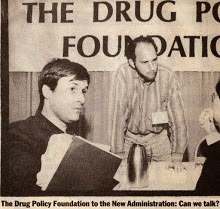
The Vatican was continuing the polices set during the early 1900s, with selective ‘anti-drug’ crusades erupting through the Hearst publishing empire and those of other media entities controlled by those with loyalties to Rome, such as membership in fraternal-social-religious orders with a definite ‘all roads lead to Rome’ network of college fraternities connected and controlled to Masonic orders connected and controlled by the Vatican, particularly that displaying the letters “IHS”: aka the Vatican’s military-strategic wing- the Jesuit Order. The drug related doctrine initially spread widely by Hearst had become that enshrined at the top of the world political body, as reflected by entities as the United Nations, with its 1961 Single ‘Narcotics’ Control Convention mandating the elimination of Coca in its native Peru and Bolivia by 1988. That was the year that Bolivia would instead openly rebel by re-legalizing a broad spectrum of commercially produced Coca leaf products, including Coca Wine, and that the Washington, D.C. Drug Policy Foundation – an organization founded in response to the drug war-cocaine centered hysteria of 1986 – was tied to the powerhouse food, drug, pharmaceutical, cigarette industry Covington and Burling, with the assignment of an attorney later described as prominent in the fields of food, food supplement, pharmaceutical and insurance industry.

The entire ‘drug war’, banning the safer substances (with the consequences of perverting coca and opium into concentrated cocaine and heroin) for the sake of protecting pharmaceuticals and cigarettes, has cost greater of numbers of shortened lives then Wlodimir Ledochowski’s wars. If it is any consolation, whereas Ledochowski had a lingering death that at times would be prematurely reported, with notations of gastro intestinal problems, the Superior General at the time of the establishment of the criminal mercantilism for pharmaceuticals and Virginia Dope cigarettes, Luis Martin, had a far worse death:
http://en.wikipedia.org/wiki/Luis_Mart%C3%ADn

Even at the beginning of his term Martín's physical health had been poor and it grew steadily worse with the years. In 1905, a tumor forced the amputation of his right arm. Pope Pius X granted him permission to celebrate mass despite his disability, a privilege for which he was most grateful. The cancer, however, soon invaded his lungs and he died in Rome, on 18 April 1906.

Luis Martin; born 1842
25th Jesuit Superior General 1892-1906


Wlodimir Ledochowski's Afterglow 3 Pedro Arrupe

27th Jesuit Superior General Pedro Arrupe
and 3rd Polish Pope of the 20th Century:
Karol Wojtyla Back and to the Right
There seemed, indeed, during those years of Ledochowski, Pius XI, and Pius XII, no real limit to what both Jesuitism and overall Roman Catholicism could achieve. Even – especially, we should say – in the afterglow of Ledochowski’s long reign and into the Generalate of his successor, Belgian Jean-Baptise Janssens, the magic power of the momentum seemed to continue.
Pedro Arrupe; born November 14, 1907
28th Jesuit Superior General 1965-1983

Karol Jozef Wojtyla; born May 8, 1920
'Pope John Paul 2': October 16, 1978 - April 2, 2005

The Jesuit Order’s post WW2 spin – of not being ‘right’ wing against ‘godless communism’ but rather ‘left’ wing for ‘social justice’ --.through Janssens’ 18 year Generalate, continued after his brain hemorrhage induced October 5, 1964 death via the also 18 year Generalate of his successor Pedro Arrupe, born November 7, 1907, from 1965 until his debilitating August 7, 1981 stroke less then 3 months after the unsuccessful assassination attempt on John Paul 2, who had become Pope after the mere 33 day Papacy of his predecessor John Paul 1:

Arrupe was:

- was a missionary in Japan during WW2 (connection with Kolbe?);

- was appointed Jesuit Superior and Master of Novices in Japan, 1942

- was living in Hiroshima when the atomic bomb was exploded in August 1945.

Arrupe’s Generalate occurs with the rise of the organized ‘left’ anti-war movement about the war in Vietnam during the later 1960s and well into the 1970s when it was becoming more and more popular to consider oneself “left”, with Arupe himself was involved with Jesuit activities in Central America ostensibly on behalf of the poor.

John Paul 2’s papacy, extending some 26 1/2 years from October 16, 1978 to his April 2, 2005 death, starts at about the same time when economic and later terrorist troubles went against incumbent figures as ‘left’ U.S. President Jimmy Carter as being weak, leading to the rise of ‘right’ Ronald Reagan in the U.S. and Margaret Thatcher in the U.K, along with the rise of activities opposing the Soviet propped communist regime in Poland.

On May 13, 1981, less then 3 months before Arrupe’s devastating stroke, Wojtyla would survive an assassination attempt, which according to reformation.org was ordered by Arrupe.

Wojtyla – JPII went on to see the fall of the USSR controlled communist regimes and the publication of this sort of cover on Time Magazine, continue as Pope until 2005:


Rome’s 3rd 20th century Polish Pope, continuing along a succession of successively more Polish figures, was JP 2, born Karol Jozef Wojtyla on May 18, 1920 who died on April 2, 2005.

Woytyla was the 3rd 20th Century Polish Pope. The others were:

Wlodimir Ledochowski, who was apparently ½ Polish via his father Anton Ledochowski (1835-1885) , and ½ Swiss-Austrian (apparently ethnic German) via his mother Josephine Zizers who was born in eastern Switzerland.

Pius X, who was ¼ Polish, who would die just hours after the death of the Jesuit Order Super General Franz Wernz, a German, on August 19-20, 1914

Tuesday, December 8, 2009

Along The Amber Path 8

Wlodimir Ledochowski: 26th Jesuit Order Superior General 1915-1942

Fry said: "There has been a history, let's face it, in Poland of a right-wing Catholicism which has been deeply disturbing for those of us who know a little history, and remember which side of the border Auschwitz was on, and know the stories, and know much of the anti-Semitic, and homophobic and nationalistic elements in countries like Poland.

Complaints: Fry 'slandered' Poland over Auschwitz

http://www.channel4.com/news/articles/politics/domestic_politics/complaints+fry+aposslanderedapos+poland+over+auschwitz/3377697

Updated on 08 October 2009

By Channel 4 News

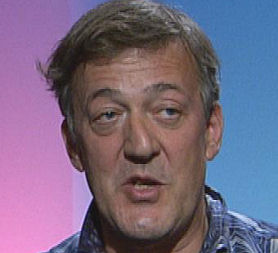
Stephen Fry is accused by embassy officials of making "utterly misleading" and "slanderous" comments about Poland after a Channel 4 News interview in which he mentioned links to the infamous Auschwitz concentration camp.

Stephen Fry on Channel 4 News

The Polish Embassy in London has launched a forthright defence of its country after the actor made his remarks in an interview with Jon Snow this week.

Fry appeared on the programme to voice his concerns over the alleged homophobic and anti-Semitic background of some Polish members of David Cameron's European Conservatives and Reformists (ECR) group in the European parliament.

Fry said: "There has been a history, let's face it, in Poland of a right-wing Catholicism which has been deeply disturbing for those of us who know a little history, and remember which side of the border Auschwitz was on, and know the stories, and know much of the anti-Semitic, and homophobic and nationalistic elements in countries like Poland.

"This is a problem that is not going to get smaller because as we start to pay for the financial disaster of the least year - as the bill comes in – a kind of great pimple acne of nationalism and homophobia and racism is going to erupt around Europe because there is going to be trouble with unemployment, there are going to be all the problems."

Fry is one of a group of activists, which also includes comedian Eddie Izzard and the Unite union, who have written to David Cameron asking him to reconsider the Conservative party's links with the Polish Law and Justice party, with whom the Polish MEPs are affiliated.

But Fry's comments on Channel 4 News, as well as prompting complaints from Polish viewers in the UK, also led the Polish Embassy to complain.

Robert Szaniawski, spokesman for the embassy, told Channel 4 News: "I have taken strong exception to the statement made by Stephen Fry in which he suggested Polish complicity in the Nazi atrocities in Auschwitz during World War Two.

"While Mr Fry has every right to express his opinion, be it regarding current political developments or, indeed, historical matters, nonetheless, it should be tempered with some respect for factual accuracy in his public pronouncements.

"Poland was not free from anti-Semitism before World War Two or under the Nazi occupation, but to imply, however vaguely, some form of collective responsibility of the Polish nation and Poland for the notorious death camp which came to symbolise the horrors of the Holocaust, is utterly misleading, and quite frankly, slanderous.

"The mere geographical reference in this context is also incorrect, as Auschwitz-Birkenau was set up and administered by Nazi Germany in the part of Poland directly annexed to the Third Reich at the time."

Michael Burleigh, author of The Third Reich: A New History, and Ethics and Extermination: Reflections on Nazi Genocide, agreed with the Polish objections.

He said: "At that time there wasn't really a Poland to speak of. They [the Nazis] had left a tiny rump of a state but that was about it. There wasn't really anything left.

"To talk about a border is nonsense really; and even if there was technically one the Polish will have been surrounded by Nazi troops anyway. It's absolutely ridiculous for Stephen Fry to imply this."


Wlodimir Ledochowski War Culpability Admission


Wlodimir Ledochowski Deranged Polish Roman Catholic Religious War


Amber Path West To South 14


If TIME can admit that U.S. President Ronald Wilson Reagan (1981-1989) and Roman Catholic Church Pope John Paul II "conspired to assist Poland's Solidarity movement and hasten the demise of communism", then what about the roles of U.S. President William Jefferson Clinton (1993-2001) and Pope John Paul II in steering the Vatican's Counter Reformation War against the Orthodox Serbian people?
http://continuingcounterreformation.blogspot.com/2009/12/amber-path-us-for-croatia-and-against.html
(excerpt)

In early August 1991, when western European-brokered talks on defusing the Yugoslav crisis were about to begin, Croatian special forces launched a secret and brutal raid on Knin, headquarters of the Krajina Serb government. During the raid, Croatian comandos killed 60 Serbian resistence fighters. The next day, EC's representative, Dutch foreign minister Hans van den Broek, requested a meeting of Yugoslav contending patries. No repriemnad were issued against the Croatian attack. Milosevic was furious and refused to attend EC negotiations. Far from sympathizing with the Serbs, however, the Dutch foreign minister blaimed Milosevic for scuttling the talks. The next day, Germany's foreign minister, Hans-Dietrich Gensher, threatened Serbia with economic sanctions. Again, no reprimand was issued against Croatia for its role in the dispute. Germany's close ally, Austria, put additional pressure on Serbia by announcing it was considernig recognizing Croatia.

The Vatican was also making its view clear on the issue. In an August 17, 1991 Mass in the Hungarian city of Pecs, less then 20 miles from Croatia, Pope John Paul II stated that Croatian actions to break away from Yugoslavia were "legitimate aspirations". The Pope's comments were eagerly welcomed by Cardinal Franjo Kuharac of Zagreb and thousands of Croatians who cheered and waved Craotian national flags throughout the Pope's speech.

Monday, December 7, 2009

Amber Path West To South 13


An account of the Yugoslav War written by by Jan Marijnissen and Karel Glastra van Loon

Jan Marijnissen is leader of the Socialist Party of the Netherlands (SP)

Karel Glastra van Loon was a novelist and journalist, closely associated with the SP, who has died, at the age of only 43, since this book was published in the original Dutch. His best known work in English was The Passion Fruit

The Last War of the 20th Century - Chapter 13

May 14, 2008 8:35 | by Jan Marijnissen and Karel Glastra van Loon

A new 'new world order'
As long as our world, which has the resources to end poverty everywhere, is divided into those addressing the problems of plenty and those confronted by the problems of scarcity, peace and freedom will remain fragile.

Nelson Mandela, 24th July, 1998, at the Mercosur Heads of State Summit, in Ushuaia, Argentina


In the foregoing chapters we have seen that in the West in general, and within NATO and the European Union in particular, a great deal is expected of the potential of military intervention in domestic and regional conflicts. NATO's new strategic concept and the EU's efforts to develop its own 'military capacity' flow directly from this.

On the basis of the wars in Bosnia and Kosovo we have tried to make it clear that these expectations are unfounded, dangerous and shortsighted. Unfounded because the political goals have not been achieved (see Kosovo); dangerous because the violent imposition of peace unleashed new tensions, which in time will lead to new conflicts (see Kosovo and Bosnia); and shortsighted because only short term and limited solutions are considered, with no estimation of the geopolitical consequences (such as for example in terms of relations with Russia), while insufficient account is taken of the history and other aspects of the background to conflicts (see almost all recent military interventions).

In order to achieve a lasting peace - or more modestly, to prevent conflicts - other means than violence are much more appropriate. That is why to close this book we want to put forward a few initiatives towards a fundamental debate around a more structural approach to international tensions, and by those means the prevention of violent escalations in the future.

Relations between ethnic and/or religious majority and minority groups within states, but also relations amongst states, are often seen in stereotypical terms. Too often tensions are described on the basis of a limited observation of a few incidents, as well as on the basis of platitudes and myths which do no justice to the complex reality. Precisely because it is not straightforward, given this complexity, to develop a truly effective insight into the background to problems elsewhere in the world, it is imperative to operate in international politics with the greatest possible caution. The byword of responsible members of governments should be heeded: better no foreign policy than a bad foreign policy. It is after all true that the greater the distance, both geographic and cultural, the smaller the empathy. And without empathy it is wellnigh inevitable that each intervention will eventually turn out badly, as has been the case time after time during this decade.

When in Rwanda the Hutus and the Tutsis became enemies, many thought that what we were dealing with were tribes who had for years lived in discord with each other, that people were being identified only by their appearance and on that basis considered each other friend or foe. These are dangerous simplifications. The historical and socio-economic background, involving poverty, overpopulation and social inequality, continues to be seriously underestimated in many analyses of Rwanda. This has also been the case in the Yugoslav crisis, in the conflicts in the Caucasus, in Indonesia, in short in almost all conflicts which have demanded the attention of the international community over the last few years, despite the fact that it is precisely this socio-economic background which is so extremely important for the forming of a correct picture of the causes of these conflicts. And without knowledge of the causes there can be no adequate solutions, without a good diagnosis, no good medicine.

The Pakistani development economist Mahbul ul Haq says with regard to the violence that has flared up in so many places in the world in the past ten or fifteen years that 'You can call these conflicts ethnic or regional, but the real causes are social and economic.'

If that is the case, and the 'international community' is truly concerned by all of the injustice to which people subject each other, then you might expect that everything would be done to ensure a fairer division of the world's wealth, in order to help the poor countries in their development, and to create opportunities for those who currently have none.

Nothing, however, could be further from the truth: the contradictions in the world continue to grow. The immense debts owed by poor countries to rich ones mean that each year 200 billion dollars net is transferred from South to North, from poor to rich. The average income in 1960 in the richest countries was thirty times greater than in the poorest; in 1990 the ratio was 1:60, while by 1997 it had further deteriorated, to 1:74. The United Nations' Human Development Report for 1999 included - by way of further illustration - the following bizarre comparison: the wealth of the three richest people in the world is greater than the value of the economies of the thirty-five poorest countries combined.
The army of the world's really poor currently numbers 1.3 billion people, and that figure continues to climb. What does the expression 'global village' mean in such a perspective? In what village is one person in three allowed to suffer miserably from hunger, while at the same time a minority can abandon themselves to their hearts' content to the thorough enjoyment of life? The expression 'global village' was invented and propagated in order to describe so-called globalisation, and to depict it as a fait accompli. This globalisation forms in its turn a justification for the carrying out of a free trade which goes ever further and the lifting of all restrictions on the movement of capital, with no regard to the social consequences for the 'village'. Or as Sakiko Fukuda-Parr, one of the compilers of the Human Development Report 1999, puts it: 'Globalisation has great advantages for some but for most of the world's citizens it means only further exclusion and impoverishment.'

At the end of the 'nineties a major financial crisis hit Asia. The managers of the enormous quantity of money - 1.5 trillion dollars per day - from wealthy countries which roams the digital highway in search of the highest profit levels, were for a number of reasons afraid of losing their money, and decided over a short period of time to withdraw it from countries such as Thailand, Malaysia, Indonesia and South Korea, once known collectively as the 'Asian Tigers'. Within a few days millions of people in the countries involved had lost their jobs and local currencies tumbled to record lows. The crisis resounded long afterwards - not in the rich West, where there was relief and an almost triumphalist assertion that the world economy could indeed survive some rough-handling, but far more in the affected countries themselves. According to the UNDP report discussed above, the crisis led to ''erosion of the social fabric, to social unrest and to a growth in criminality'.

The flaring up of all sorts of 'ethnic-religious' conflicts in Indonesia in recent times cannot be seen as unrelated to the economic crisis in which the country has found itself. When as a result of this crisis the Suharto regime fell, countless western experts (amongst whom was the biggest boss of Dutch bank ING's subsidiary in Jakarta) all knew precisely what had gone wrong in Indonesia: the country was corrupt through and through, its 'democracy' was a farce and there was no respect for human rights. The crisis was, in other words, the fault of Indonesia itself. This analysis stood in stark contrast to everything that had been called for in preceding years in regard to the country of Suharto. Human rights activists had been told not to moan and whinge, and Development Cooperation Minister Jan Pronk got a dressing down for his trouble when he had the nerve to approach the Suharto government about the massacre in East Timor. During a royal visit to Indonesia in the year that the country celebrated fifty years of independence, a heavyweight delegation of Dutch entrepreneurs travelled in the footsteps of Her Majesty in order to do business in what was then still referred to as an exemplary growth economy. Top Philips boss Jan Timmer took this opportunity to announce that if he were still young he would certainly set out for South East Asia in order to seek his fortune. We heard not a word then about corruption, while human rights also went unmentioned. As long as there was money to be earned it would turn out time and again that concern over the fate of one's fellow human beings would melt away like snow on a sunny spring day, only to be wheeled out when the situation deteriorated and foreign investments and earnings were at risk.

In order to put an end to the vicious circle of lopsided economic growth, exploitation, poverty, migration, instability, crisis and violence in which so many countries are trapped, it is necessary that the western powers at long last show the courage to take a critical look at their economic interventions in those countries. It will then emerge that structural measures are needed if the constant repetition of humanitarian tragedies is to be prevented.

In the first place the developing countries must have - and retain - the freedom to determine their own development strategy. This would stand in complete opposition to the Multilateral Agreement on Investments (MAI), which the OECD - the organisation representing the richest industrialised countries - and the World Trade Organization currently have in mind. The countries of the Third World must no longer be pressured to accept the International Monetary Fund's neoliberal prescription before they are given any support by the wealthy countries. Even Henry Kissinger, ex-US Secretary of State, criticises the shortsighted approach of the IMF as being 'just like a doctor specializing in measles [who] tries to cure every illness with one remedy", as he wrote not so long ago, complaining that the Fund always prescribes 'moderation', large increases in interest rates to counter capital flight, and strong devaluation in order to discourage imports and stimulate exports. This, he argued, always leads to a dramatic fall in living standards, explosive growth in unemployment and a growing malaise in the general population, undermining the very political institutions that must carry out the IMF programme. Kissinger sides with a long line of former political leaders who, no longer being in office, suddenly begin to say things which are both intelligent and critical.

Organisations such as the WTO and the IMF currently represent exclusively the institutionalised 'market think' and interests of the countries which stand to gain most from their approach. They talk constantly of total freedom of trade as opposed to a total lack of freedom, but equal rules for unequal countries simply perpetuate inequality. Moreover globalised free trade means little more than the ability to set worker against worker throughout the world in a new race to the bottom when it comes to wages, social security, social provisions and working conditions. Not only people but nature and the environment will inevitably pay a high price for this.

Poor countries must have the right to protect their own domestic markets from cheap western products, in order that they can have enough time to build up their own industries and security of food supply. On the other hand low income countries must have the right and means to sell their products on the markets of wealthy countries without being confronted with barriers in whatever form. In 1976, 7.2 percent of the European Economic Community's total imports originated in developing countries, while in 1995 this percentage had fallen for the European Union to 4.5 percent. It is completely morally objectionable that we continue to think that we should protect our European markets from cheap products from these countries, while we at the same time force them into an unlimited opening of their own markets to our products and corporations. The foreign exchange which they could earn through their exports is indispensable, for example for acquiring new technology.

A concrete possibility to do something about inequality in the world could be provided by the introduction of a solidarity levy. Whenever countries gain a competitive advantage through their indifference to social rights or to the interests of the environment, their products should be excluded from the international market by means of a levy imposed at the borders of the importing country. In keeping with the unequal economic position of different countries the size of this levy should be proportionate with the size of the Gross National Product of the exporting country. All of this should be conditional on the poorest countries - as we have already argued - being at all times given free access to 'rich' markets. If we are then also prepared to pay a fair price for their products, so that they too have the chance to work on building a just society, we will have provided ourselves with an effective means of bringing about a redistribution of global wealth and thereby a safer world.

Another possible measure is the taming of what former German Chancellor Helmut Schmidt described as 'predator capitalism'. This could be achieved by means of a reintroduction of restrictions on international capital movements, so that economies can no longer - as a result of the herd behaviour and blind hunger for profit of owners of capital - be brought to ruin in a single day. Even the former senior adviser to the GATT (now the WTO), American economics professor Jagdish Bhagwati, seems to have grasped this, as he shows at the end of a lengthy article in the Dutch business daily Financieele Dagblad of 26th September 1998:

'And despite evidence of the risks attached to the free flow of capital, the Wall Street financial complex continues to make the self-serving assumption that the ideal world is indeed one of free capital flows, with the IMF presiding over all. But the weight and the force of logic points in the opposite direction, towards limits on capital flows. It is time to shift the burden of proof from the opponents to the supporters of free capital.'

In order to limit these capital flows we must be able to move towards the introduction of the so-called Tobin Tax. James Tobin, American economist and Nobel Laureate, proposed at the beginning of the 'seventies the imposition of a 0.1 percent tax on international monetary flows. By these means situations such as that in Asia in 1997 and 1998 would occur less frequently, while, still more importantly, the United Nations, which would have to collect this, would for example for the year 2000 have available over 188 billion dollars, twice as much money as experts argue would be necessary to combat the world's most severe poverty.

In conclusion, a development plan for the Third World's countries must be established under the aegis of the UN - it goes without saying that this should be done with the involvement of the countries in question - and financed by the wealthy countries. Under the slogan 'debt clearance is the best conflict prevention', a start could be made on debt forgiveness for low income countries, the central demand of the Jubilee 2000 initiative. Annual interest and repayments hang like a millstone around the neck of these countries and prevent them clambering up out of the depths of poverty. A country such as Ethiopia is currently forced to pay four times as much money in interest and debt repayment as it does on health care, to give just one harrowing example. And while we are on the subject of a development plan under UN supervision, we should not refrain from calling on this same UN to screen for once instances of multilateral development aid for efficiency and effectiveness. As things stand development cooperation - bilateral and multilateral - is in general a hotchpotch of good intentions, as emerged in practice in, amongst other places, former Yugoslavia. In Bosnia, for example, there are no less than 450 different aid NGOs and consultancies active in spending the 10 billion Deutschmarks which has in total been made available by the various donor countries. The fact that the results fail to meet expectations is logical, as is the fact that there are exceptionally high levels of waste. While corruption thrives in luxury, the reconstruction for which the money was intended stagnates.

As we have already said, an 'international community' which was really concerned about the humanitarian tragedies unfolding in countless parts of the world, would put a comparable measure high on the political agenda. That this is not happening says as much about the sincerity of the politicians involved as it does about the relations of power in the world since the fall of the Berlin Wall. A nice illustration of how these relations currently lie was provided by the WTO negotiations which took place in Seattle in December 1999. Corporations such as Microsoft, Hewlett Packard, General Motors and Northwest Airlines belonged to the exclusive community of sponsors that by means of a payment of less than 100,000 dollars assured themselves of the necessary privileges. They each took a place on the front row as well as gaining - to the advantage of their lobbyists - direct access to the informal circuit for direct contact with the heads of state, government leaders and other delegates present. Meanwhile an enormous force of police held the thousands of demonstrators back, while the demonstrators outside the conference building gave voice to the huge dissatisfaction which is growing in ever broader circles over the monomaniac way in which the WTO operates. If we really want to move towards a truly new world order, then this gap between participants to the WTO negotiations and those demonstrators must be closed. Only then will the one-sided fixation on free trade, if needs be at the cost of state sovereignty, and with no regard for the political, social, ecological or safety consequences, have to give way to an awareness of the interests of all of those now ground down by the unrestrained forces of the free market.

If it is the most important causes of many conflicts with which we are concerned - poverty, neglect, lack of development and absence of hope - then there is still a world to win. But if this 'new world' is really our goal, we cannot avoid first of all answering the question, 'Who do we want to rule this world?' Is it the rich countries within which this service is provided by those who possess the economic power? Is it organisations such as the WTO, the IMF, the OECD and the G7 in which the wealthy countries set the tone and impose their will on the rest? Or is it the political forces, legitimised by democracy, which are striving for development and progress within and for all countries, for a fair distribution of wealth and for protection of nature and of the environment?

Earlier in this book various people stressed the role of the United Nations and of regional organisations such as the OSCE. The Netherlands Advisory Council on International Affairs had this to say about this question: 'Both the UN and the OSCE have a coordinating responsibility in relation to the preservation of international peace and security. The UN is the sole global forum in which security and stability, human rights, sustainable socio-economic development and environmental problems are on the agenda in their internal cohesiveness.' Everyone - with any knowledge of these matters - will only be able to agree with this assessment. But this assessment should also have consequences for policy. Anyone who takes these words seriously cannot at the same time defend a situation in which countries off their own bat and whenever it suits them break the UN's monopoly on the use of violence and with no legitimacy enter into conflicts in foreign countries. By such actions international law is desecrated, the position of the Security Council undermined and geopolitical stability placed in the balance.

The Pax Americana, by which the monopolar world which has existed since the fall of the Wall is characterised, has led in the west to the arrogant belief that we can do everything on our own. The manner in which the west has behaved since the departure of Gorbachev, is therefore illustrative: the enlargement of NATO towards the east; the disregard of the Russian (and Chinese) standpoint in relation to the conflict in Kosovo; using, certainly, Russia's diplomatic offices in solving the conflict but granting the Russians no significant role in the framework of KFOR; the continuation of the development of a defence shield in space by the United States, despite the fact that this is in conflict with the Anti-Ballistic Missile Treaty; the development of a new frontline to the south of Russia as a result of strategic interests connected to the oil which is to be found in that region. Where these policies have led within Russia was made clear in Chapter 8 of Part 1 of this book by Georgi Arbatov en Vladimir Lukin; to what foreign policy consequences it will lead only the future can tell us.

Although many criticisms can be made of the functioning of the UN - we have written about this above - it is as things stand (and probably this will remain the case) the only place in which the major powers and other countries can together discuss geopolitical questions. Intelligent foreign policy must include the goal of strengthening the United Nations and its institutions, as well as the Organisation for Security and Cooperation in Europe, the OSCE. Max van der Stoel, OSCE High Commissioner for national minorities, takes every possible opportunity to complain about the lack of interest from the international community in investing in inter-ethnic cooperation directed at the early prevention of conflicts. In his lonely struggle he finds it absolutely impossible to assemble financial resources for such projects. 'The states which must contend with economic stagnation or even decline, with as a consequence the threatened loss of of the hope for a better future, deserve particular attention,' said Van der Stoel in his inaugural professorial address at the University of Leiden. 'In such situations political extremism thrives. Giving new impulses through outside aid can help to turn around such dangers and belongs in a modern security policy.'

The fire brigade have a popular saying: 'Any fire can be extinguished with a bucket of water if only you get there quickly enough.' For those who really want to contribute to a safer world there are therefore two questions to be answered: do we have the will to get there early? And do we have a bucket of water?

In order to 'get there early' we must create a worldwide early warning system, which will enable the UN and regional organisations such as the OSCE to offer timely help in the prevention of conflicts and - where conflicts already exist - the avoidance of further escalation. It will then be necessary for the UN and the OSCE to have access to sufficient financial resources to enable them to offer effective help.

After the war in Kosovo the Western countries established a Stability Pact for the Balkans, excluding the Federal Republic of Yugoslavia. The question is this: why is there now a willingness to put billions into this region, while this was not the case earlier? Would Lord Carrington's plan not have had more chance of success when we were prepared to extend also a helping financial hand? It is a question which can no longer be answered with certainty, but what is certain is that the billions which are now being used to bring about damage and destruction is many times more than the sum that at the start of the 1990s would have been needed to reshape a declining economy into a growing economy. Had such a sum been provided at the time, and had the European countries put their efforts into the establishment of a confederation instead of the independence of all of the republics, the human tragedy now unfolding in the Balkans could very likely have been prevented.

To make a comparison with the development of armaments, preventative diplomacy, peaceful intervention, and structural aid and advice are perhaps at the level of the invention of the Colt around 1850.

That brings us to our last point: the reopening of the arms race. Just as the ubiquity of firearms is cited as one of the most important causes of the exceptionally high degree of violence in American society, so the ample stocks of weaponry provide us with one of the explanations for the violent escalations of regional and/or ethnic conflicts. Despite the fact that the Cold War, which held the world in its grip for decades, and the arms race which was linked to it, are now almost ten years in the past, the worldwide trade in arms continues to grow. The Netherlands plays a leading role in this, despite assertions from the ministers responsible that the Dutch defence industry is limited in size in comparison with other European countries. In 1998 our country was sixth in the league table of the world's biggest arms exporters. With no scruples our country supplied and continues to supply weapons to Turkey, and to Indonesia under Suharto, as well as to countries which spend a disproportionately large share of their GNP on buying weapons, such as Israel, Oman and Qatar. In addition regulated supplies go to areas of tension, such as South Korea and the Middle East. In 1998 licences were issued for the export of military goods with a total value of something over 350 billion dollars. And the Netherlands is no exception - neither in the West, nor in the world as a whole. Almost all countries, or, to put it better, the arms producers in these countries, are still profiting daily from armaments and the arms trade.

The member states of the European Union together spend almost 100 billion dollars a year on 'defence', of which a large proportion goes on armaments. It is high time that worldwide arms spending, and above all disarmament, came under international political attention. The extent and quantity of arms exported must be reduced, and in time the entire international arms trade perhaps indeed forbidden. The development of ever more new attack weapons must be stopped, beginning with those countries which have made the greatest progress in the development of sophisticated, 'smart' weapons. The further spread of existing, and the introduction of new, weapons of mass destruction can only be resisted if the nuclear powers are prepared to sign a no first use declaration and at last begin to run down their arsenals. Who are we to send inspection teams to Iraq to track down illegal weapons of mass destruction if we ourselves maintain major arsenals of nuclear weapons? In NATO's new strategic concept nuclear weapons are seen as essential to the preservation of peace. This is in conflict with the Non-Proliferation Treaty, which asserts that states which have signed the treaty have an obligation to conduct negotiations leading to complete nuclear disarmament under strict and effective international monitoring. Through the explicitly stated unwillingness of NATO to proceed to complete nuclear disarmament the fundamental precepts of this treaty have been jettisoned. And at the very moment that the United States Senate has rejected the Non-Proliferation Treaty, India and Pakistan are embroiled in a nuclear arms race, while the Russian nuclear policy, as we have seen, is being accentuated.

The course which Western military experts are now following in the area of non-nuclear armament, which is described in this book by, amongst others, the Editor-in-Chief of Jane's Defence Weekly, Clifford Beal, will lead without doubt to still more violence. Perhaps Clifford Beal will in the end have to recognise that whenever the West increases its 'lead' over other parts of the world, this inevitably provokes a reaction. This does not always necessarily take the form of a similar pursuit of smart weapons by those who resist the West, such as China, Iraq, Russia or India. It can just as easily be what has been called an asymmetrical response - such as the carrying out of terrorist attacks.