19 hours ago

http://www.sj2014.net/blog/17-may-1915-ww1-moves-fr-general-to-switzerland
The First World War began in 1914, with the assassination of Archduke Franz Ferdinand of Austria. There was a confrontation between Austria and Serbia (he was killed by a Yugoslav nationalist). This initial confrontation triggered a series of alliances and led to to the Austro-Hungarian Empire and the Germans against the British, French and Russians. Thus it was essentially a battle of empires. Italy was party of the triple alliance with the Germans and the Austrians but chose initially not to enter the war as it understood this as a defensive alliance and saw Austria as the agitators. By 1915 they shifted allegiance and entered the war on the British side.
Meanwhile in Rome Fr Wenz was to die in 1914, famously followed a day later by Pius X, some say of a broken heart as he witnessed Europe disintegrate in spite of his impressive efforts for peace. Six months later the Jesuits elected their 26th Fr General. Wlodimir Ledochowski was from an Austrian/Polish aristocratic family and was to be general from 1915 to 1942. When Italy entered the war against Austria it was untenable for Ledochowski to stay in Rome, so he moved with the curia to Zizers, Switzerland, where he was able to govern with less disruption.
Jesuits were to serve as chaplains during the war on both sides. The Irish Jesuit Fr Willie Doyle was one who was outstanding, and awarded and commended for his bravery. He was to die during the Battle of Passchendeale after running here and there on the battlefield as an angel of mercy. The publication of his spiritual writings and diaries have generated great interest in Ireland, he has been declared a Servant of God and his cause for beatification is open. There is a blog on his writings here.
http://goodjesuitbadjesuit.blogspot.com/2007/09/superior-general-wlodimir-ledochowski.html
A towering figure in Jesuit circles in the twentieth century was Fr. Wlodimir Ledochowski, SJ, elected 26th general of the Society in February 1915. He served until his death in December 1940. Elected during the turmoil of World War I, he governed the Society from Switzerland for three years to lessen the impact of that war on Jesuit matters. He went to Spain twice during 25 years as general, but hardly ever traveled beyond that.
In those more formal days, "exterior reverence" to the general prevailed. Jesuits kissed the hand of the general, addressing him as "Your Paternity." Other superiors (and even the priests when dealing with scholastics or brothers) were "Your Reverence." Like other superiors, the general had a fixed place in the refectory and in the recreation room. Much less formality exists today.
Fr. Peter-Hans Kolvenbach, SJ, succeeded Arrupe to became the Society's 29th general in 1983.
An important part of the general's work is communication: gathering information, making appointments, encouraging Jesuits worldwide. Fr. Ledochowski experienced both more rapid communication and a growing number of questions and issues with a world in turmoil. In voluminous correspondence he tried to adjust Jesuit life to rapid technological and political change.
Fr. Peter-Hans Kolvenbach, the Jesuits' general since 1983, experiences even more rapid means of communication and questions and issues, but he is also able to travel and meet Jesuits all over the world and to invite individuals and groups to come to meet with him. But he still signs something like 17,000 letters a year and has vast amounts of information to absorb
http://continuingcounterreformation.blogspot.com/2008/05/wlodimir-vladimir-ledochowski-usually.html


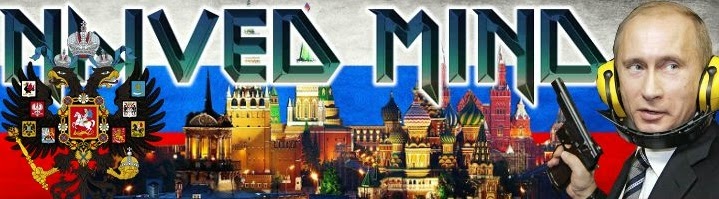
The supposedly anti Rome 'The UnHived Mind' favoring the Eastern Roman Empire over Germany
& Paul Craig Roberts frequent writer for Alex Jones InfoWars favoring Vladimir Putin over the West!
http://control-avles-blogs.blogspot.com/2014/10/putins-boot-la-parisienne.html
Quoted by 'Avles':
Note: I am thinking to the recent negative talking about Germany by Craig Oxley of The Unhived Mind forum, on which he continually brainwashed about the DVD Germany intelligence as "over the CIA and NSA". I firmly believe The Unhived Mind & Craig Oxley deeply involved in this Roman Catholic operation in to present Germany as "bad guy", a psycho-ideological brainwash aimed to the next definitive Catholicization of Germany:

DVD Nazi Angela Merkel is attacked by wonderful front pages in Italian Newspapers
DVD Nazi Angela Merkel is attacked by wonderful front pages in Italian Newspapers
ITALIAN NEWSPAPERS ATTACK ANGELA MERKEL WITH VULGAR FRONT PAGES
Two Italian newspapers attacking Angela Merkel
Friday June 29,2012
By Emily Fox for express.co.uk
http://www.express.co.uk/posts/view/329734/Italian-newspapers-attack-Angela-Merkel-with-vulgar-front-pages
TWO Italian newspapers reacted to the EU bailout deal today with two brash and vulgar front pages which target German Chancellor Angela Merkel.
The apparent withdrawal by the austerity-conscious German Chancellor allowing the Italian and Spanish direct access to Eurozone funds without incurring government debt has been met with delight in Italy.
One newspaper the Libero showed Mario Balotelli kicking a football with Angela Merkel’s face on it symbolising Italy’s victory over Germany in not only the EU but also Euro 2012.
The Libero ran the image alongside the headline “VaffanMerkel” which translates to “F*** Off Merkel.”[NOTE - it is Craig Oxley that smears Angela Merkel as 'Nazi' and not Avles nor myself.]
One newspaper showed a ball with Angela Merkel’s head on it being kicked by Mario Balotelli
http://jesus-partisans-balkans.blogspot.com/2014/10/apotheosis-of-putin.html
Apotheosis of Putin
Since Putin's tirade against the USA 3 days ago, the Eurasianist lackeys have been working extra time to polish his image. Paul Craig Roberts, an american economist, a Georgetown teaching professor with fatalistic views on the West, and an increasingly vocal supporter of Putin and his feudal caste, is here going about the tasks set by his masters, the jesuits.
http://www.paulcraigroberts.org/2014/10/25/vladimir-putin-leader-moral-world-paul-craig-roberts/Hah!
Vladimir Putin Is The Leader Of the Moral World — Paul Craig Roberts
Paul Craig Roberts
Dear Friends,
Vladimir Putin’s remarks at the 11th meeting of the Valdai International Discussion Club are worth more than a link in my latest column. These are the remarks of a humanitarian political leader, the like of which the world has not seen in my lifetime. Compare Putin to the corrupt war criminal in the White House or to his puppets in office in Germany, UK, France, Japan, Canada, Australia, and you will see the difference between a criminal clique and a leader striving for a humane and livable world in which the interests of all peoples are respected.....
In a sane Western society, Putin’s statements would have been reproduced in full and discussions organized with remarks from experts such as [added link] Stephen F. Cohen. Choruses of approval would have been heard on television and read in the print media. But, of course, nothing like this is possible in a country whose rulers claim that it is the “exceptional” and “indispensable” country with an extra-legal right to hegemony over the world. As far as Washington and its prostitute media, named “presstitutes” by the trends specialist Gerald Celente, are concerned, no country counts except Washington. “You are with us or against us,” which means “you are our vassals or our enemies.” This means that Washington has declared Russia, China, India, Brazil and other parts of South America, Iran, and South Africa to be enemies.
This is a big chunk of the world for a bankrupt country, hated by its vassal populations and many of its own subjects, that has not won a war since it defeated tiny Japan in 1945 by using nuclear weapons, the only use of such terrible weapons in world history.
As an American, try to image any known American politician, or for that matter any professor at Harvard, Princeton, Yale, or Stanford capable of giving an address to an educated discussion group of the quality of Putin’s remarks. Try to find any American politician capable of responding precisely and directly to questions instead of employing evasion.
No one can read Putin’s remarks without concluding that Putin is the leader of the world.
http://continuingcounterreformation.blogspot.com/2014/09/the-putin-murders.html
http://continuingcounterreformation.blogspot.com/2014/09/western-eastern-roman-empire-101.html
http://continuingcounterreformation.blogspot.com/2014/06/born-october-7-1866-1952.html
http://continuingcounterreformation.blogspot.com/2014/05/what-circus-ii.htm
http://continuingcounterreformation.blogspot.com/2013/10/what-circus.html

“News outlets from Belarus to Poland have reported for months that the Russian strongman has cancer of the spinal cord. But my sources say it’s pancreatic cancer, one of the most lethal forms of the disease. Putin is allegedly being treated by an elderly doctor from the old East Germany whom Putin met decades ago while serving in Dresden for the KGB. The doctor has been trying various treatments including steroid shots, which would explain Putin’s puffy appearance…”Writing earlier this year for the U.K. website The Week, intelligence analyst and British military vet Crispin Black asserted that given the Russian leader’s influence on the world stage, the status of Putin’s health is important both domestically and internationally.
“President Putin is seriously ill, according to a number of seasoned observers of the Russian scene. Some of them suggest that he is suffering from cancer, perhaps even one of the most feared forms of the disease — cancer of the spinal cord, which might explain his periodically bad back…
What happens to Putin is important to us all even though his fervent nationalism and strong preference for ‘traditional’ (his word) sexuality have upset Western elite opinion…
Like many Russian leaders before him, Putin’s rule, although obeying the forms of the (elastic) Russian constitution, is basically personal. He is Tsar in all but name, and like the Romanovs, has appropriated a large chunk of Russia’s wealth to himself. Unlike the Romanovs, he has no obvious heir. If he becomes seriously ill in office, any succession struggle will be made doubly bitter by the extreme wealth as well as political power up for grabs.”Black also observed that around Christmas time last year, Putin uncharacteristically freed one of his foes from after 10 years because the man’s mother had a terminal cancer diagnosis. “Some have suggested [Putin] is clearing his conscience.”


http://continuingcounterreformation.blogspot.com/2014/03/gorbachev-offered-riga-line-to-poland.html
http://continuingcounterreformation.blogspot.com/2013/12/ukraine-split-ghosts-of-polish.html
http://continuingcounterreformation.blogspot.com/2014/03/the-reincarnation-of-polish-lithuanian.html


http://jesus-partisans-balkans.blogspot.fi/2014/10/putin-augustus.html
http://continuingcounterreformation.blogspot.com/2014/06/born-october-7-1866-1952.html
http://continuingcounterreformation.blogspot.com/2009/07/wlodimir-ledochowski-kulturkampf_17.html
http://continuingcounterreformation.blogspot.com/2009/11/along-amber-path-7_7355.html
http://continuingcounterreformation.blogspot.com/2014/09/western-eastern-roman-empire-101.html
http://control-avles-blogs.blogspot.com/2014/04/roman-catholic-romanov-soon-on-throne.html
http://maallikkoapuri.blogspot.com/2014/10/keisarit-augustus-ja-putin.html

http://jesus-partisans-balkans.blogspot.com/2014/10/the-greatest-false-flag-in-last.html
http://continuingcounterreformation.blogspot.com/2014/09/a-trio-of-strangely-similar-flags.html
The 1914+ Pharma-Tobacco 'Drug War' Market Protection Scheme tied together with the Vatican's 20th Century Counter Reformation War of Revenge Against Eastern Germany & Poland for the Reformation and the 1573 Warsaw Confederation Polish stand for religious toleration against the 1572 St Bartholomew's Day MassacreNote the timing of the 2nd Vatican award to Coca popularizer - creator of Vin Coca Mariani -- Angelo Francois Mariani in January 1904, mere months before the start of the nonsensical anti cocaine in any form hysteria through the USDA & AMA's Harvey Wiley - May 1904.


http://continuingcounterreformation.blogspot.com/2008/07/roman-catholic-church-cocaine.html
Frenchman. Angry about Germany taking Alsace Lorraine- the eastern tip of France? Guess what we have planned for the eastern portion of Germany!

But that would mean Germany starting and loosing an exceptionally brutal war- thus by extension, that would mean horrible things to be done to Poland.


http://southmallblogger.blogspot.com/2012/07/the-death-of-angelo-francois-mariani.html

http://en.wikipedia.org/wiki/Franco-Prussian_War
(excerpt)
The Franco-Prussian War or Franco-German War (German: Deutsch-Französischer Krieg, lit. German-French War, French: Guerre franco-allemande, lit. French-German War), often referred to in France as the War of 1870 (19 July 1870 – 10 May 1871), was a conflict between the Second French Empire and the German states of the North German Confederation led by the Kingdom of Prussia. The conflict emerged from tensions caused by German unification. Prussian chancellor Otto von Bismarck planned to provoke a French attack in order to draw the southern German states—Baden, Württemberg, Bavaria and Hesse-Darmstadt—into an alliance with the Prussian dominated North German Confederation.
Bismarck adroitly created a diplomatic crisis over the succession to the Spanish throne, then rewrote a dispatch about a meeting between king William of Prussia and the French foreign minister, to make it appear that the French had been insulted. The French press and parliament demanded a war, which the generals of Napoleon III assured him that France would win. Napoleon and his Prime Minister, Émile Ollivier, for their parts sought war to solve political disunity in France. On 16 July 1870, the French parliament voted to declare war and hostilities began three days later. The German coalition mobilised its troops much more quickly than the French and rapidly invaded northeastern France. The German forces were superior in numbers, had better training and leadership and made more effective use of modern technology, particularly railroads and artillery.
A series of swift Prussian and German victories in eastern France, culminating at the Battle of Sedan and the Siege of Metz saw the French army decisively defeated; Napoleon III was captured at Sedan on 2 September. The war continued, after the Third Republic was declared in Paris 4 September, under the Government of National Defence and Adolphe Thiers. For the next five months the German forces fought and defeated new French armies in northern France. Following the Siege of Paris, the capital fell on 28 January 1871. The German states proclaimed their union as the German Empire under the Prussian king, Wilhelm I, uniting Germany as a nation-state. The Treaty of Frankfurt of 10 May 1871 gave Germany most of Alsace and some parts of Lorraine, which became the Imperial territory of Alsace-Lorraine (Reichsland Elsaß-Lothringen).
Following defeat, a revolutionary uprising called the Paris Commune seized power in the capital and held it for two months, until it was bloodily suppressed by the regular French army at the end of May 1871. The unification of Germany upset the European balance of power that had existed since the Congress of Vienna in 1815 and Bismarck maintained great authority in international affairs for two decades. French determination to regain Alsace-Lorraine and fear of another Franco-German war, along with British concern over the balance of power, became factors in the causes of World War I.

http://en.wikipedia.org/wiki/Alsace-Lorraine
(excerpt)
The Imperial Territory of Alsace-Lorraine (German: Reichsland Elsaß-Lothringen, or Elsass-Lothringen), was a territory created by the German Empire in 1871 after it annexed most of Alsace and the Moselle department of Lorraine following its victory in the Franco-Prussian War. The Alsatian part lay in the Rhine Valley on the west bank of the Rhine River and east of the Vosges Mountains. The Lorraine section was in the upper Moselle valley to the north of the Vosges.
The Imperial territory of Alsace-Lorraine was made up of 93% of Alsace (7% remained French) and 26% of Lorraine (74% remained French). For historical reasons, specific legal dispositions are still applied in the territory in the form of a local law. In relation to its special legal status, since its reversion to France following World War I, the territory has been referred to administratively as Alsace-Moselle.[1]
The newly created German Empire's demand of territory from France in the aftermath of its victory in the Franco-Prussian War was not simply a punitive measure. The transfer was controversial even among the Germans themselves - German Chancellor Otto von Bismarck was strongly opposed to a transfer of territory that he knew would provoke permanent French enmity towards the new State.[citation needed] However, German Emperor Wilhelm I eventually sided with Helmuth von Moltke the Elder and other Prussian generals and others who argued that a westward shift in the new Franco-German border was necessary and desirable for a number of reasons. From a ethnicistic perspective, the transfer seemed justified, since most of the lands that were annexed were populated by people who spoke Alemannic German dialects. From a military perspective, shifting the Franco-German frontier away from the Rhine would give the Germans a strategic advantage over the French, especially by early 1870s military standards and thinking. Indeed, thanks to this annexation, the Germans took control of the fortifications of Metz, a French-speaking town, and also of most of the iron resources available in the region.
However, domestic politics of the new Empire might have been the decisive factor. Although it was effectively led by Prussia, the German Empire was a new and highly decentralized creation. The new arrangement left many senior Prussian generals with serious misgivings about leading diverse military forces to guard a pre-war frontier that, except for the northernmost section, was part of two other states of the new Empire – Baden and Bavaria. As recently as the 1866 Austro-Prussian War, these states had been Prussia's enemies. Both states, but especially Bavaria had been given substantial concessions with regards to local autonomy in the new Empire's constitution, including a great deal of autonomy over military matters. For this reason, the Prussian General Staff argued that it was prudent and necessary that the new Empire's frontier with France be under their direct control.[citation needed] Creating a new Imperial Territory (Reichsland) out of formerly French territory would achieve this goal: although a Reichsland would not be part of the Kingdom of Prussia, being governed directly from Berlin it would be under Prussian control. Thus, by annexing territory, Berlin was able to avoid delicate negotiations with Baden and Bavaria on such matters as construction and control of new fortifications, etc. The governments of Baden and Bavaria, naturally, were in favour of moving the French border away from their territories.
Memories of the Napoleonic Wars were still quite fresh in the 1870s. Right up until the Franco-Prussian War, the French had maintained a long-standing desire to establish their entire eastern frontier on the Rhine, and thus they were viewed by most 19th century Germans as an aggressive people. In the years prior to 1870, it is arguable that the Germans feared the French more than the French feared the Germans. Many Germans at the time thought creation of the new Empire in itself would be enough to earn permanent French enmity, and thus desired a defensible border with their old enemy. Any additional enmity that would be earned from territorial concessions was downplayed as marginal and insignificant in the overall scheme of things.
The annexed area consisted of the northern part of Lorraine, along with Alsace. The area around the town of Belfort (now the French département of Territoire de Belfort) was unaffected, because its inhabitants were predominantly French speakers and because Belfort had been defended by Colonel Denfert-Rochereau, who surrendered only after receiving orders from Paris. The town of Montbéliard and its surrounding area to the south of Belfort, which have been part of the Doubs department since 1816, and therefore were not considered part of Alsace, were not included, despite the fact that they were a Protestant enclave, as it belonged to Württemberg from 1397 to 1806. This area corresponded to the French départements of Bas-Rhin (in its entirety), Haut-Rhin (except the area of Belfort and Montbéliard), and a small area in the northeast of the Vosges département, all of which made up Alsace, and the départements of Moselle (four-fifths of it) and the northeast of Meurthe (one-third of Meurthe), which were the eastern part of Lorraine.
The remaining département of Meurthe was joined with the westernmost part of Moselle which had escaped German annexation to form the new département of Meurthe-et-Moselle.
The new border between France and Germany mainly followed the geolinguistic divide between Romance and Germanic dialects, except in a few valleys of the Alsatian side of the Vosges mountains, the city of Metz and in the area of Château-Salins (formerly in the Meurthe département), which were annexed by Germany despite the fact that people there spoke French.[5] In 1900, 11.6% of the population of Alsace-Lorraine spoke French as their first language (11.0% in 1905, 10.9% in 1910).
The fact that small francophone areas were affected was used in France to denounce the new border as hypocrisy, since Germany had justified them by the native Germanic dialects and culture of the inhabitants, which was true for the majority of Alsace-Lorraine. However, the German administration was tolerant of the use of the French language, and French was permitted as an official language and school language in those areas where it was spoken by a majority.
The Treaty of Frankfurt gave the residents of the region until October 1, 1872 to choose between emigrating to France or remaining in the region and having their nationality legally changed to German. About 161,000 persons, i.e., around 10.4% of the residents of Alsace-Lorraine opted for French citizenship (the so-called Optanden), however, only about 50,000 actually emigrated while the rest acquired German citizenship.[6]
The "being French" feeling stayed strong at least during the first sixteen years of the annexation. During the Reichstag elections, the fifteen deputies of 1874, 1881, 1884 (but one) and 1887 were called protester deputies (fr: députés protestataires) because they expressed to the Parliament their opposition to the annexation by means of the 1874 motion in French language: « May it please the Reichstag to decide that the populations of Alsace-Lorraine that were annexed, without having been consulted, to the German Reich by the treaty of Frankfurt have to come out particularly about this annexation. »[7] The infamous Saverne Affair put a severe strain on the relationship between the people of Alsace-Lorraine and the rest of the German Empire.
Under the German Empire of 1871-1918, the territory constituted the Reichsland or Imperial Province of Elsass-Lothringen. The area was administered directly by the imperial government in Berlin and was granted some measure of autonomy in 1911. This included its constitution and state assembly, its own flag, and the Elsässisches Fahnenlied as its anthem.


http://continuingcounterreformation.blogspot.com/2011/06/cardinal-wisemanthe-decisive-battle.html
Prussia, the first Protestant Power in Germany, is the main support of German Protestantism, as, according to Moufang, France and Austria are the main supports of Catholicism. It is plain, therefore, that Austria and France were to give help against Prussia. The winged words of Cardinal Wiseman, which he uttered about 1850, that THE DECISIVE BATTLE AGAINST PROTESTANTISM WOULD BE FOUGHT ON THE SANDS OF THE MARK OF BRANDENBURG, have thus their political sense http://continuingcounterreformation.blogspot.com/2011/06/kulturkampf-1874.html
http://continuingcounterreformation.blogspot.com/2011/06/kulturkampf-1874.html
Sir William Harcourt, on his appointment as Solicitor General, spoke as follows to the electors of Oxford and the world at large:—
'But Ultramontanism is not a religious belief, it is a political system: and that political system is in my opinion essentially hostile to the principles on which the constitution of this country was established at the Reformation and at the Evolution. It has been in every age and in every country, and it still is the implacable enemy of Religious Liberty and Civil Freedom.'

http://en.wikipedia.org/wiki/Mieczys%C5%82aw_Halka_Led%C3%B3chowski
Mieczysław Halka Ledóchowski, (29 October 1822 – 22 July 1902) was born in Górki (near Sandomierz) in Russian controlled Congress Poland[1] to Count Josef Ledóchowski and Maria Zakrzewska. He was uncle to such high-ranking and notable religious as Saint Ursula Ledóchowska, the Blessed Maria Teresia (Theresa) Ledóchowska and Father Wlodimir Ledóchowski, General Superior of the Society of Jesus.
After studying at Radom and Warsaw, he entered the Jesuit Accademia dei Nobili Ecclesiastici in Rome in 1842, and was ordained priest on 13 July 1845. He became domestic prelate of Pope Pius IX in 1846, auditor of the papal nunciature at Lisbon in 1847, Apostolic delegate to Colombia and Chile in 1856, nuncio at Brussels and titular Archbishop of Thebes in 1861, and finally in December 1865 became Archbishop of Poznań and Gniezno and Primate of Poland (both cities then a part of the Prussian Province of Posen).
In 1873, the Prussian government began the implementation of Kulturkampf policies against the influence of the Roman Catholic Church and in the aftermath forbade the use of Polish in instruction in the Province of Posen. Archbishop Ledóchowski urgently protested this order, and ultimately issued a circular ordering the religion teachers at higher educational institutes to use German in their teachings to the higher classes but to preserve Polish in their teachings to the lower classes.[citation needed]
The religious instructors obediently followed the archbishop's order and were subsequently deposed by the Prussian government. After repeated fines for outlawed activity, the government demanded Ledóchowski's resignation. The archbishop responded that no temporal court could deprive him of an office granted to him by God, and he was jailed in the Ostrowo dungeon in February 1874.[citation needed]
In March 1875 the Pope appointed him as Cardinal. The following month the government declared him as deposed. In 1875, Ledóchowski was released and banished and thereafter ruled his see from Rome. He resigned in 1885. In 1892 he became Prefect of the Propaganda, an office which he held until his death. An official reconciliation between the cardinal and the Prussian government reportedly took place when Emperor Wilhelm II visited Rome in 1893.
http://continuingcounterreformation.blogspot.com/2007/10/washington-post-on-cardinal-mieczyslaw.html
This is what the NY Times published in 1892: The New York Times On the Papacy and Cardinal Mieczyslaw Ledochowski

http://continuingcounterreformation.blogspot.com/2007/06/wlodimir-vladimir-ledochowski-mission.html
http://continuingcounterreformation.blogspot.com/2007/06/wlodimir-vladimir-ledochowski-according.html
Tupper Saussy wrote a fascinating book on the origins and nature of the U.S .government as a vessel of the Roman Catholic Church- particularly the “Black Pope” Superior General of the Jesuit Order. During the critical years of the origins of the major wars of the 20th century, the Black Pope was Wlodimir Ledochowski:
The Jesuits were very busy between the crucial years (as you would call them) 1913-1920. I think a better framing would be between 1915-1942. These were the years of the Generalate of Vladimir Ledochowski, whom I’m tempted to regard as the single most important man of the 20th century. Check him out in the New Catholic Encyclopedia.
His obituary in the NY Times in December 1942 said he did “many great and important things” which future historians would write about. Yet I can’t find any book by any historian about any great and important things he did. I think he was a power behind radio and film, and we have evidence that he funded Adolph Hitler to unite Germany under a Catholic dictator. [See 15 Brienner Strasse for more details.]
Ledochowski’s career needs to be carefully studied. Remember, though, that you’re tracking a man who covers his tracks. It won’t be easy.15 Brienner Strasse excerpts
15 Brienner Strasse is named for the address of the Papal nucio to Bavaria where Pacelli received his first visit from a then struggling Austrian revolutionary who wanted to become the charismatic dictator of Germany, Adolph Hitler. Accordingly:
Immediately upon assuming his Generalate, Vladimir (Wlodimir) Ledochowski fled Rome (Austria, after all, was now at war with Italy) and set up office with two assistants in his mother’s castle at Zizers, Switzerland.Whose Who at Number 15?
In 1917, Ledochowski invited Mathias Erzberger, a deputy from the German Catholic Center Party for a secret meeting.
Erzberger later reported to friends that the General had persuaded him to support a strategy of destroying the unified Reich under the Protestant Kaiser Wilhelm II in order to bring the Catholic nations of central and eastern Europe together in a pan-German federation under a charismatic dictator charged with subduing the communist menace from the east.
Dr. Hans Carossa, documenting the deputy’s fact patterns after Zizers, observed that “Every political maneuver that Erzberger has engaged in since his discussion with the Jesuit General has only served to advance this Jesuit political strategy.” (Manfred Barthel, The Jesuits, William Morrow, p. 254-255)
Eighty-two years ago, 15 Brienner Strasse housed three vital players in world politics: Eugenio Pacelli, Archbishop of Sardi, nuncio to Bavaria, and administrator of the Vatican’s foreign affairs; his housekeeper, a Holy Cross nun named Pascalina; and his Jesuit speech-writer Robert Lieber.
Eugenio Pacelli had served in the Church’s diplomatic service since his ordination in 1899. His international sensibilities had been mentioned by the Jesuits, one of whom – Vladimir (Wlodimir) Ledochowski – he idolized. I say “idolized” because this is the exact word an elderly Jesuit I interviewed in Rome employed to describe Pacelli’s relationship to Ledochowski. He’d known both figures personally.
Wlodimir Ledochowski was a Polish aristocrat who by 1906 had demonstrated such exceptional skills in international diplomacy that Jesuit Superior General Franz Xavier Wernz (under whose tutelage Pacelli had done his prost graduate research in canon law) appointed him Consultor General for Germany, Austria-Hungary, Russia, Bosnia, Serbia, Croatia, and Poland, as well as Belgium and the Netherlands.
“Consultor General” is the equivalent of a cabinet post. It empowered Ledochowski to lace the future of his nations with alliances that lay buried like so many land-mines. This is not an unusual feat for a Jesuit strategist. Indeed, the Society of Jesus (which is the pope’s private CIA and veritable Mother of Spies) is renowned for “Orthelloizing” nations- setting them up for mutual destruction, as when Othello’s trusted but treacherous advisor Iago gloats to the audience, “Now whether he kills Cassio or Cassio him, or each do kill the other, every way makes my gain.”
(It’s foolish, in my opinion, not to suspect a covert military strategist of anything he has the authority, means, and requirement to do. To ignore him is to be conquered by his strategy, which is usually to foster ignorance of his most decisive operations.Triggering World WarMost historians agree that the first World War was triggered by the Serbian Concordat of June 1914. Eugenio Pacelli was the Concordat's acknowledged author, but Vladimir Ledochowski had authority, means, and requirement to ghost it.The Serbian Concordat promised (a) Vatican support of Serbia's liberation from Roman Catholic Austria-Hungary, while (b) pitting Roman Catholic evangelism against the Serbian state religion, Eastern Orthodoxy, a faith that denies the supremacy of the Roman papacy.Such a policy was sure to provoke belligerency between Austria-Hungary and Serbia, just as Jesuit military strategy created enmity between America and Great Britain to incite a Revolution that resulted in the world's first republic governable by Roman Catholic laypersons. The underlying purpose of the Serbian Concordat, like the Declaration of Independence, was to restructure the world according to the requirements of Rome. What those requirements were we shall learn presently.Four days after Eugenio Pacelli signed the Concordat, a Serbian terrorist assassinated the heir to the Austro-Hungarian throne. Within weeks, nations with no more reason to make war than the alliances they had signed began outfitting their respective soldiery for what looked like Armageddon.
Reorganization
Death hit the Vatican, too. On August 19, 1914, Jesuit General Wernz died suddenly, followed the next day by Pope Pius X—of heartbreak, it was rumored, over the world's disintegration. To succeed Pius, the college of cardinals chose a professional diplomat, Giacomo della Chiesa, who assumed the name Benedict XV.It took the Jesuits six months to elect a Superior General to succeed Wernz. There's no more powerful political office on earth than Superior General of the Society of Jesus. It commands absolute, unquestioned obedience. The proposition that Jesus Christ is to be seen in the person of the Superior General is repeated no less than five hundred times in the Society's Constitutions.
Vladimir Ledochowski was chosen General by his Jesuit electors.The man idolized by Eugenio Pacelli now had full authority to cause America to desire war against Germany. We have heard many reasons why America entered World War I. Statesmen argued that it was “the war to end all wars,” while pacifists charged it was a war to support British imperialism. Actual outcome points to another, less apparent yet more practical reason.The Purpose of World War I
Immediately upon assuming his Generalate, Vladimir Ledochowski fled Rome (Austria, after all, was now at war with Italy) and set up office with two assistants in his mother's castle at Zizers, Switzerland.
In 1917, Ledochowski invited Mathias Erzberger, a deputy from the German Catholic Center party, to Zizers for a secret meeting
Erzberger later reported to friends that the General had persuaded him to support a strategy of destroying the unified Reich under the Protestant Kaiser Wilhelm II in order to bring the Catholic nations of central and eastern Europe together in a pan-German federation under a charismatic dictator charged with subduing the communist menace from the east.
Dr. Hans Carossa, documenting the deputy's fact patterns after Zizers, observed that “Every political maneuver that Erzberger has engaged in since his discussion with the Jesuit General has only served to advance this Jesuit political strategy.” (Manfred Barthel, The Jesuits, William Morrow, p. 254-5)Means A: The LusitaniaAs much as Ledochowski needed to mobilize America against Germany, America was disinterested in European events. In fact, President Woodrow Wilson repeatedly declared that Europe's calamities were of absolutely no concern to Americans.
But soon after Ledochowski ensconced in Zizers (locals pronounce it "Caesar's"), things started going his way. A German submarine sank the RMS Lusitania off the coast of Ireland with 128 Americans aboard.
This act, wrote Jim Marrs in his study of clandestine governments (Rule By Secrecy, HarperCollins, 2000), “set off a firestorm of anti-German feeling throughout the United States, fanned by the Rockefeller-[J.P.] Morgan dominated press.”
Marrs added that “Morgan was the Rothschilds' American representative—some say partner.”
The house of Rothschild is bound by fiduciary duty to facilitate the Jesuit General's needs. According to Encyclopedia Judaica, the Rothschilds are “Guardians of the Vatican Treasury.”
The Rothschild press used the Lusitania to foment hatred among Americans toward “the hideous Hun.” But a stunt even more dramatic was needed to secure a declaration of war.Means B: The Zimmerman Telegram
War resulted from the famous Zimmerman Telegram, which the Rothschild press sensationally published in America on March 1, 1917
In the telegram, supposedly decoded by British interceptors, German foreign minister Arthur Zimmermann proposed to the German ambassador in Mexico a German-Mexican alliance against the United States in which Germany would support the Mexican recapture of territory in Texas, Arizona and New Mexico.
A German official talking secretly of invading Texas, Arizona, and New Mexico brought the war suddenly home
Normally, when the alleged proponent of such an explosive notion—true or not—is asked for verification, he follows good diplomatic form and categorically denies responsibility. Not Arthur Zimmermann. At a Berlin news conference on March 3rd, a reporter for the Hearst papers—which columnist George Seldes terms "the most pro-Catholic press in America”—caught Zimmermann's attention and stated: “Of course Your Excellency will deny this story.” Zimmermann replied, “I cannot deny it. It is true.”Is this a script, or what?
Zimmermann's inexplicable admission (and shamefully unprofessional, unless done in obedience to the General or the Rothschilds) gave President Wilson no alternative but to ask Congress for precisely what Vladimir Ledochowski desired: a declaration that a state of war existed with Germany.
Congress complied on April 6, the Guardians of the Vatican Treasury cranked out the credit (through the Rothschilds' brand new Federal Reserve), and over the next year and a half, more than 364,000 American lives were sacrificed (out of 4,355,000 mobilized) to Ledochowski's objective of destroying the Reich and replacing its Protestant Kaiser with a charismatic dictator.
Came Armistice Day, November 11, 1918, the Reich was devastated . The Kaiser had fled for the safety of Holland.
Power-drunk from overthrowing czarist Russia, Bolshevik mobs flying red flags overran Bavaria. All Munich's diplomatic legations returned to their home countries. The Vatican nunciature alone remained.
On June 28, 1919, the Allies presented the Treaty of Versailles for Germany to sign. The Diktat, as Germans called it (“dictated peace”), only perfected their devastation—forcing them to accept sole responsibility for the war, ripping great chunks of territory away from the Reich, and reducing German naval and military power to practically nil
The moment had arrived for the introduction of Vladimir Ledochowski's “charismatic dictator.”
He entered history at 15 Brienner Strasse late one blustery night during the winter following the Diktat...
Mission AccomplishedSister Pascalina recalled the moment for her biographers, Paul Murphy and Rene Arlington (La Popessa, Viking, 1983).
The nunciature was asleep. Pascalina heard knocking at the door. She answered to find a young Austrian soldier standing there, a corporal and a Catholic, bearing a letter of introduction from a leading Bavarian politician citing him for acts of bravery during the war.
Pascalina issued the young man into the sitting room and awoke Archbishop Pacelli. Their meeting went fast. The soldier vowed to check the spread of atheistic communism in Munich and elsewhere.
Pascalina heard Pacelli say, “Munich has been good to me, so has Germany. I pray Almighty God that this land remain a holy land, in the hands of Our Lord, and free of communism.”
She then saw Pacelli give the soldier “a large cache of Church money to aid the rising revolutionary and his small, struggling band of anticommunists.”
“Go, quell the devil's works,” the archbishop told him. “Help spread the love of Almighty God.”
Sister Pascalina never forgot the young soldier's face or his name—Adolf Hitler.
Reflections
Of course, in 1939 Eugenio Paceli was elected Pope Pius XII, whom John Paul II moved toward sainthood with beatification in 1998.
Catholic author and Cambridge scholar John Cornwell contends in Hitler’s Pope: The Secret History of Pius XII (Viking, 1999) that Pacelli’s tactical subservience to Hitler, particularly his refusal to intercede with the Fuhrer’s treatment if the Jews, depended upon “a fatal combination of high spiritual aspirations in conflict with soaring ambition for power and control.” In other words, “Ignore Vladimir (Wlodimir) Ledochowski; look no further then His Holiness, in the same way you would look no further than Oswald, Ray, Koresh, or McVeigh.”
Although it fails to consider the pope’s very real legal relationship to the man he idolized (). Cornwll’s estimable book is still our most revealing examination of Pacelli’s inner career.
Scholars need to learn that the Church is perennially at war with every no Catholic, a fact proved by the existence and record of the Jesuits. His task of defending the sacraments places the Superior General in control of the entire Church Militant. In certain circumstances, he is entitled to require obedience to the pope for the sake of Rome.
And so I submit that the policies of Pius XII were not his to make but rather those of Vladimir (Wlodimir) Ledochowski. The ‘society of Jesus’ will never agree to this I know. As Manfred Barthel has explained, “Jesuit sources always blandly insist that the General concerned himself entirely with spiritual and administrative matters and never gave politics a thought.”
http://continuingcounterreformation.blogspot.com/2009/11/along-amber-path-7_7355.html
http://continuingcounterreformation.blogspot.com/2009/07/wlodimir-ledochowski-kulturkampf_17.html
http://continuingcounterreformation.blogspot.com/2014/06/quid-pro-quo-croatia-and-russia-ussr.html
http://continuingcounterreformation.blogspot.com/2014/09/western-eastern-roman-empire-101.html